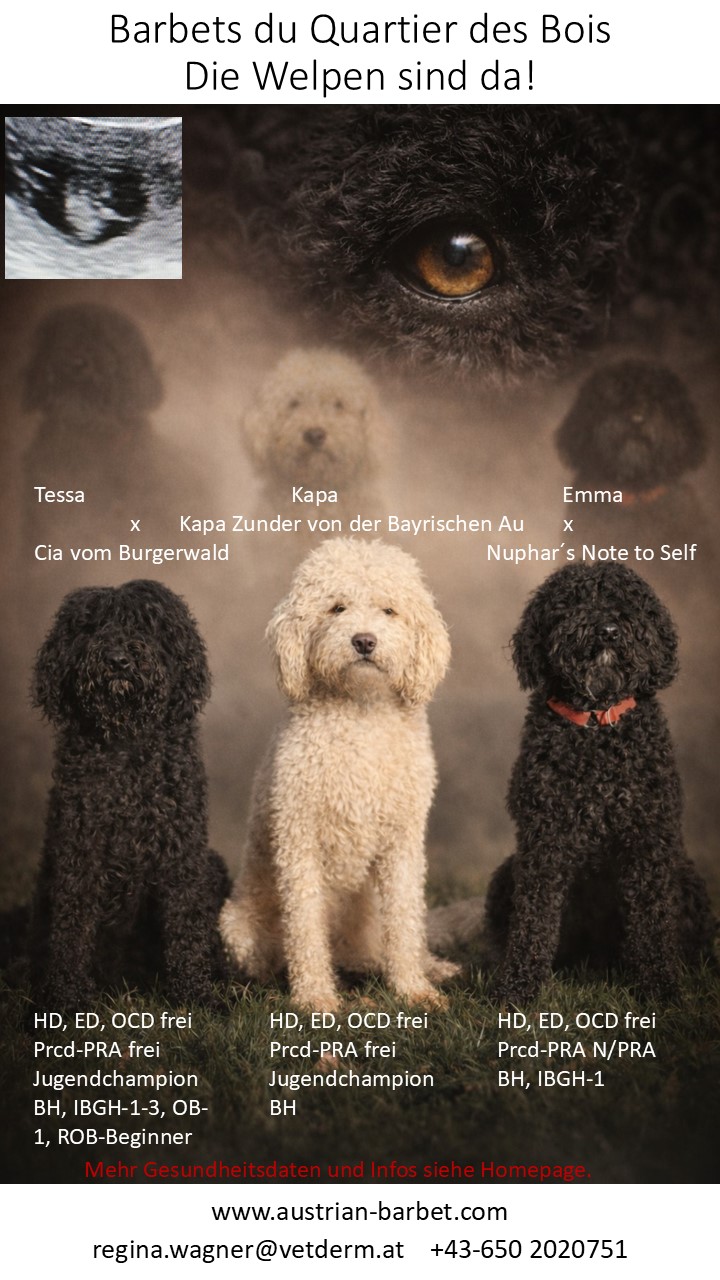
M- & N-Litter (Tessa and Emma)
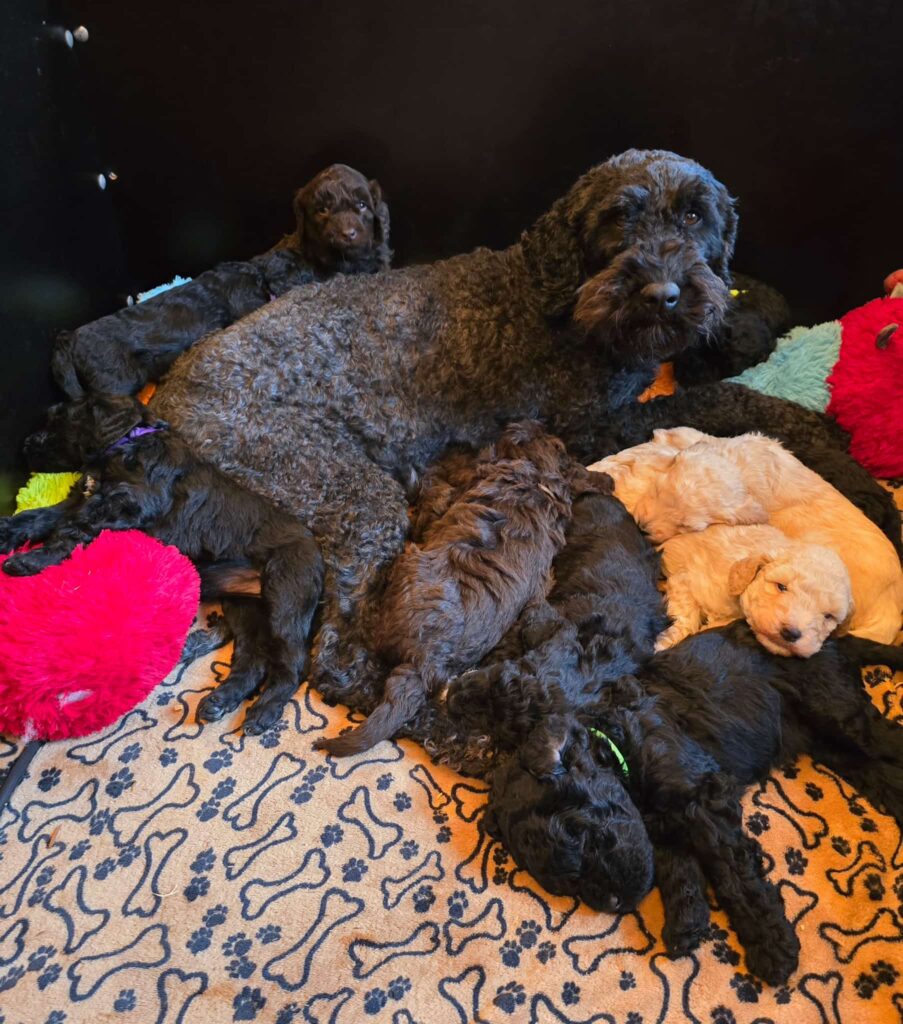
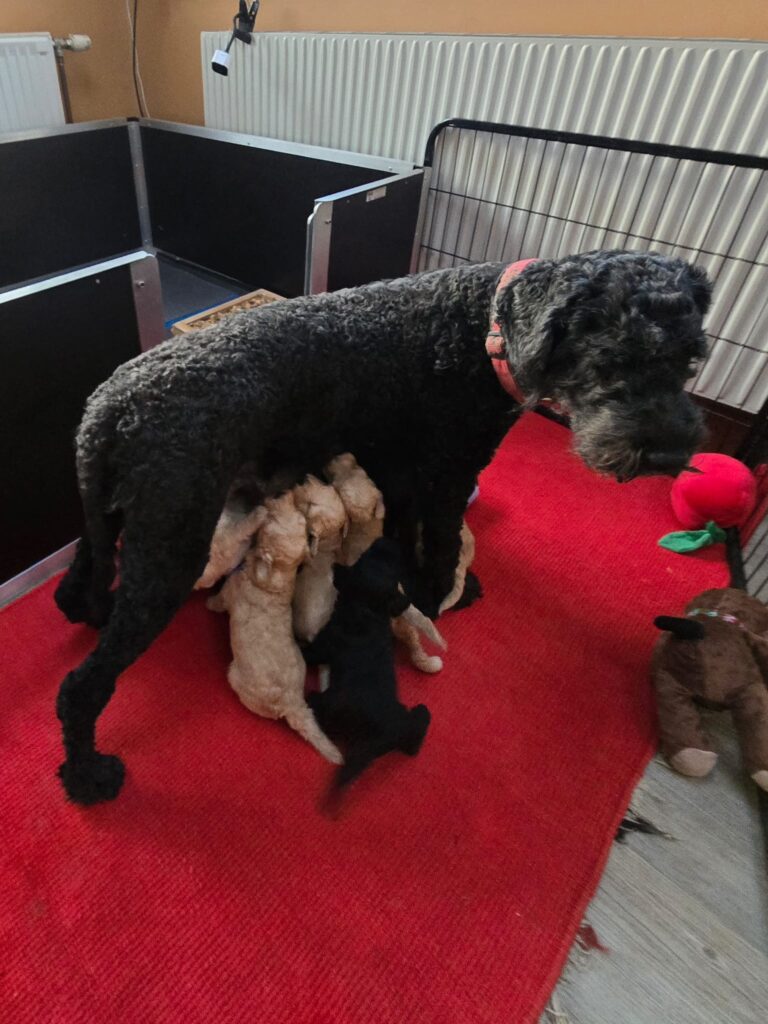
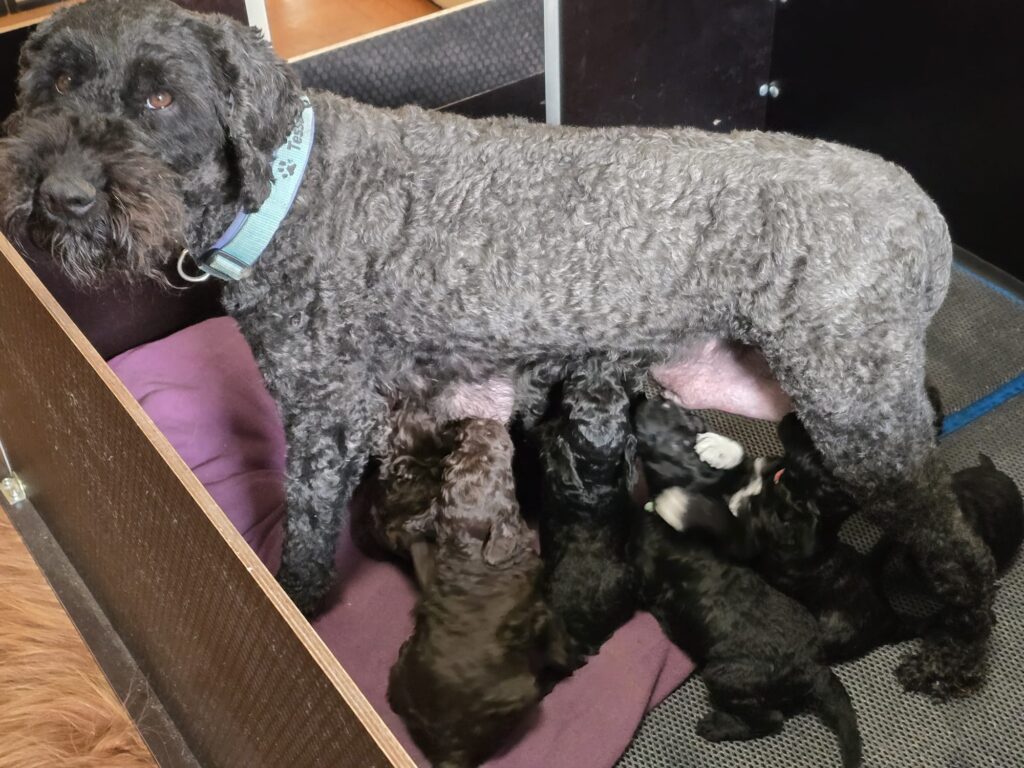
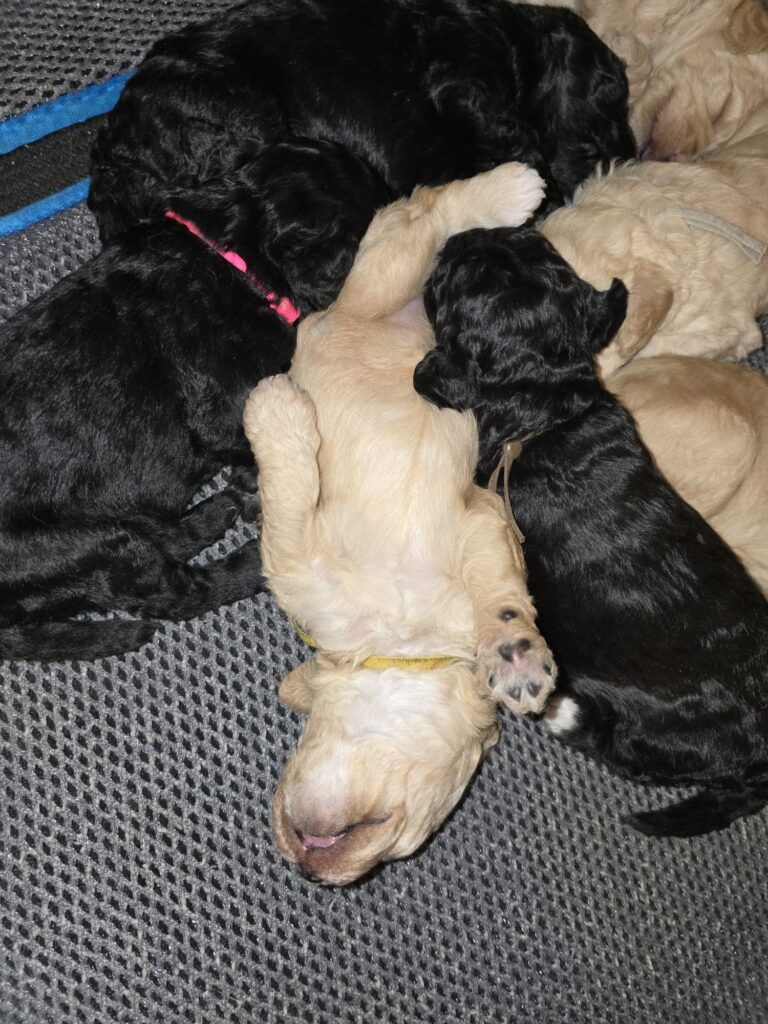
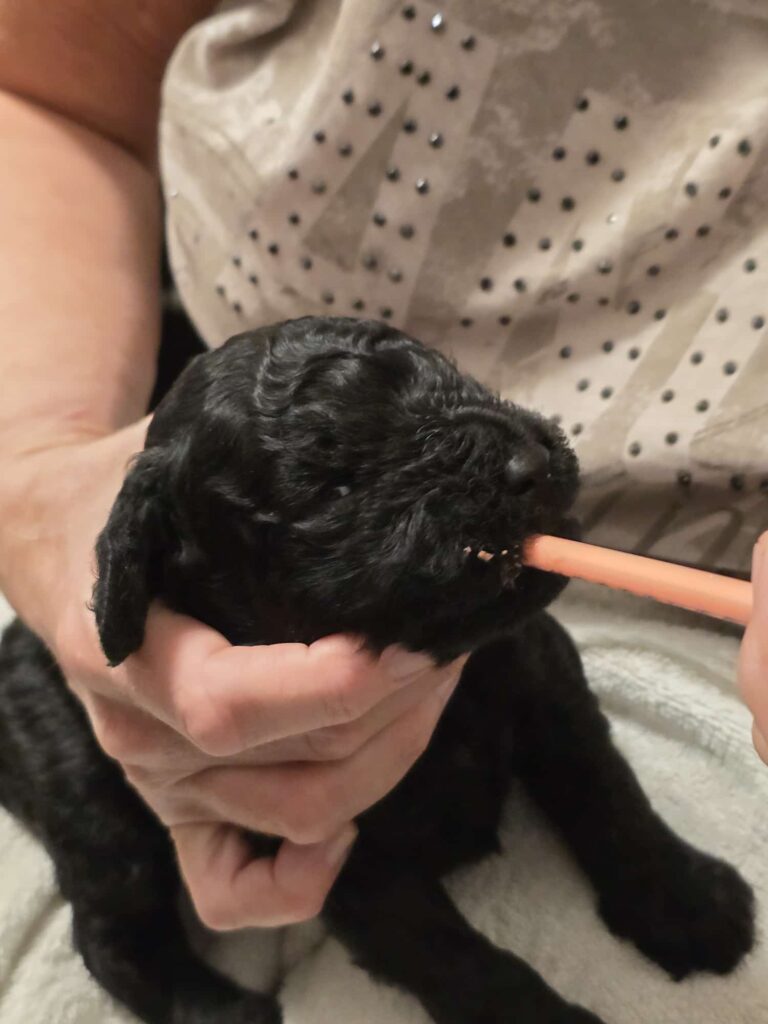
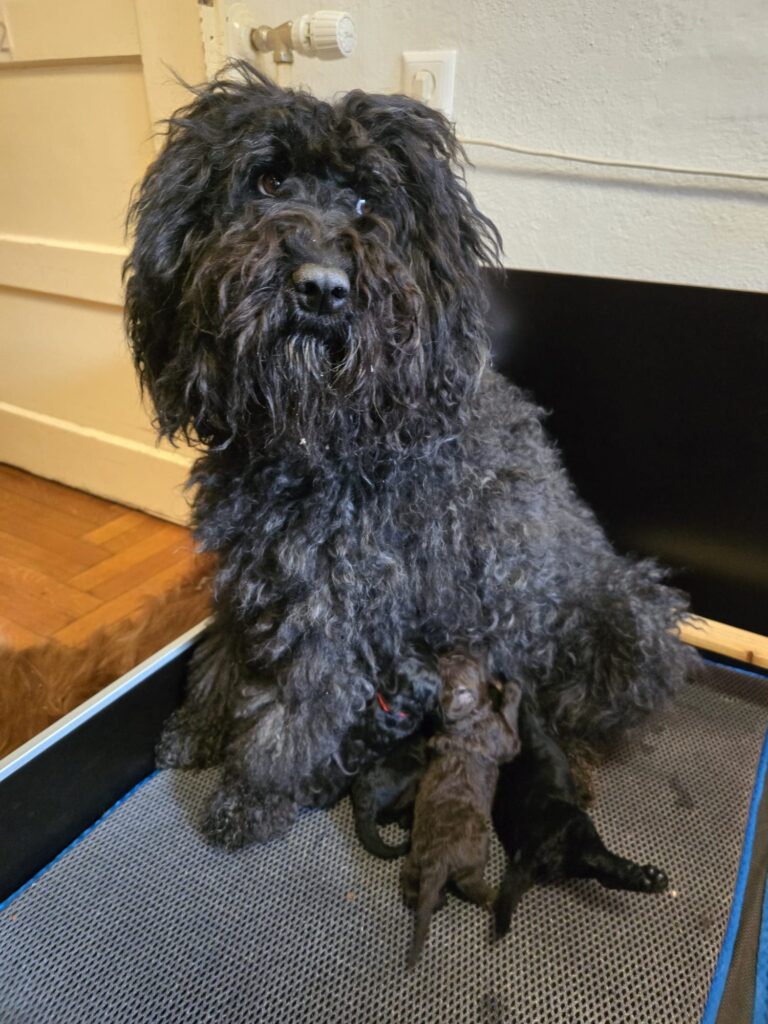
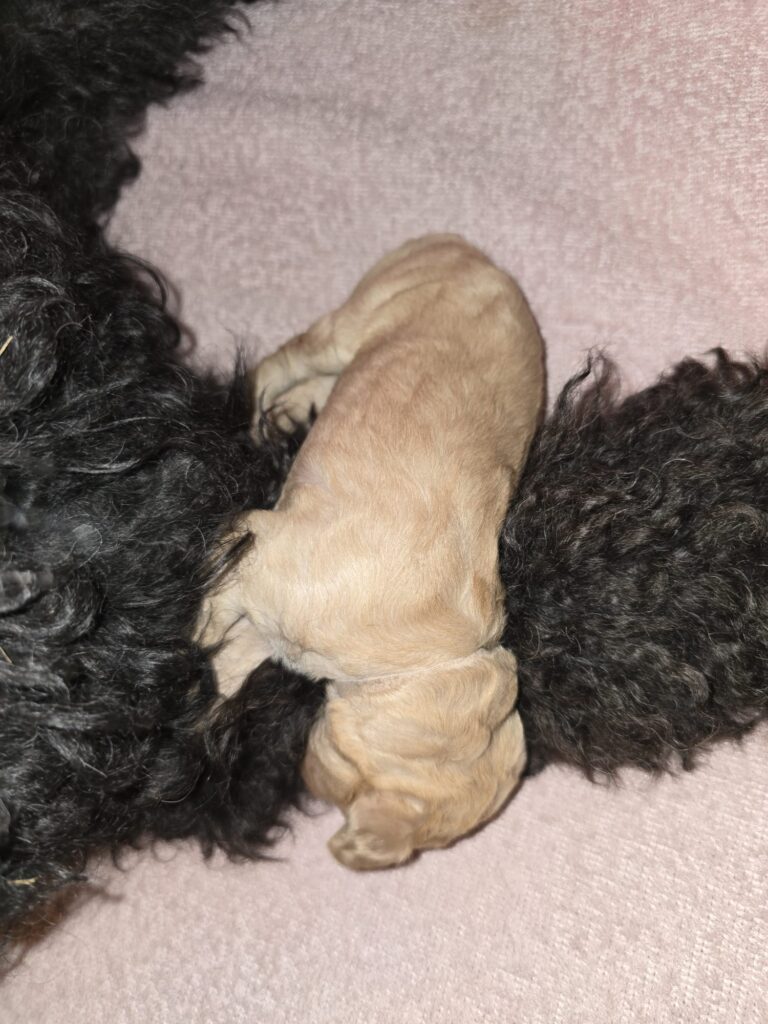
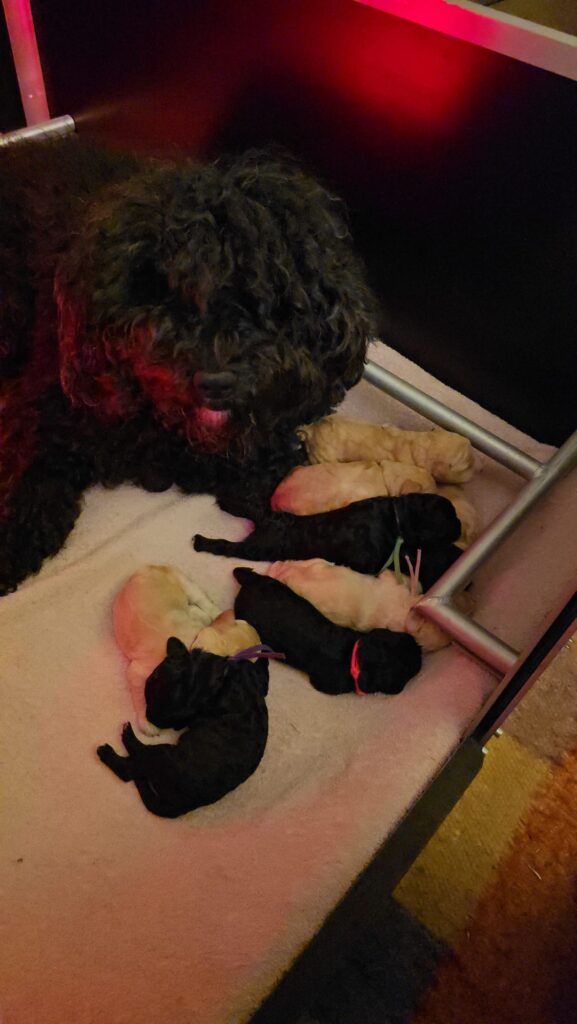
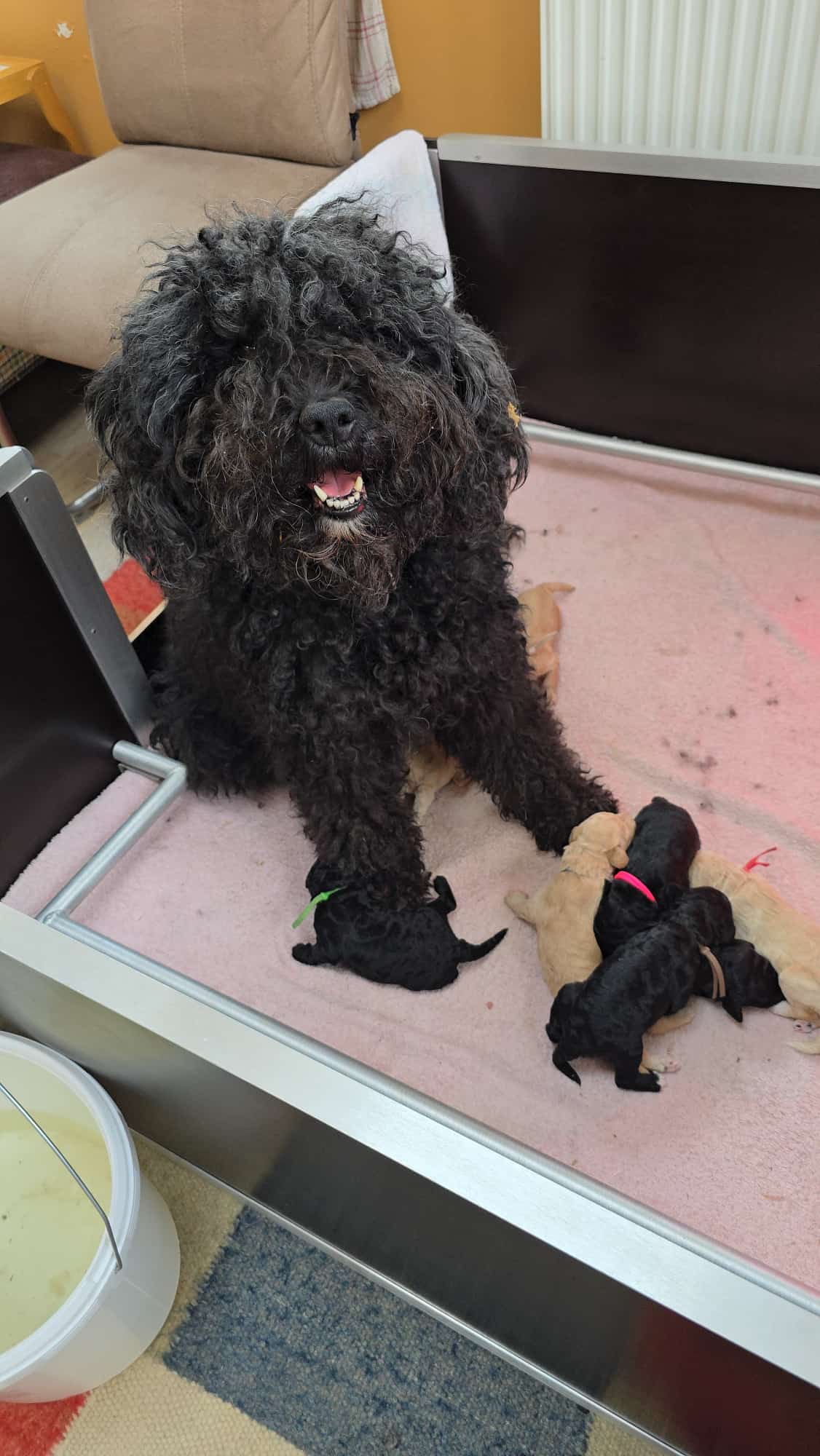
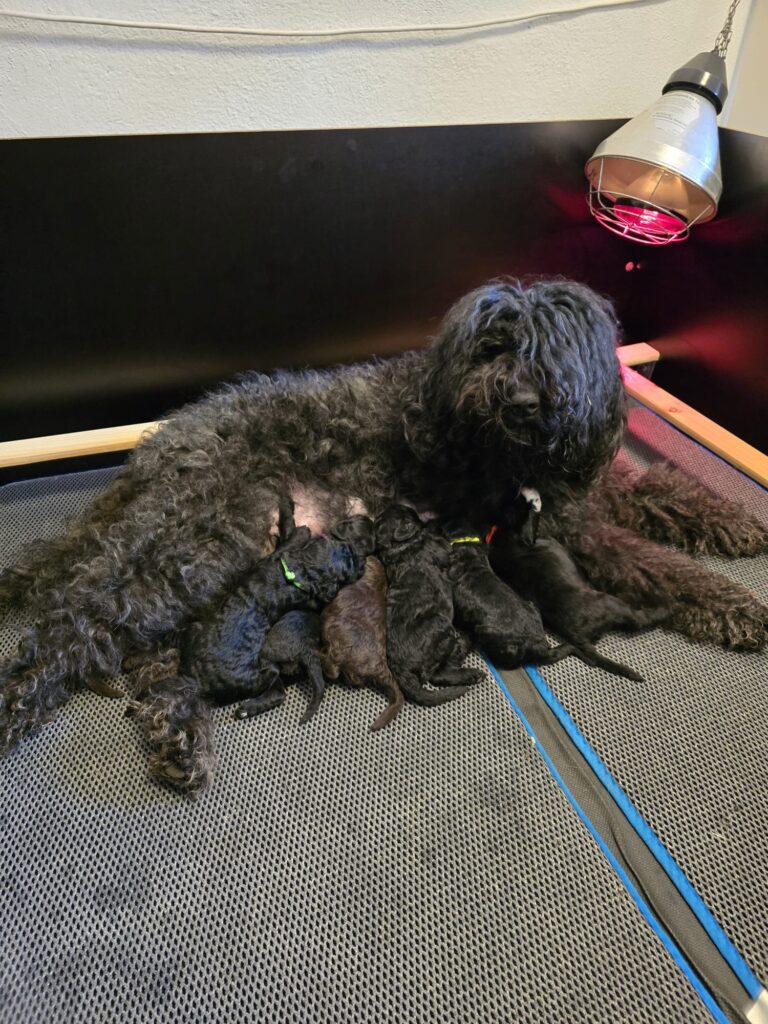
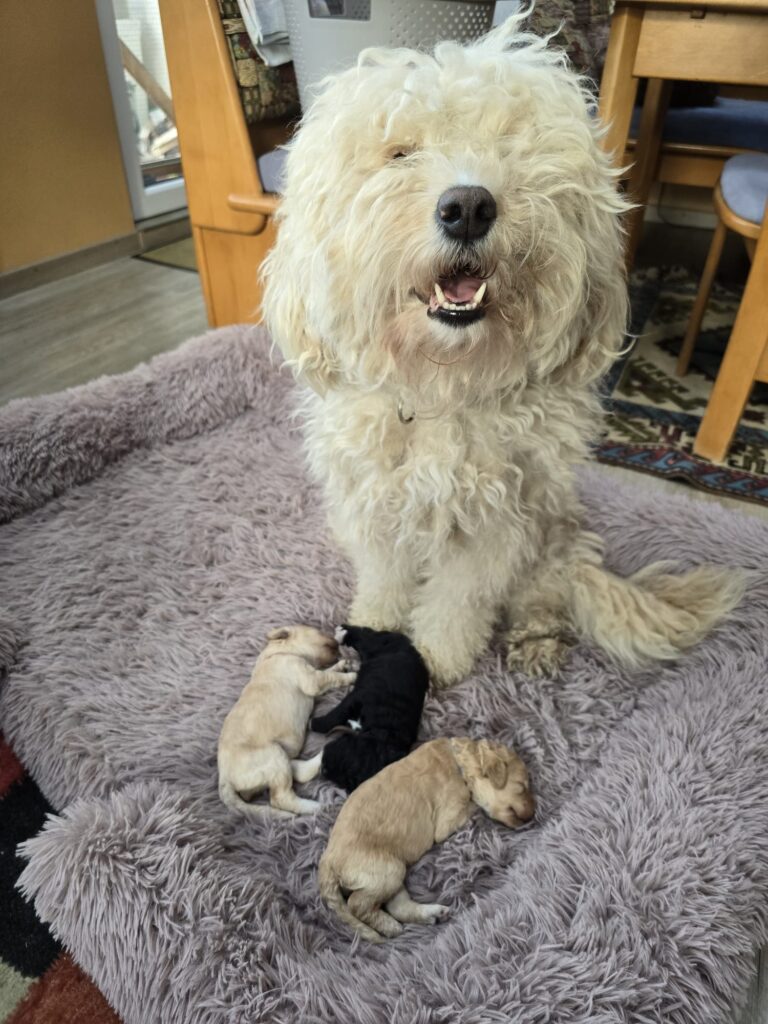
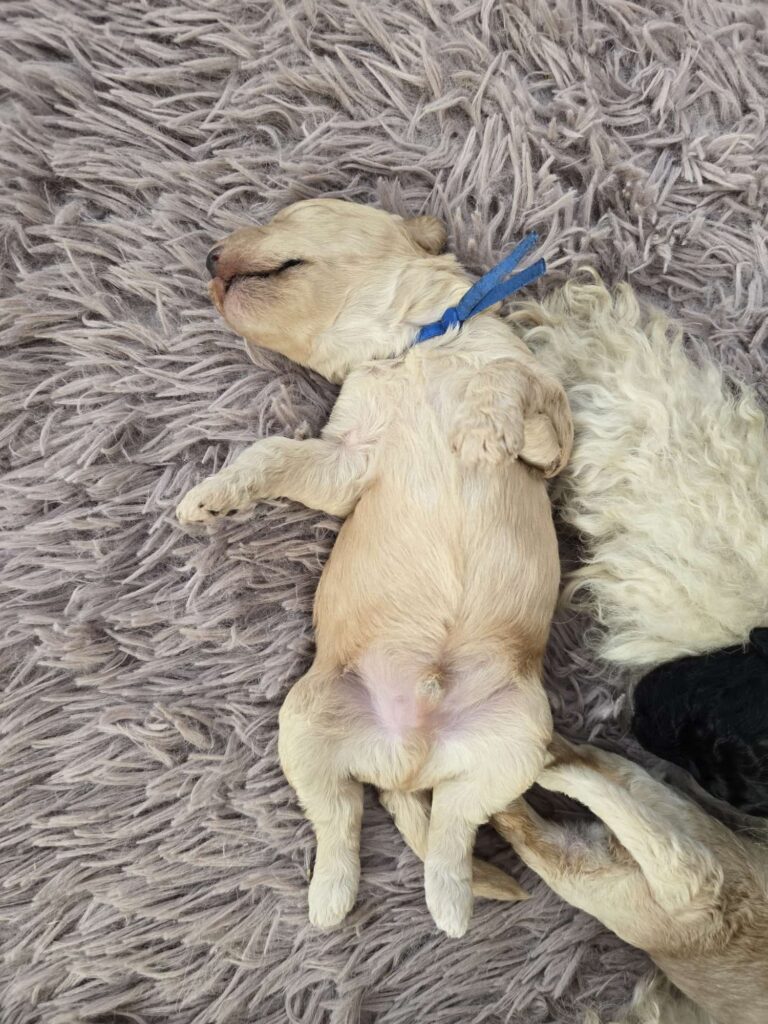
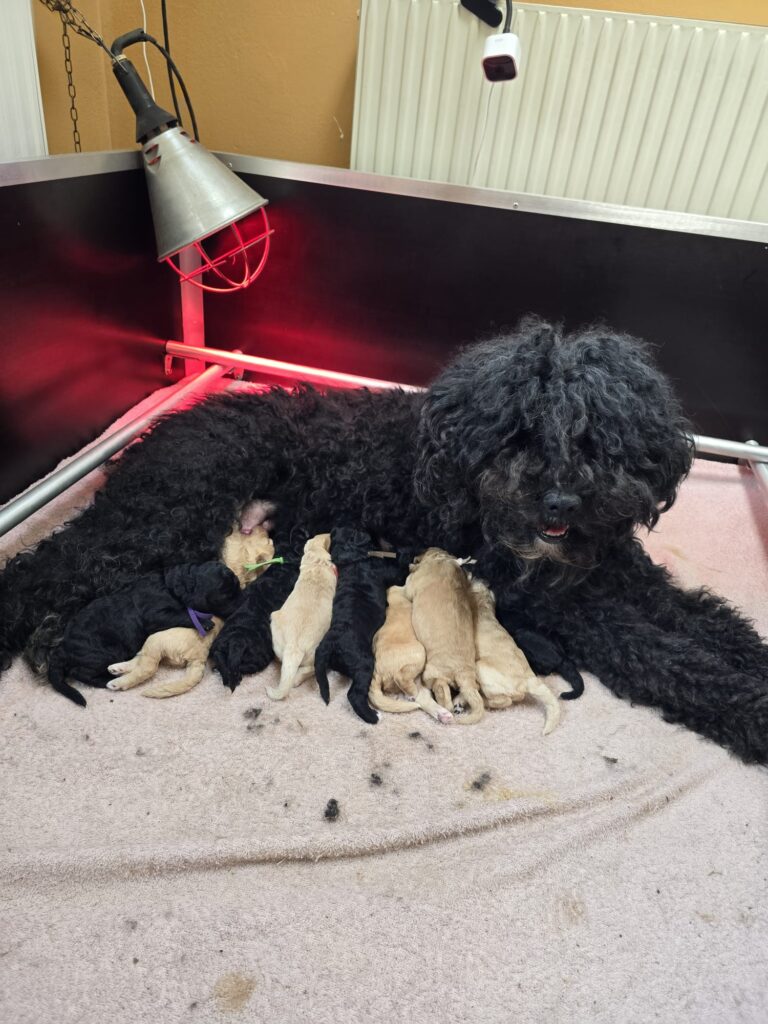
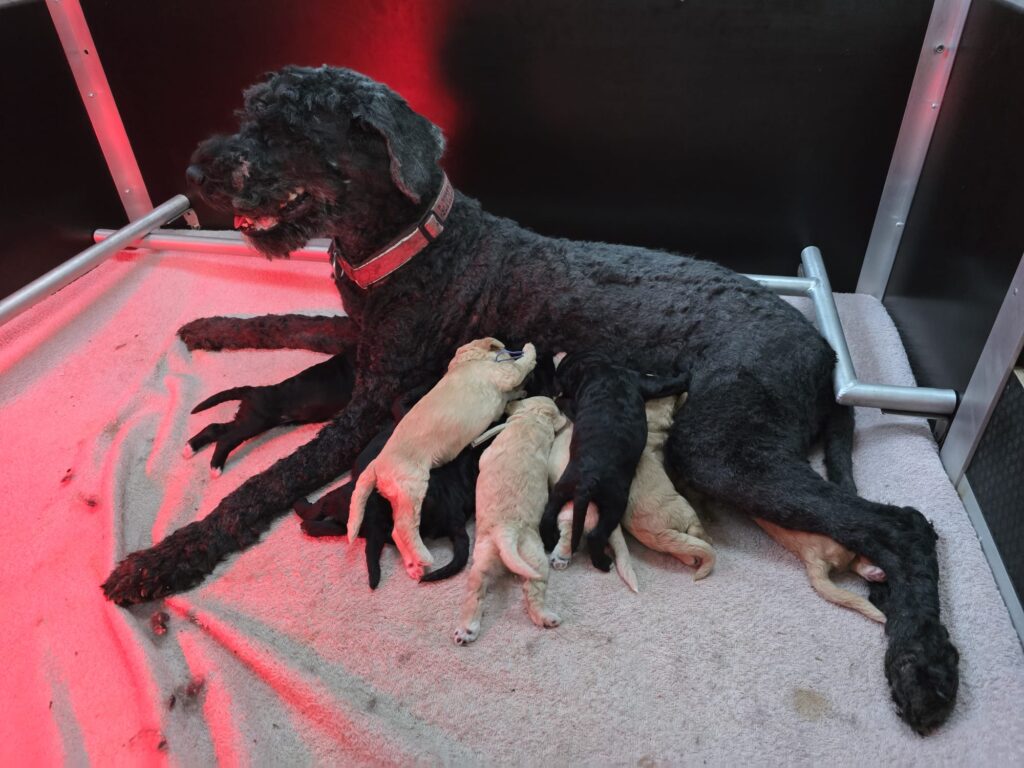
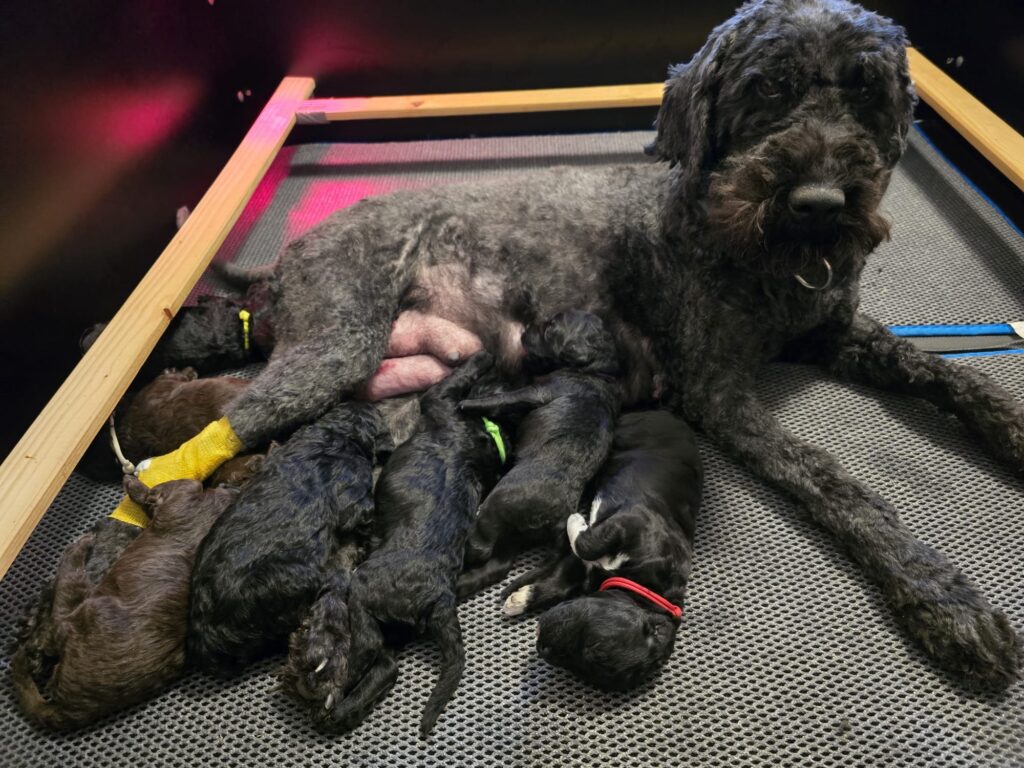
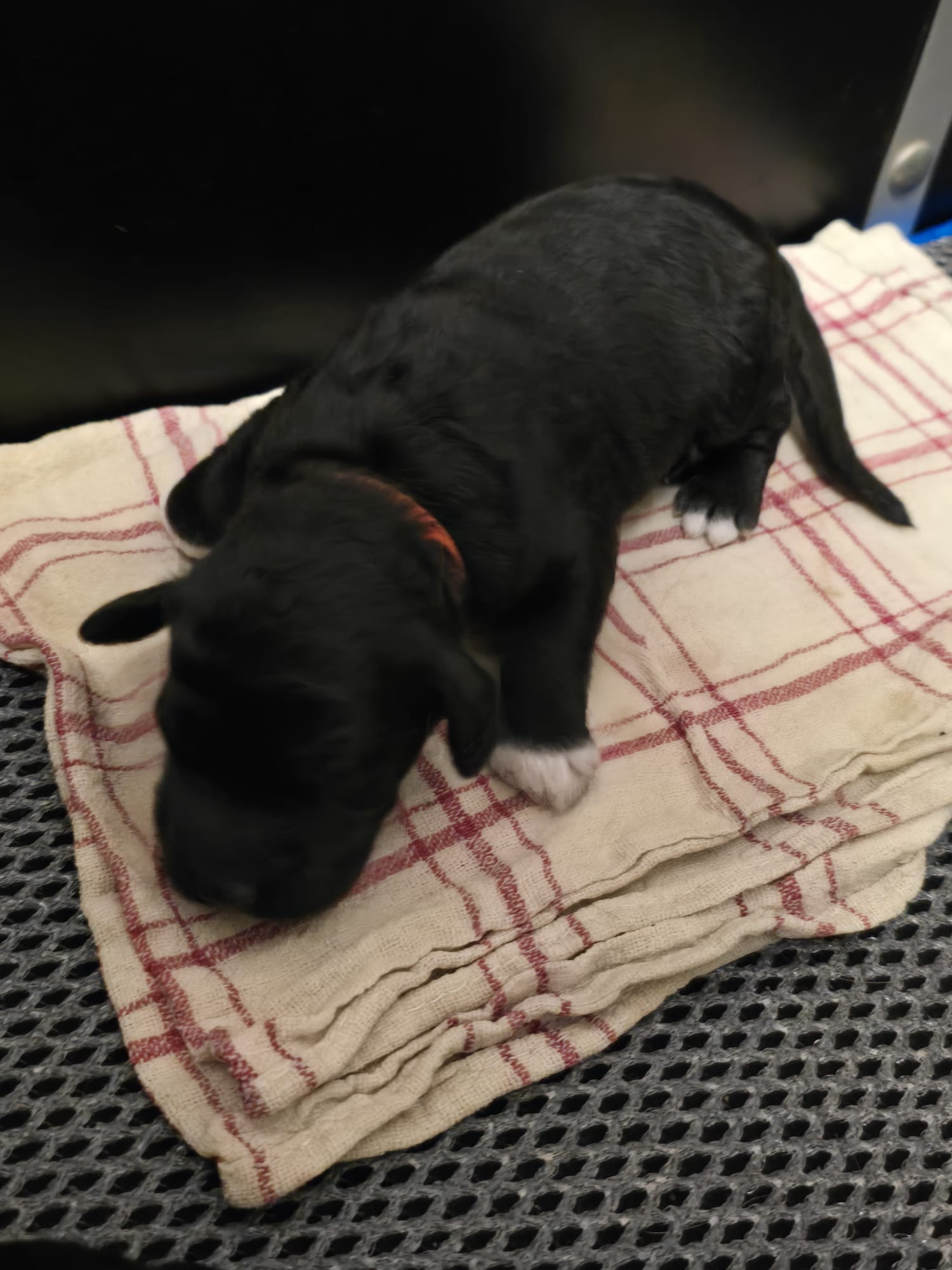
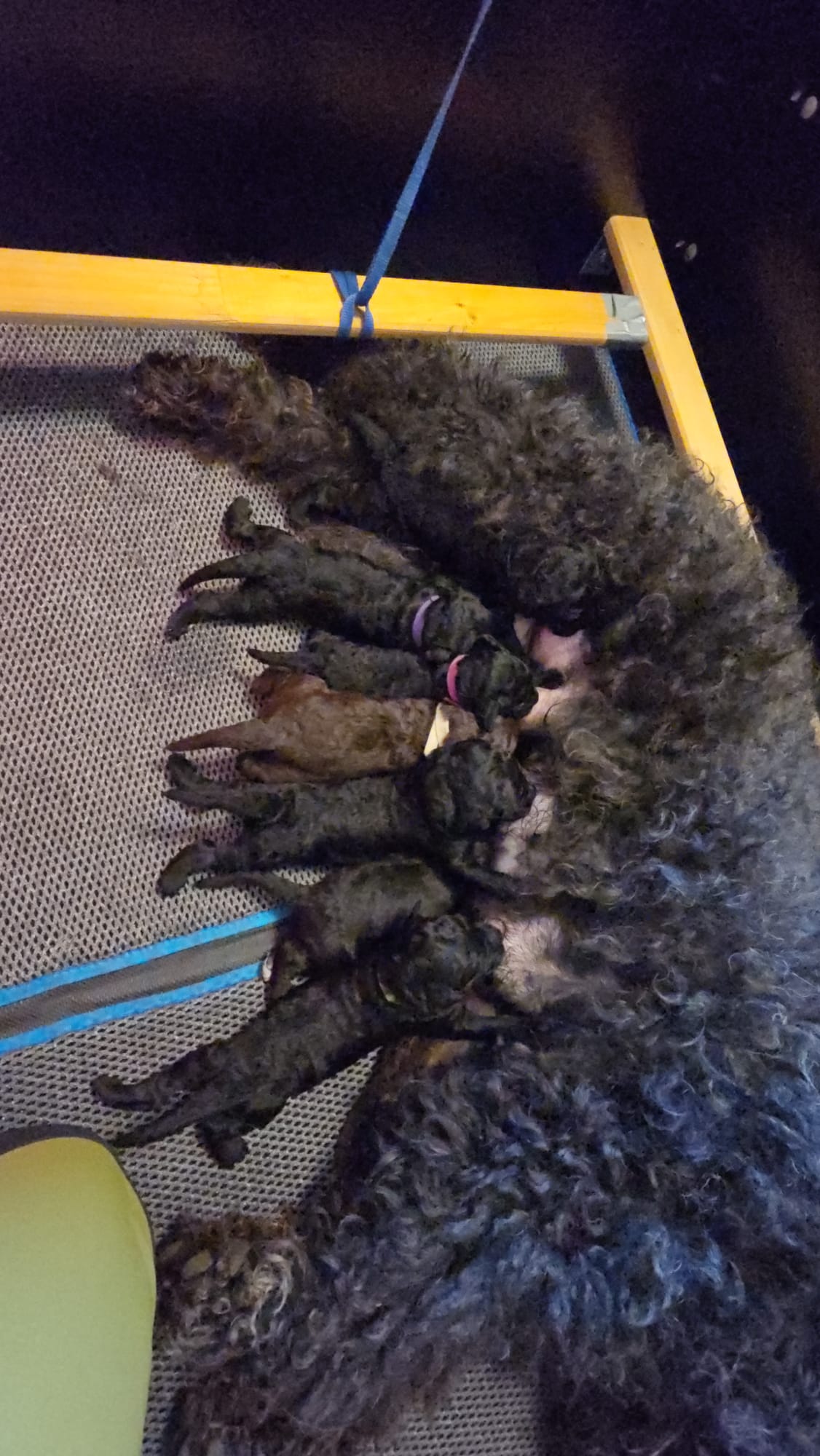
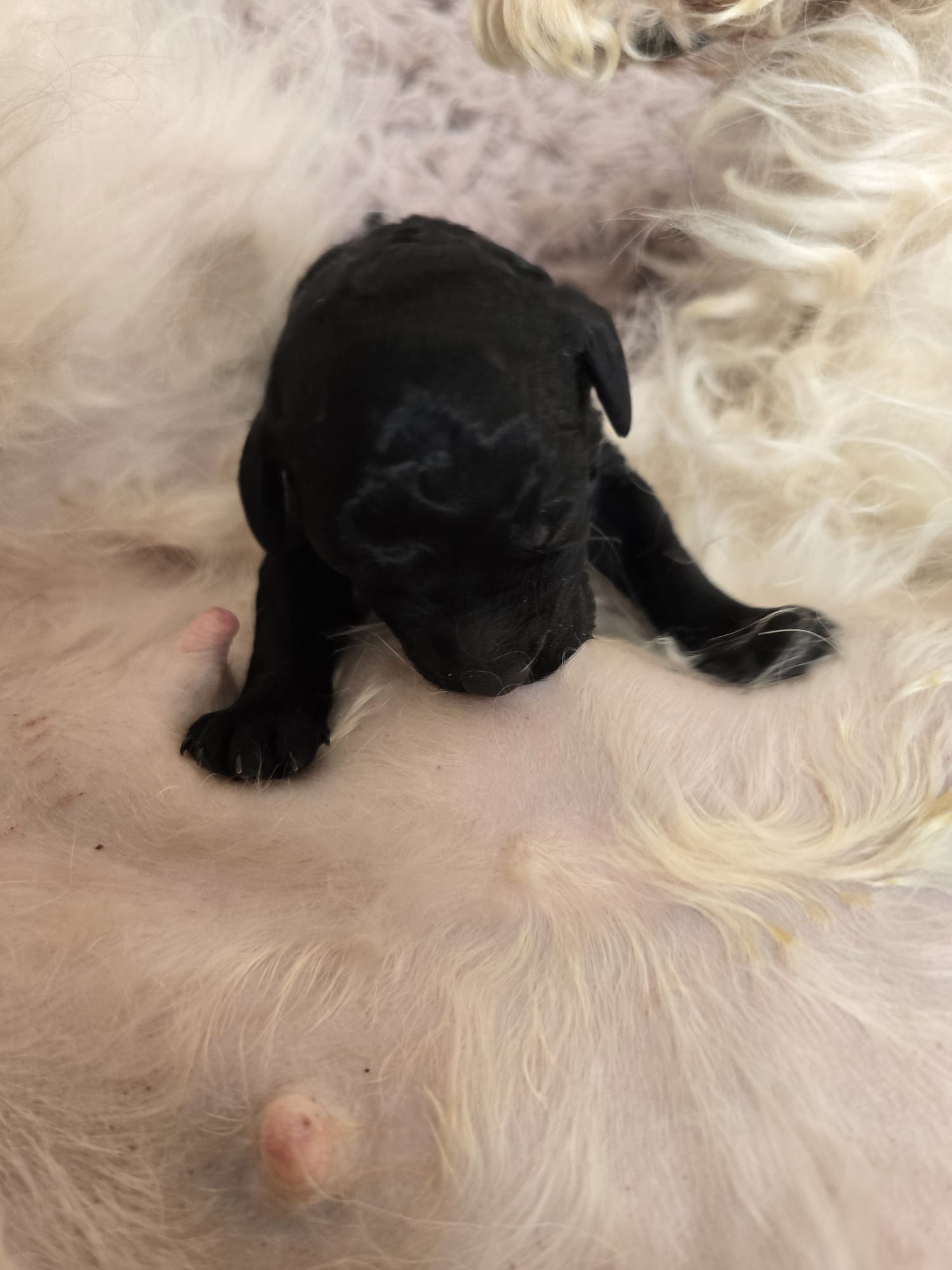
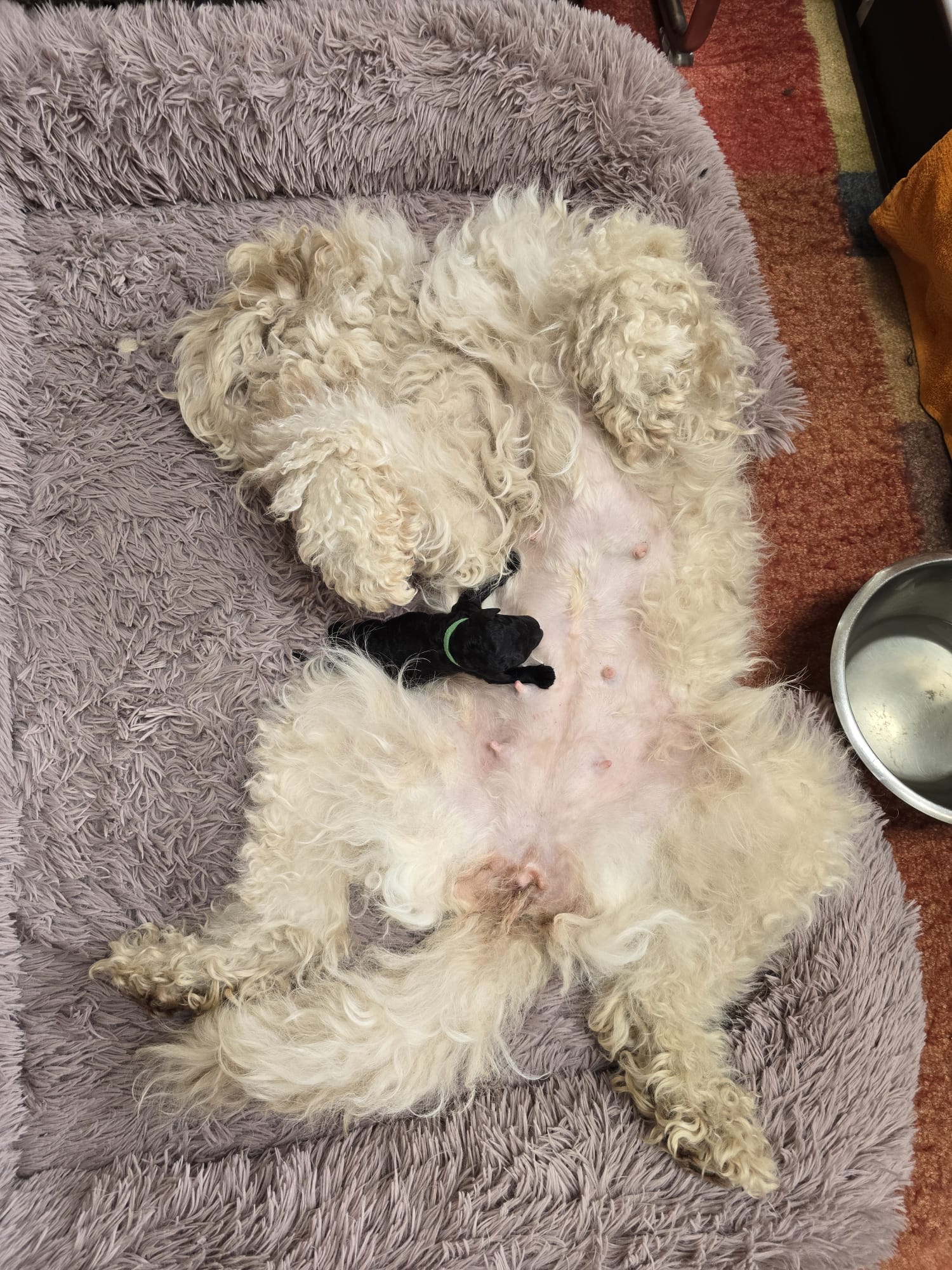
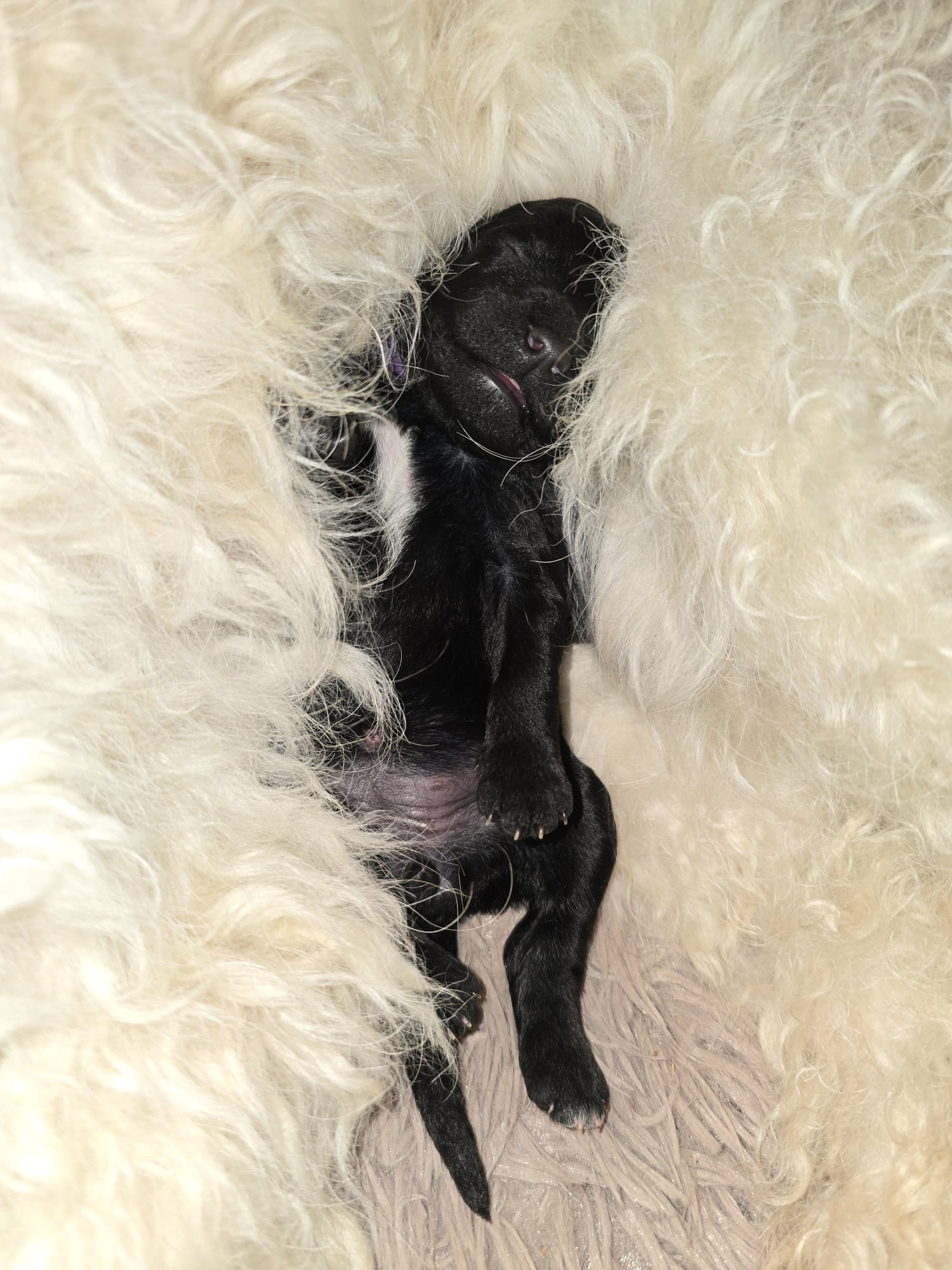
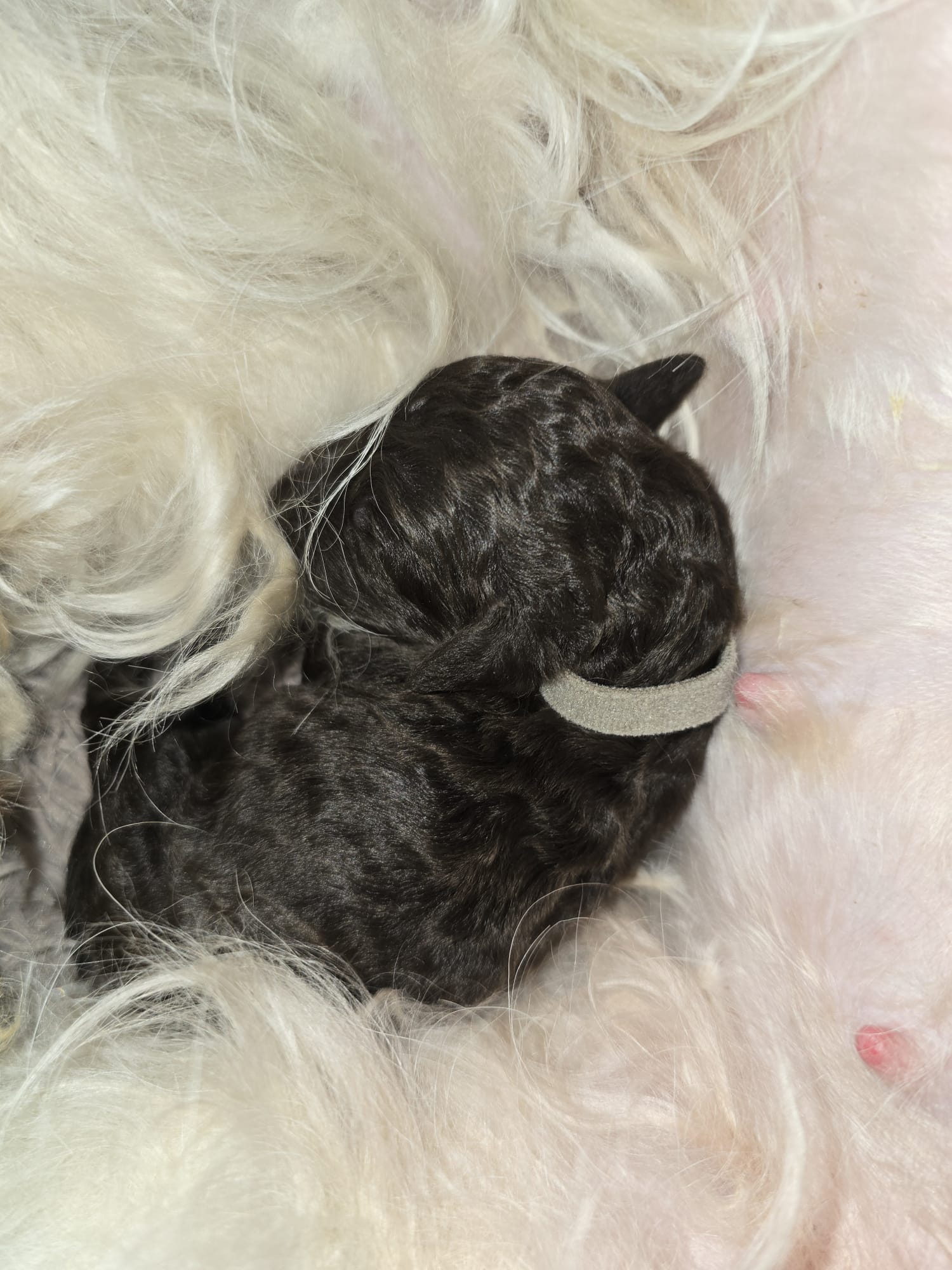
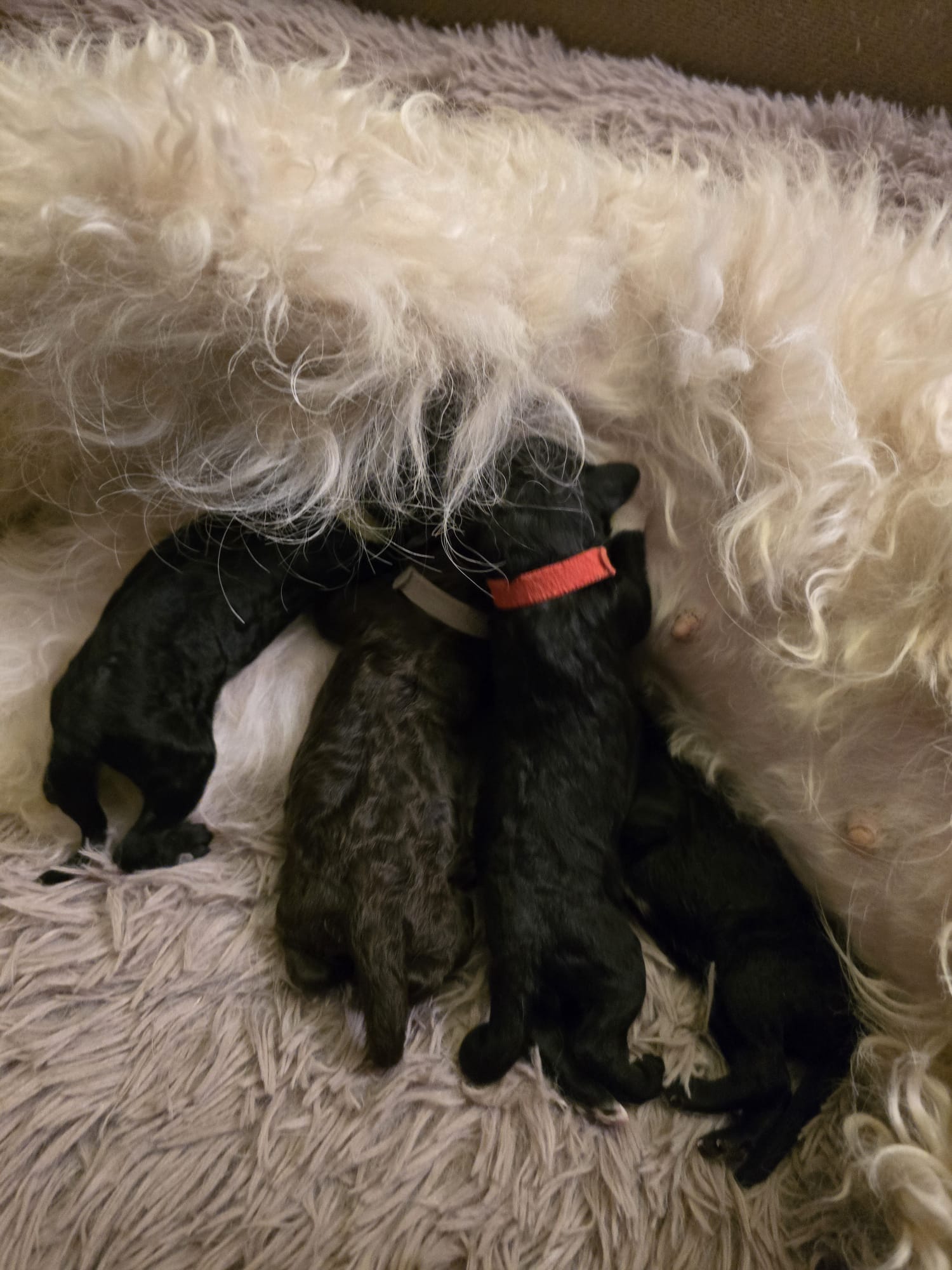
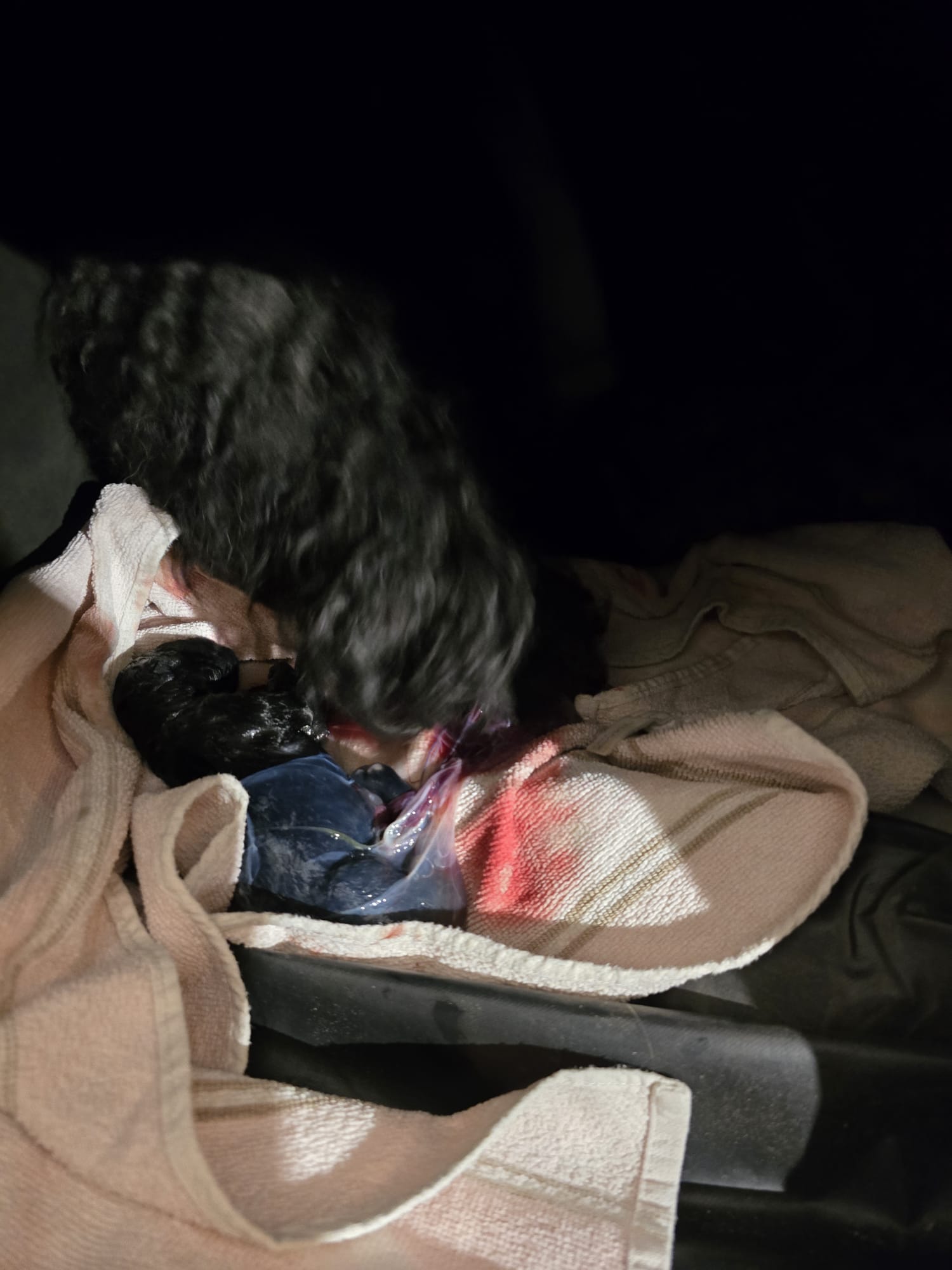
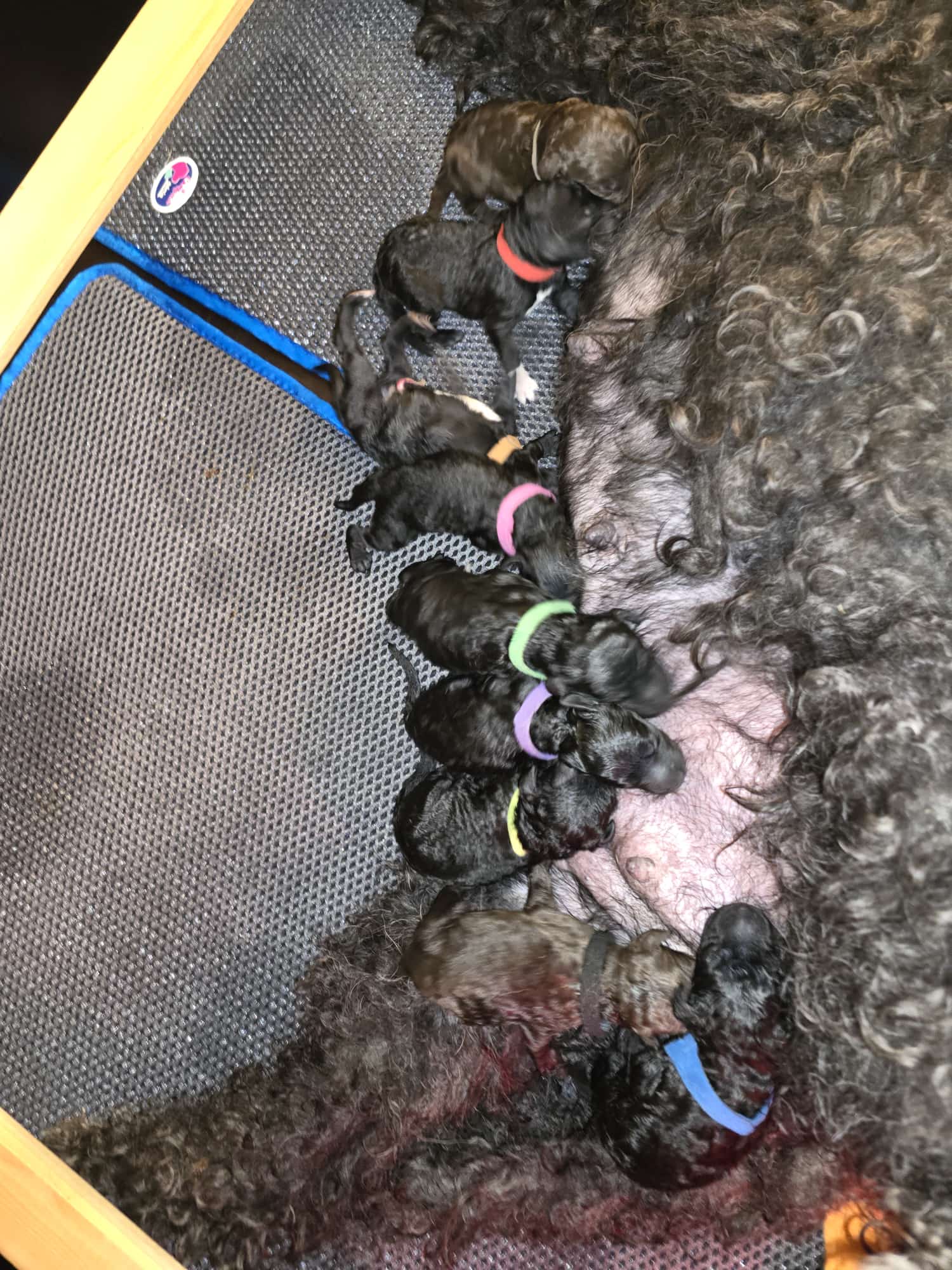
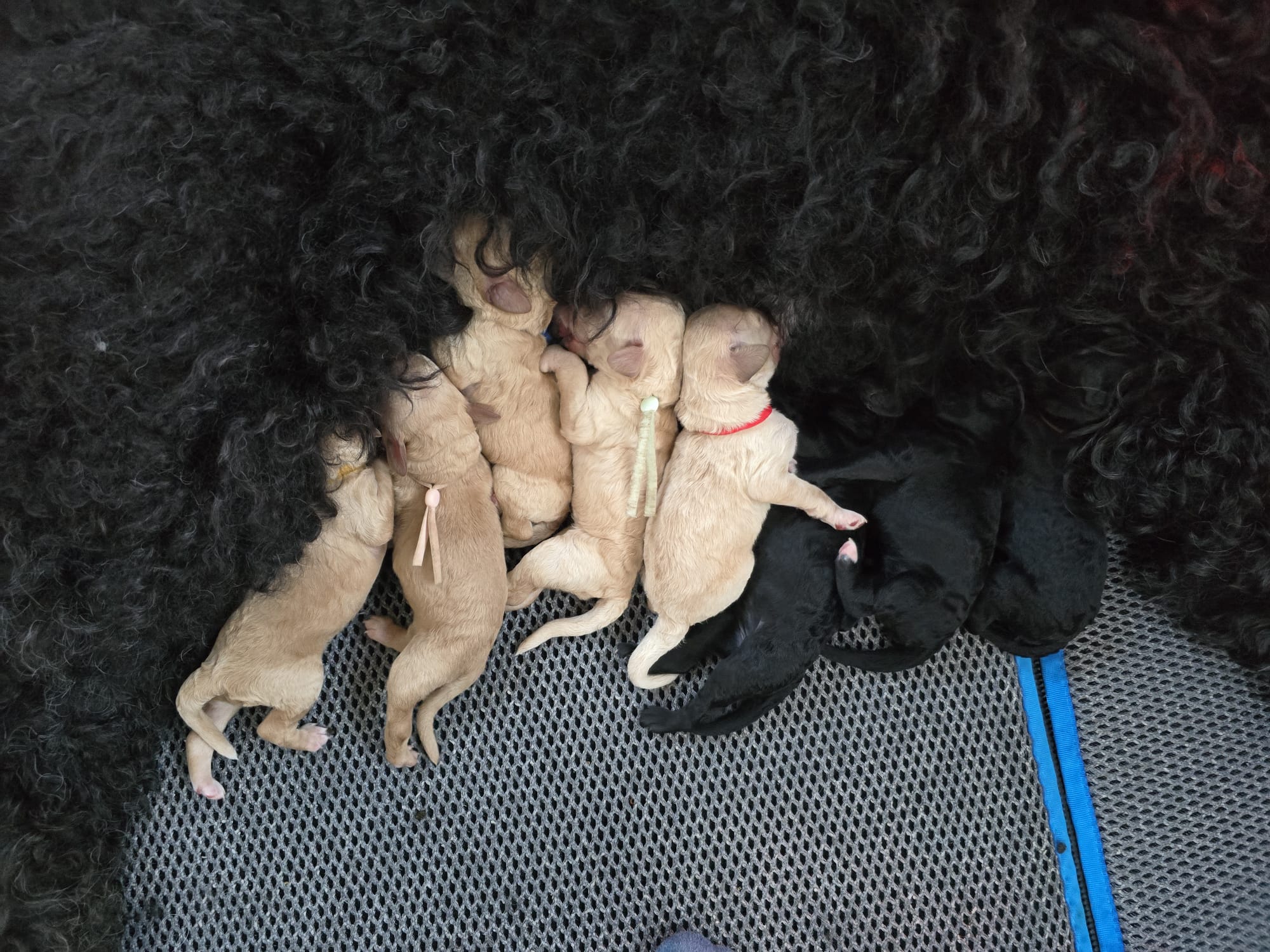
Tessa gave birth to nine (7 males /2 females ) puppies on the night of February 27/28. 2026 Unfortunately, one of them was born with a deformity and soon passed away. The others are doing well. Emma gave birth to eight (1 male /7 females) puppies on the night of March 2/3 2026, and all of them are doing well.
9th Week
Farewell, New Beginnings, and a Challenging Time
During this week and the following one, our puppies gradually left for their new homes as they were welcomed by their new families. As always, this moment brings many mixed emotions: joy that the little ones have found loving families, but also sadness as they leave the pack.
For us, however, this period was additionally overshadowed by a significant personal loss. During this week, we had to say our final goodbye to my father, just as my mother passed away during the F-litter. As a result, these days were particularly challenging and emotionally demanding. Nevertheless, the puppies and their needs remained our top priority. Their care and the handover to their new families were carried out as planned, with great dedication and love.
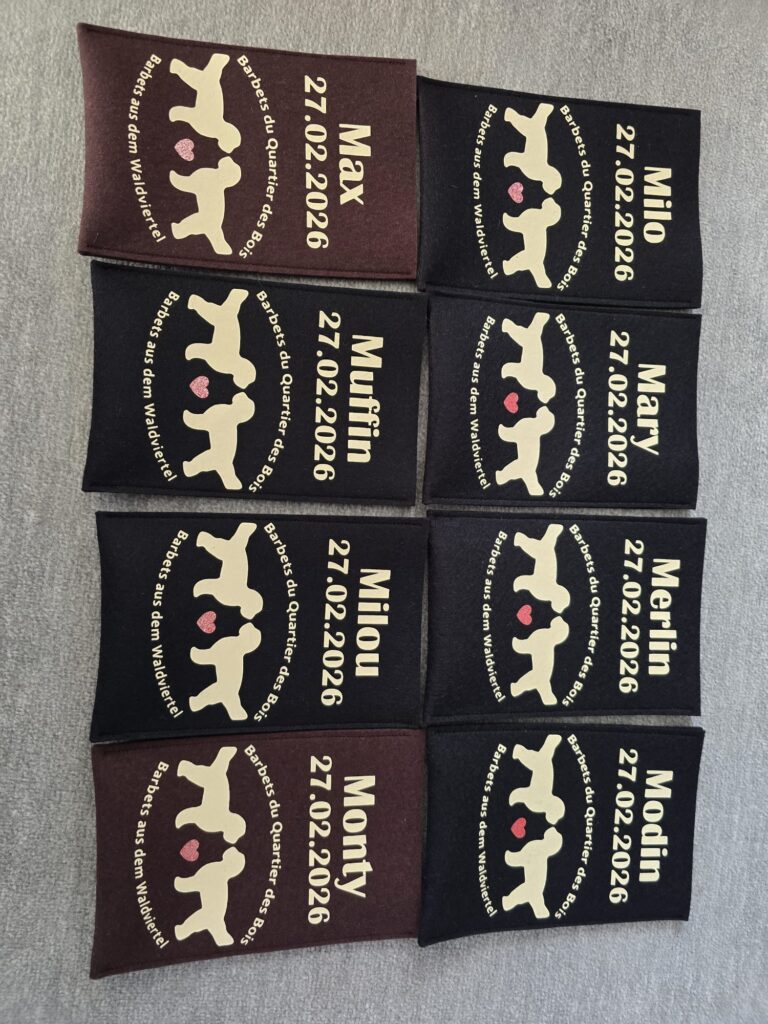
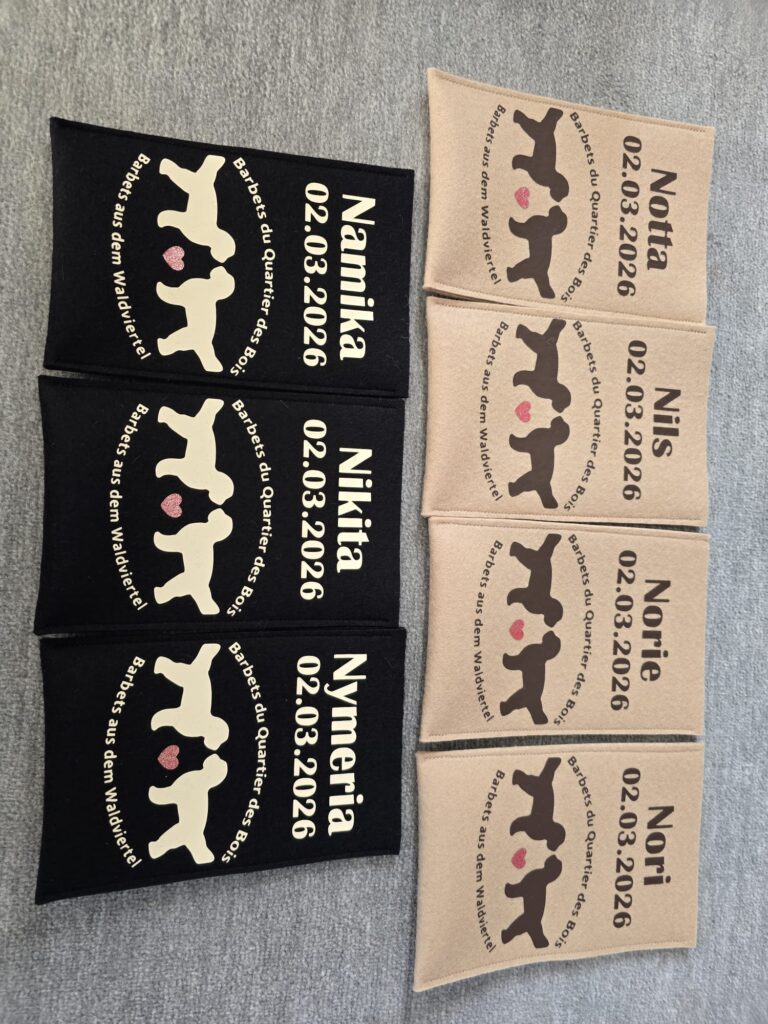
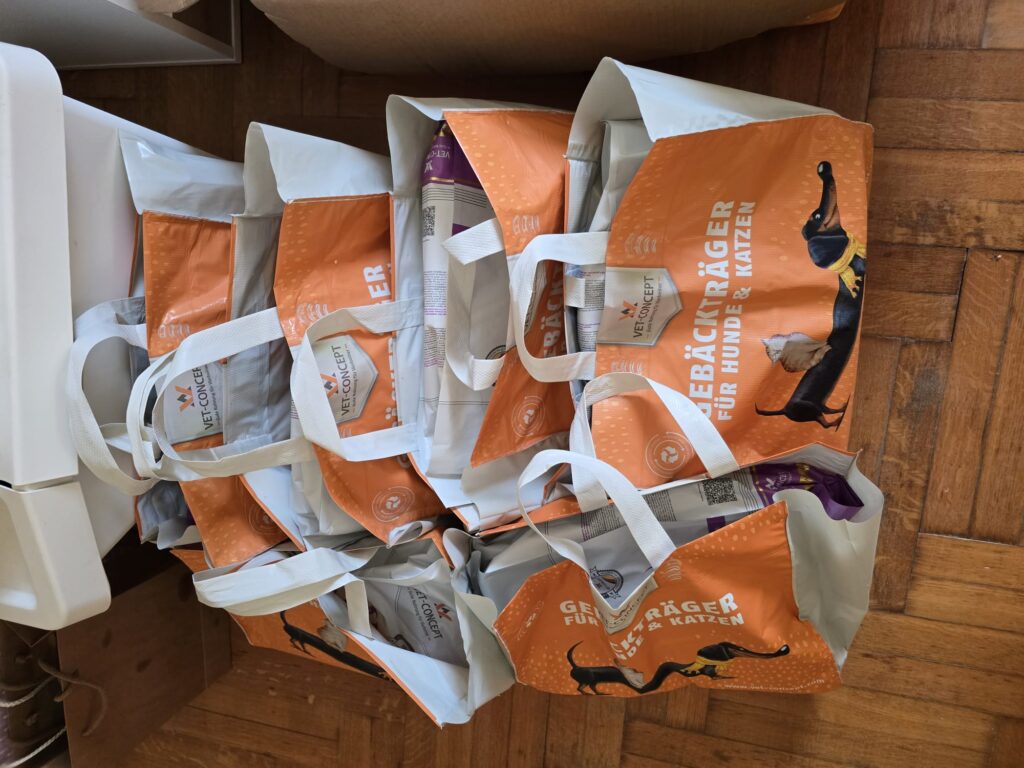
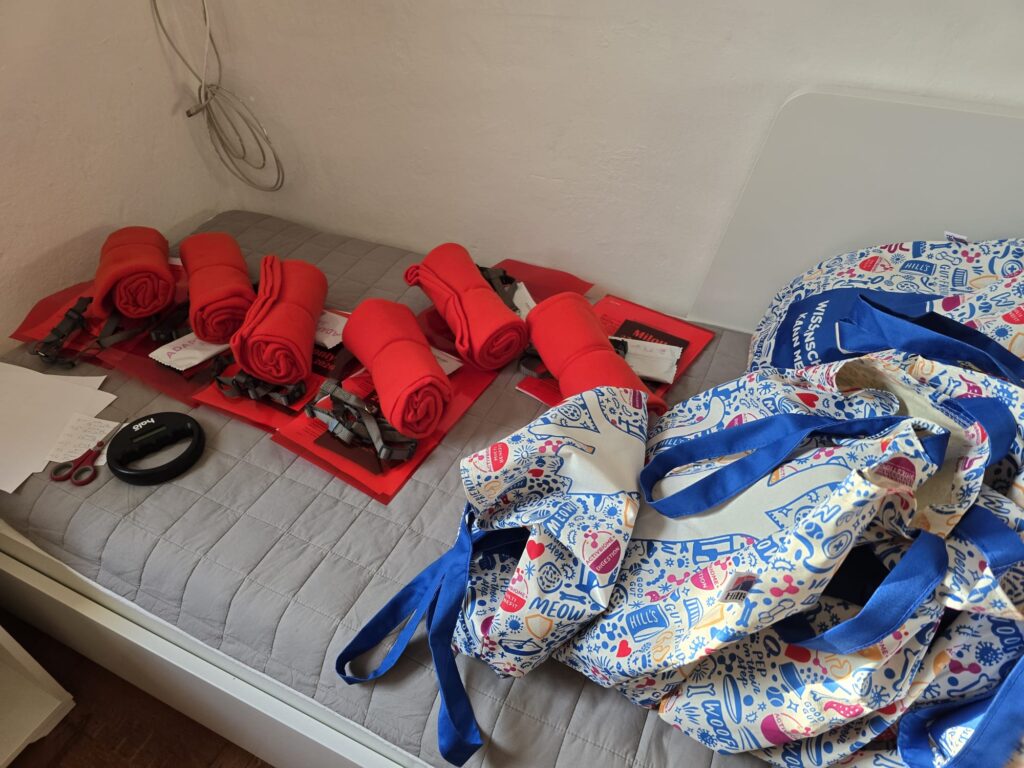
As with every litter, the puppies received a comprehensive starter package when they left. Just in time for departure, the individually designed vaccination passport covers arrived as well. In addition, each puppy took home their familiar scented blanket carrying the smell of their pack and me, toys, a bag of food, and many other useful items. These familiar belongings are intended to ease the transition into their new homes and provide comfort and security during the first few days.
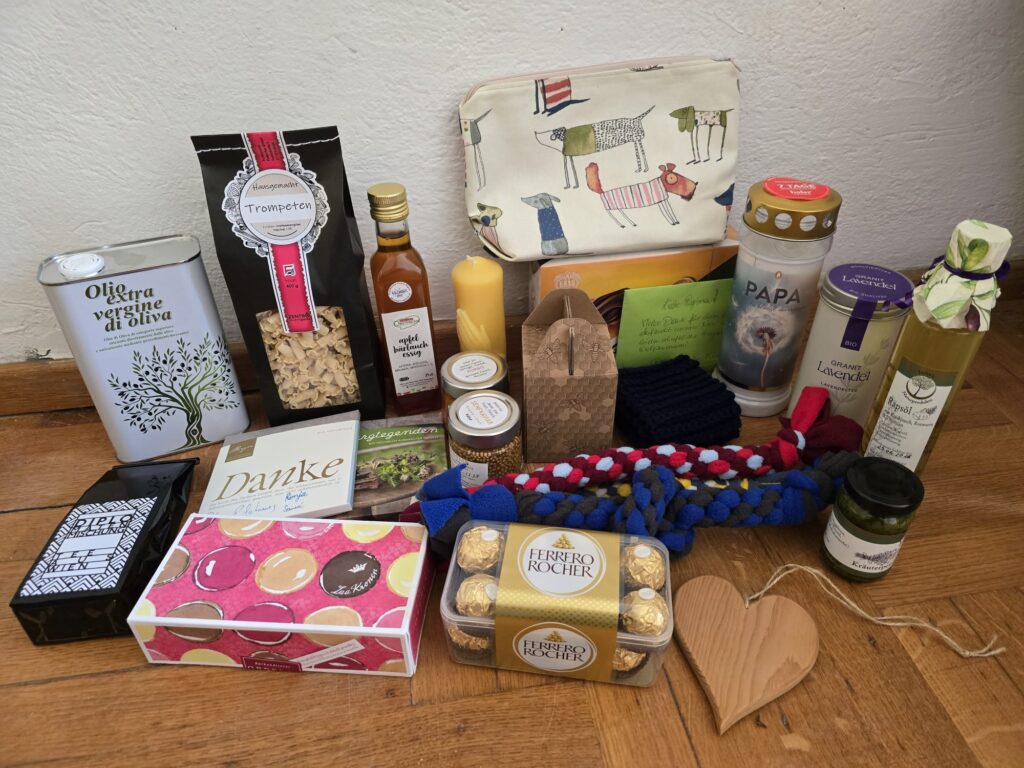
I was also deeply touched by the many thoughtful gifts and kind gestures I received from most of the puppy families. I would like to express my heartfelt gratitude for this appreciation and for all the warm words and support.
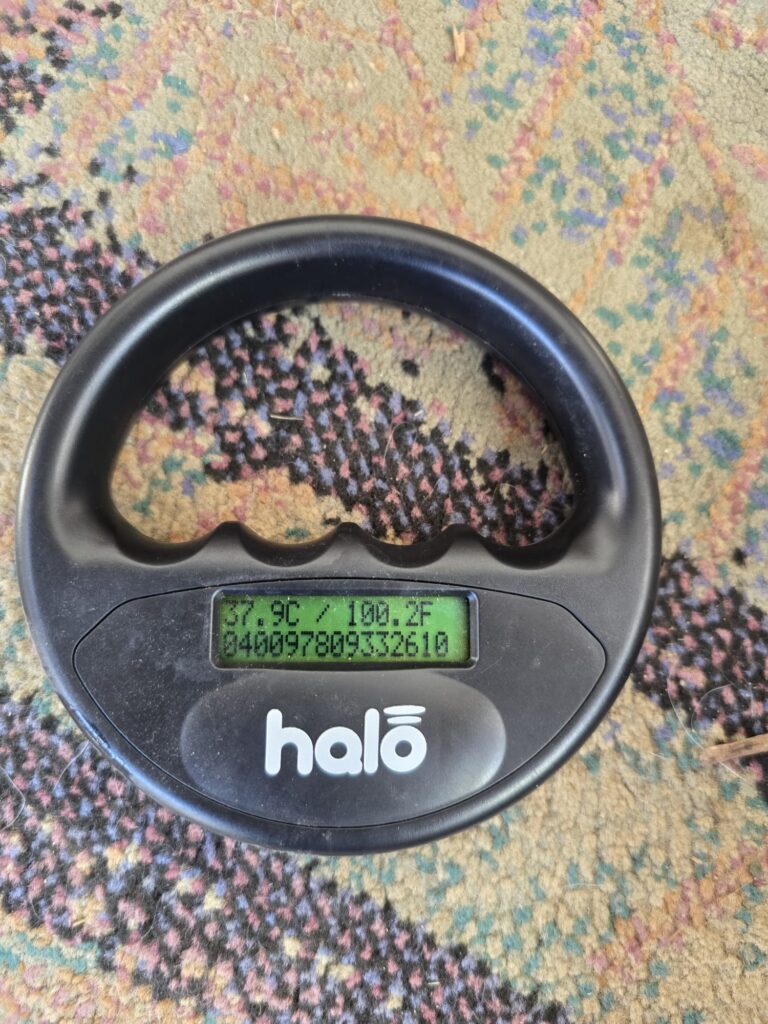
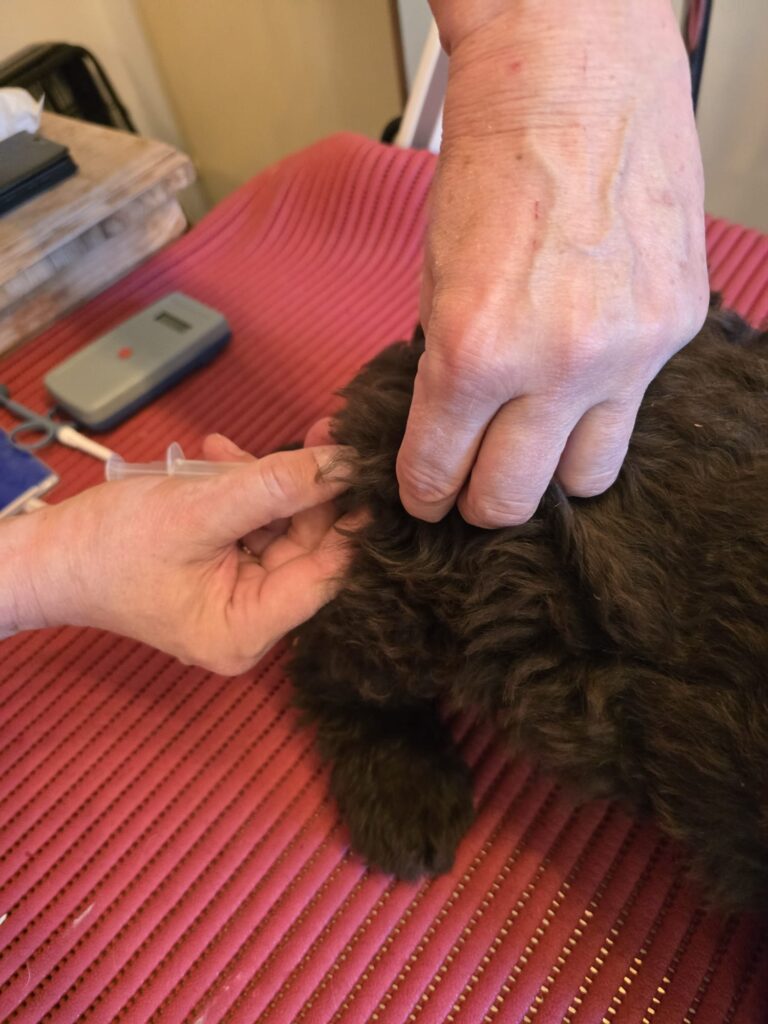
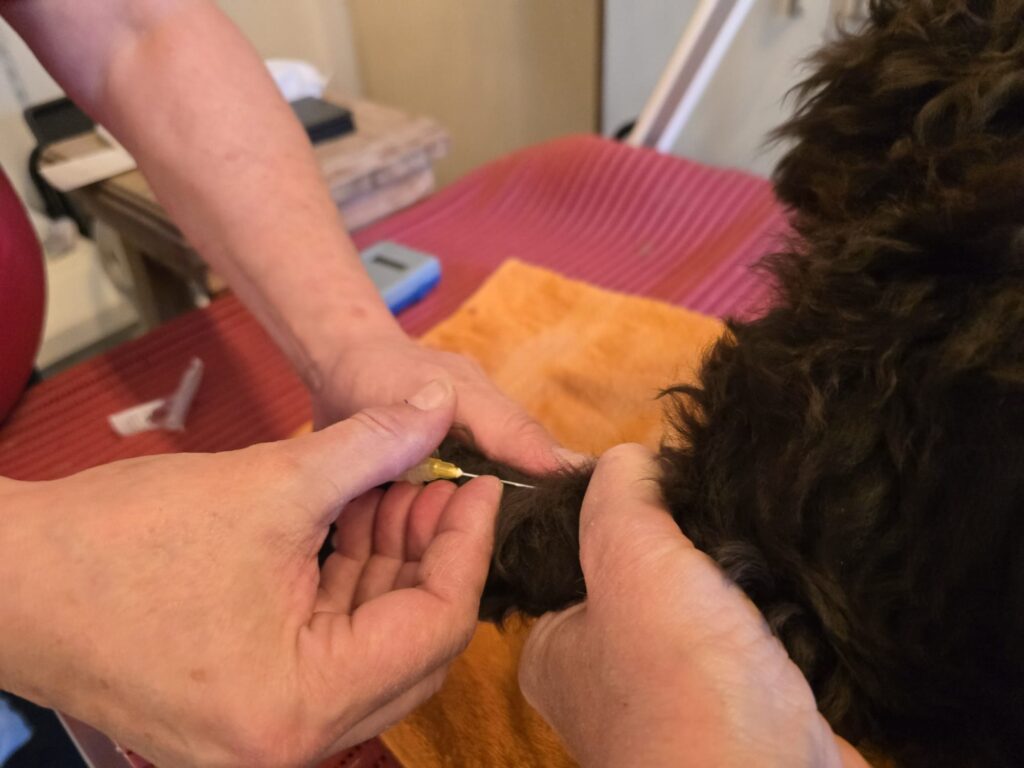
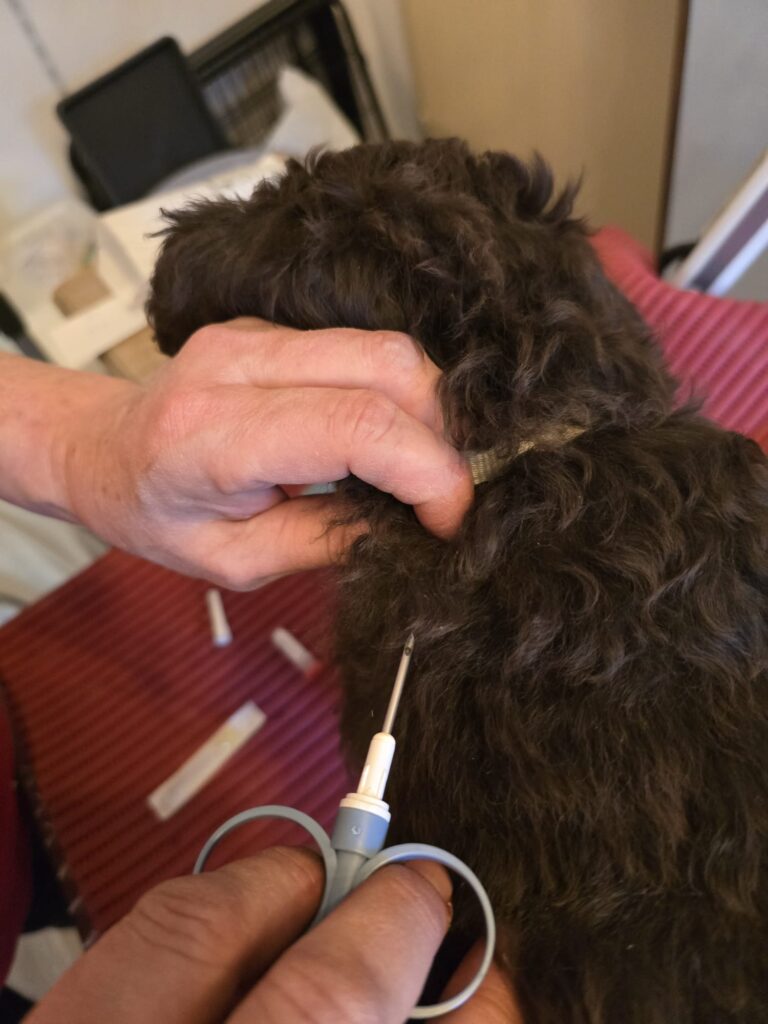
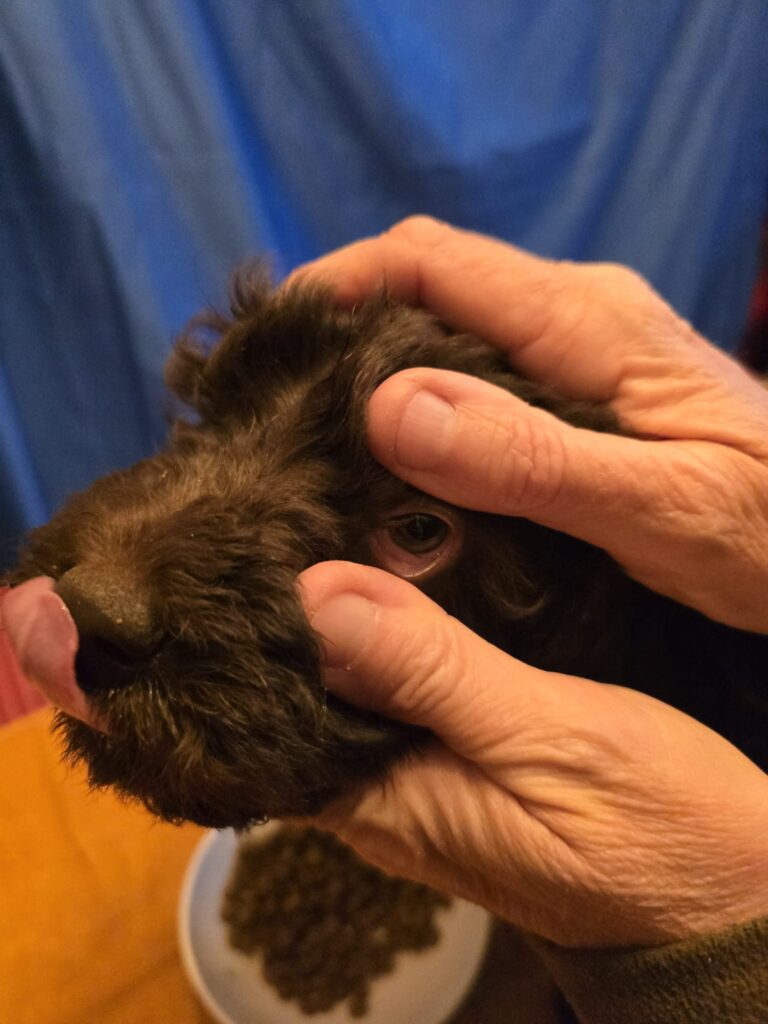
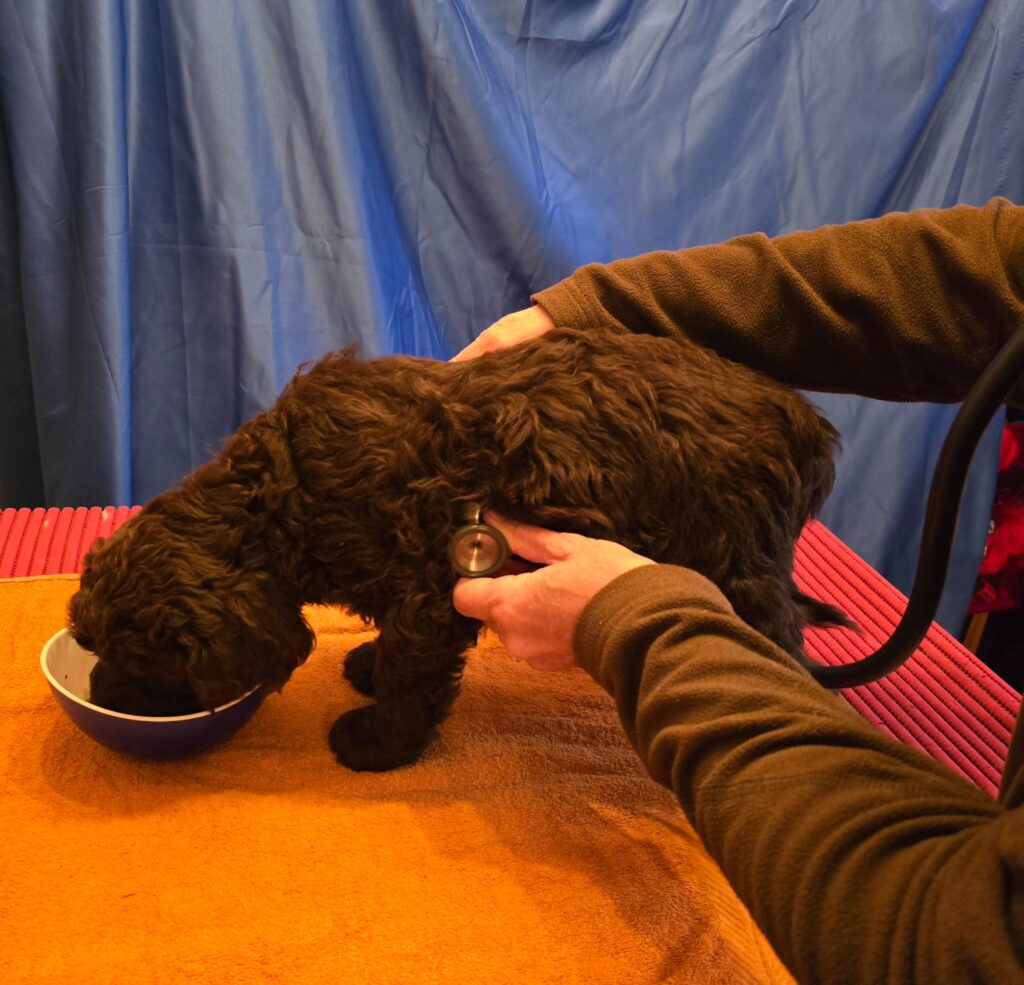
As with all of my litters, a temperature-sensing microchip was used during the microchipping process. In addition to storing the puppy’s identification number, this chip also allows the internal body temperature to be measured without the need for a separate thermometer.
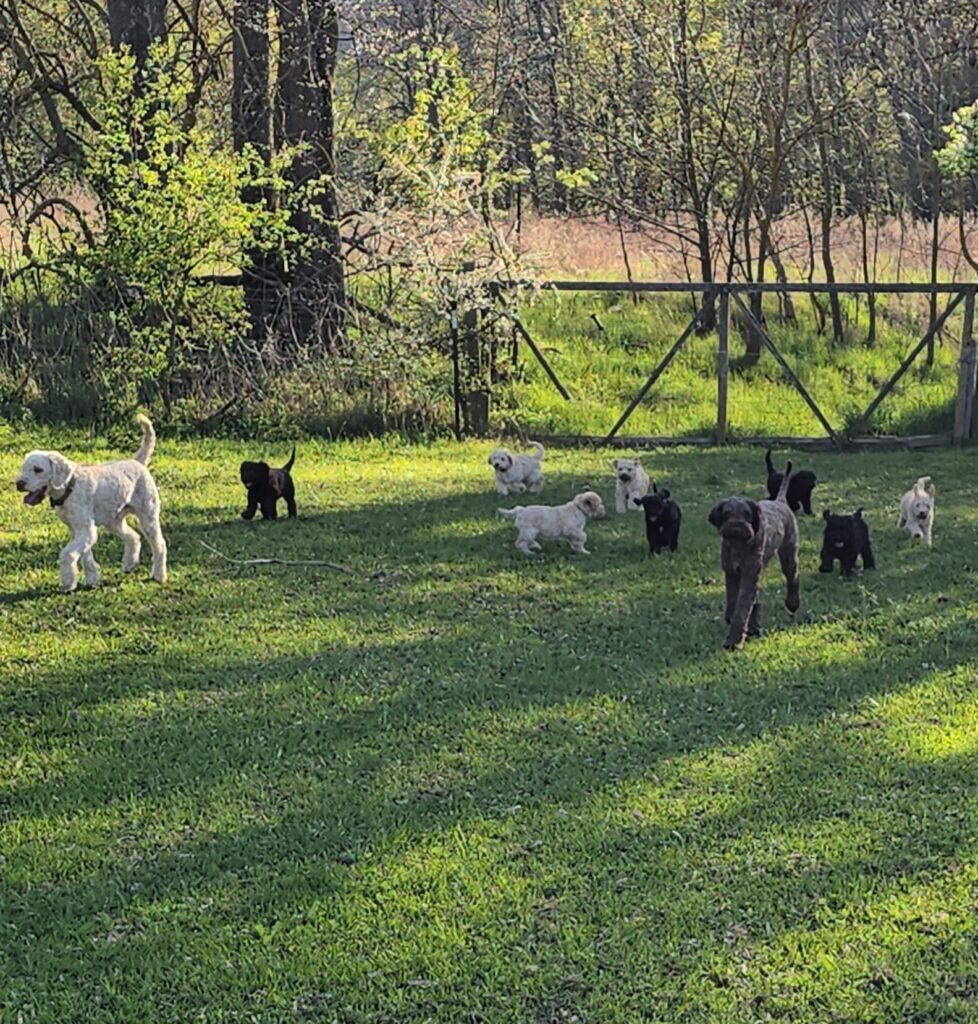
Of course, we continued our daily outings during these final days together. However, the group became smaller with each passing day as more puppies moved on to their new families. Every farewell was special, yet it was wonderful to see how well prepared these little adventurers were as they embarked on the next chapter of their lives.
We sincerely wish all of the puppies and their families a wonderful future together and look forward to following their development in the years to come. 🐾❤️
Because we maintain a WhatsApp group for every litter, we will continue to stay in regular contact with all of our puppy families and remain connected as they grow and thrive.
8th Week
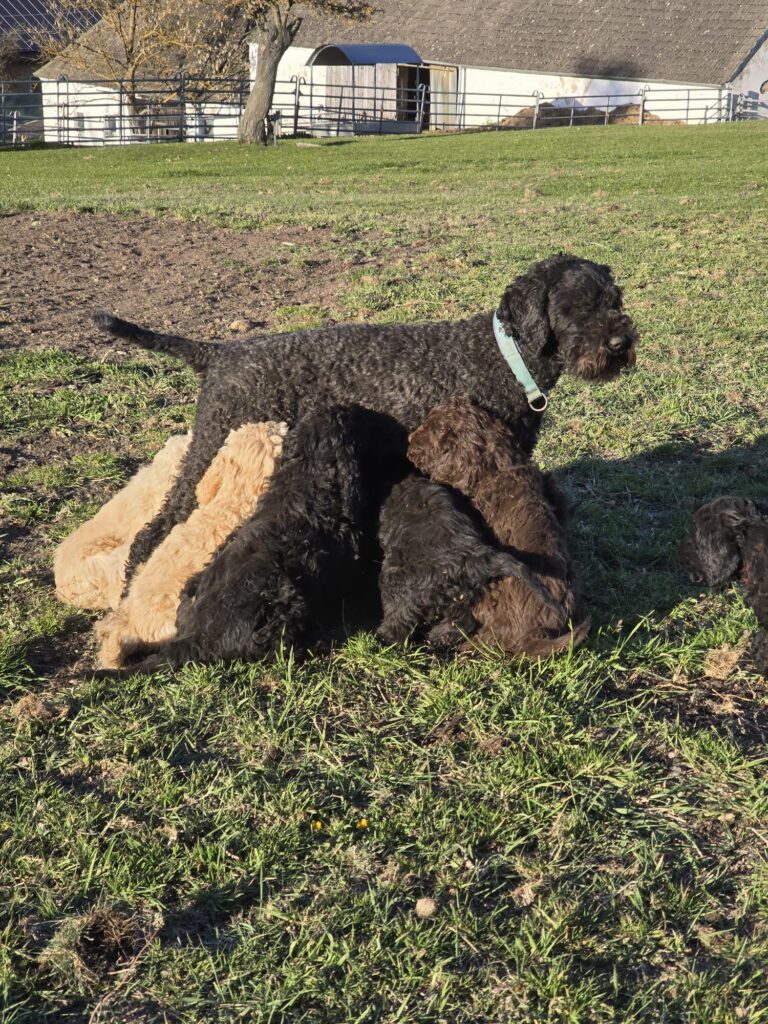
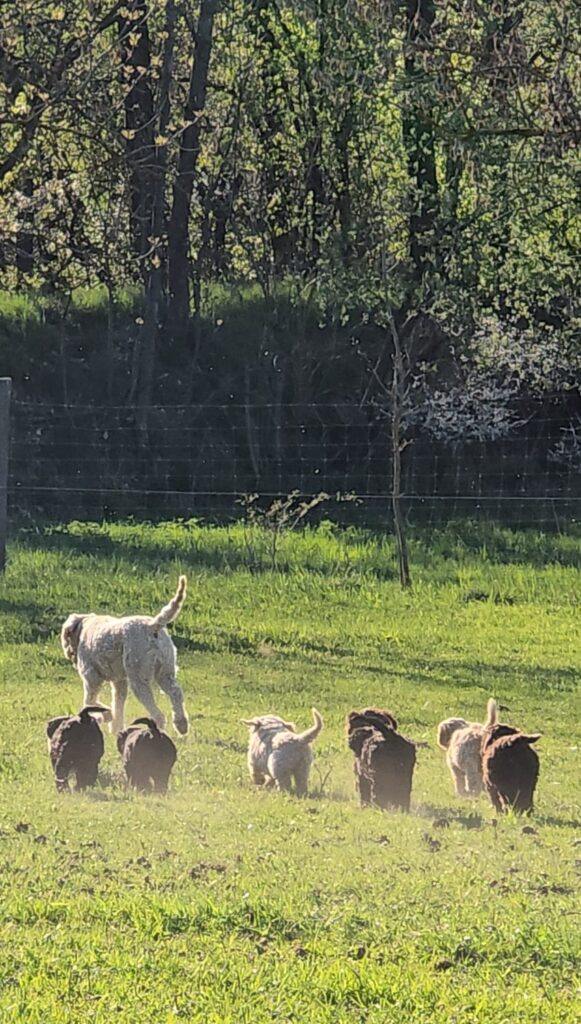
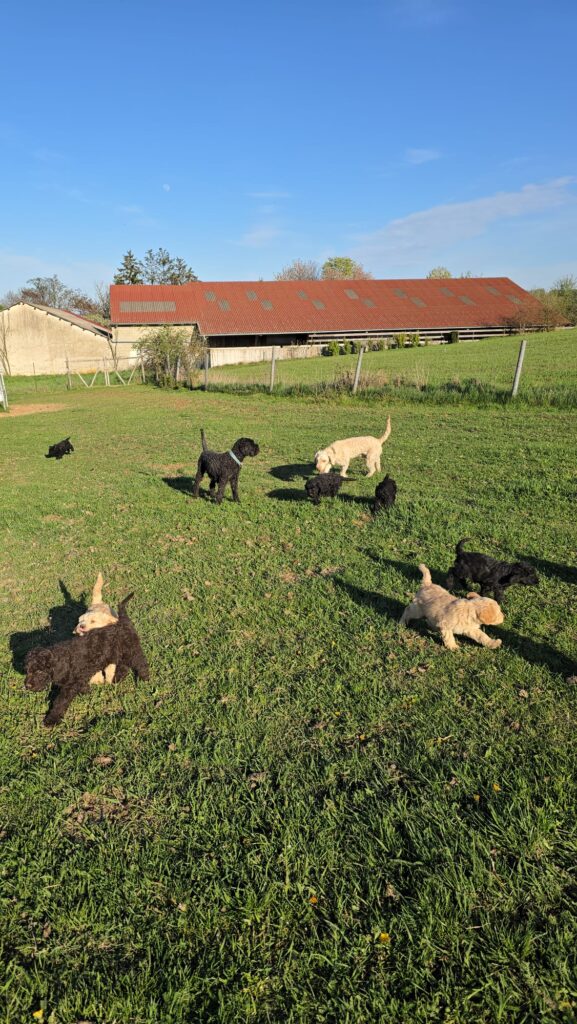
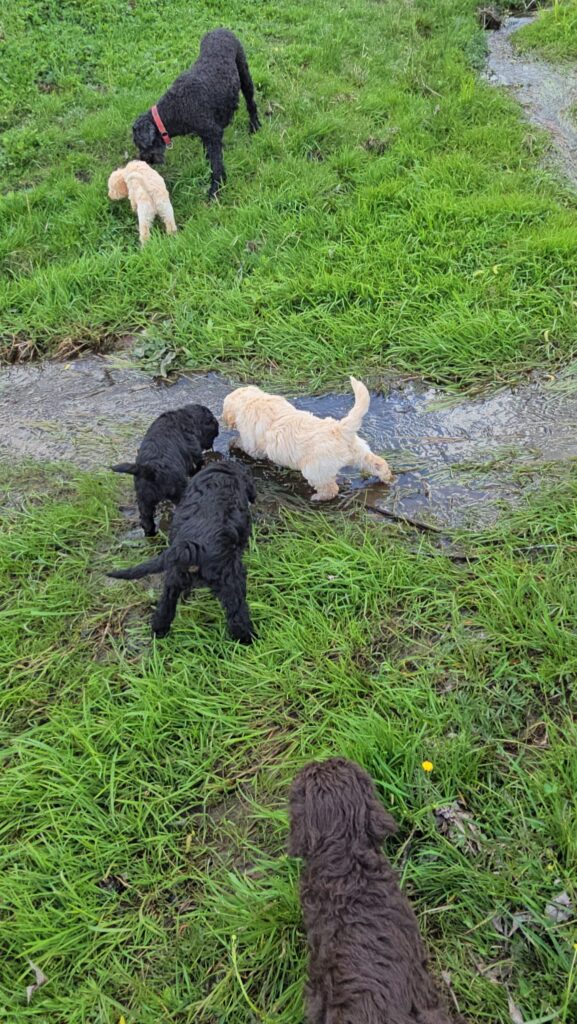
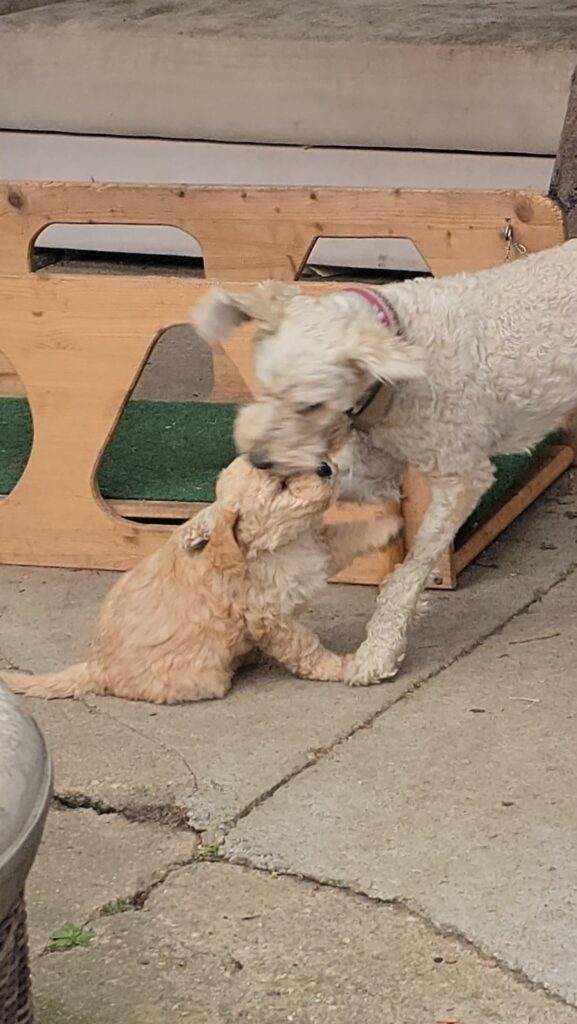
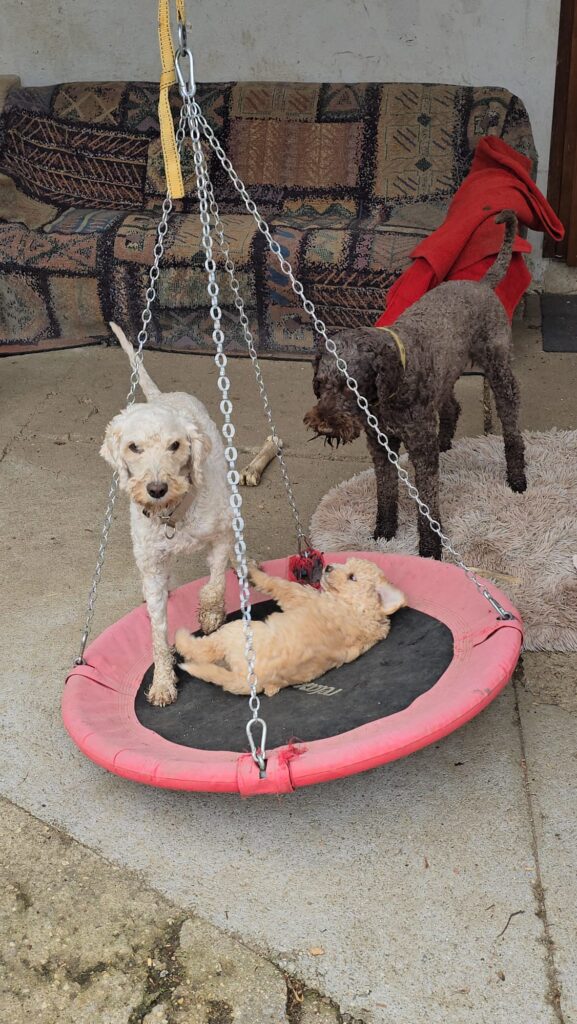
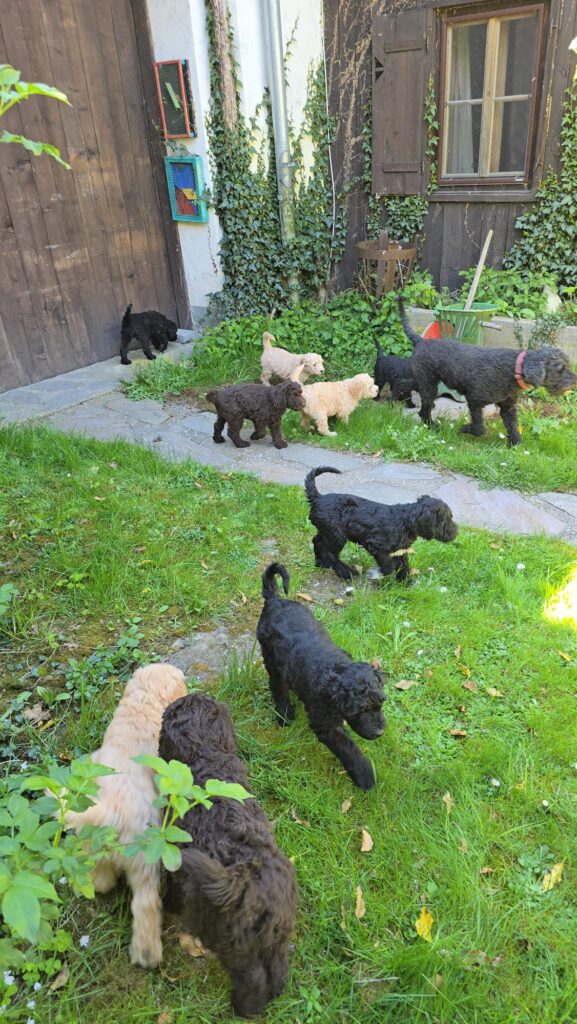
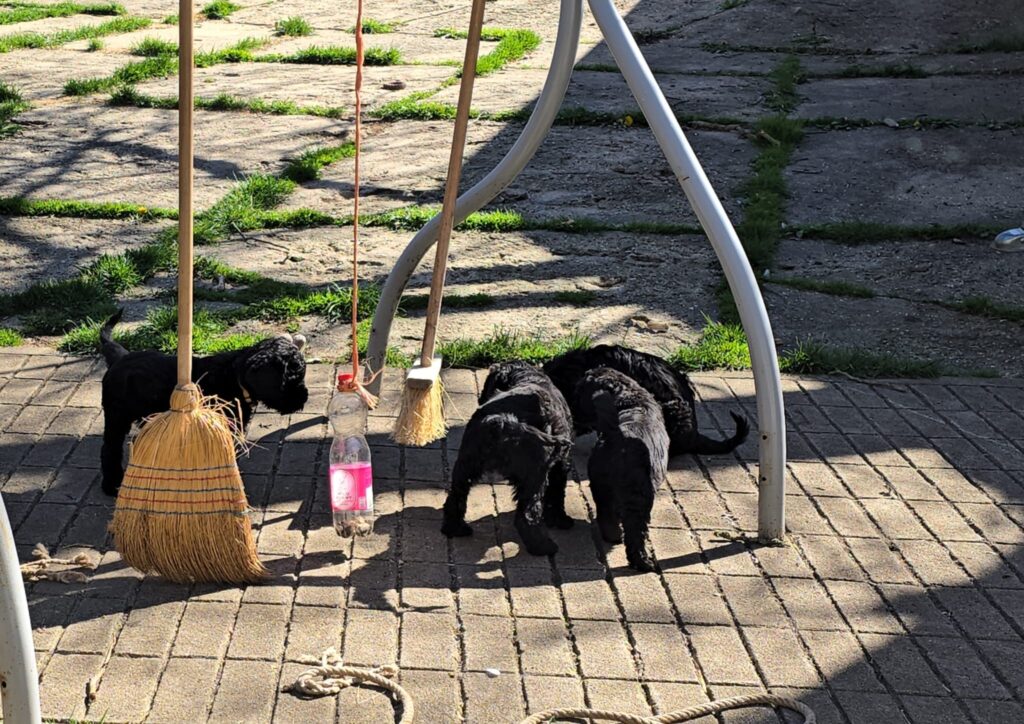
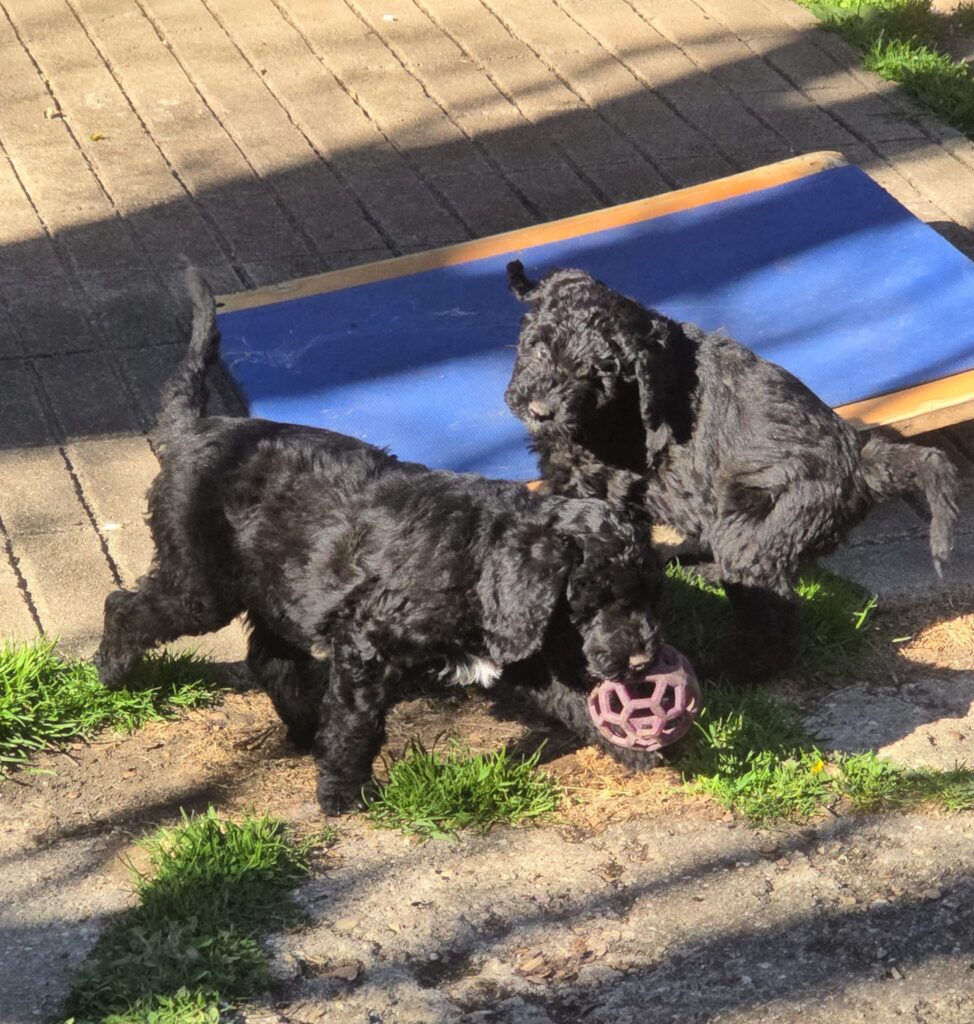
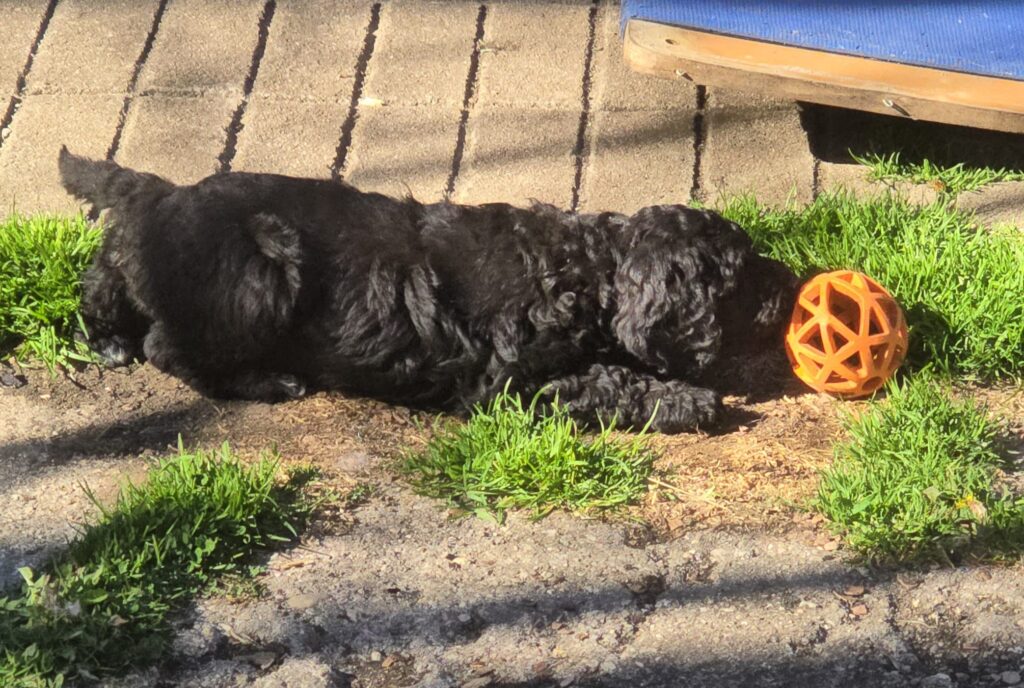
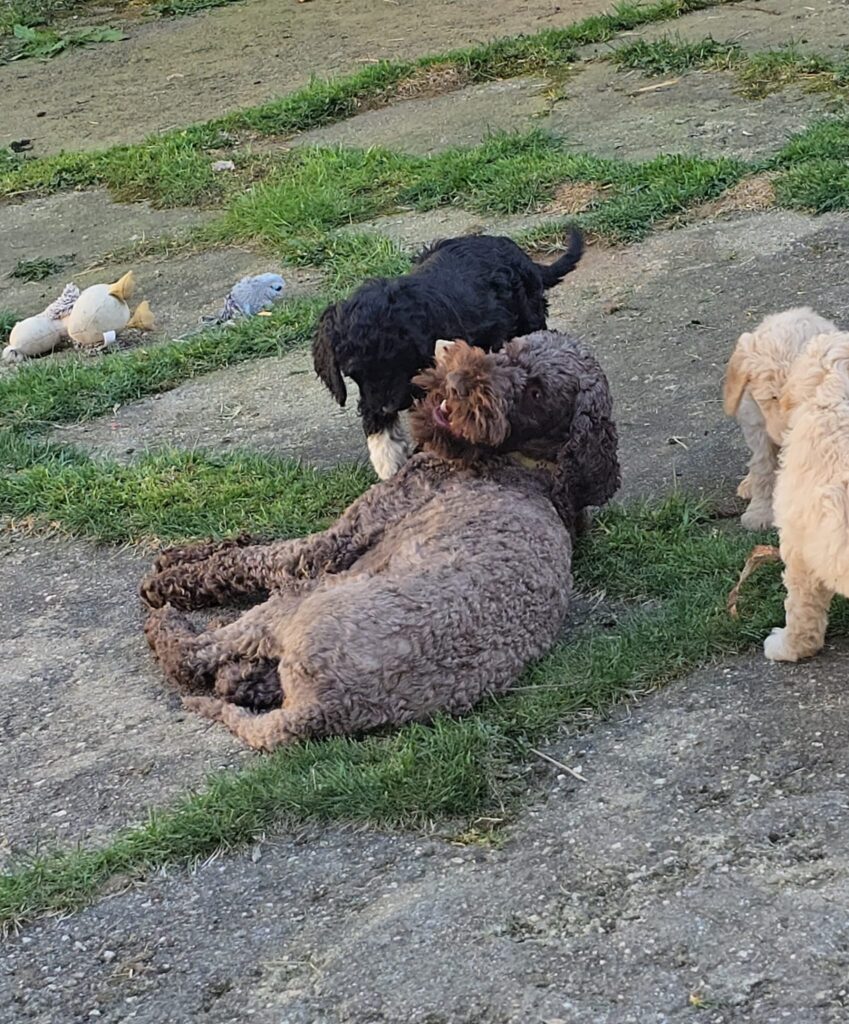
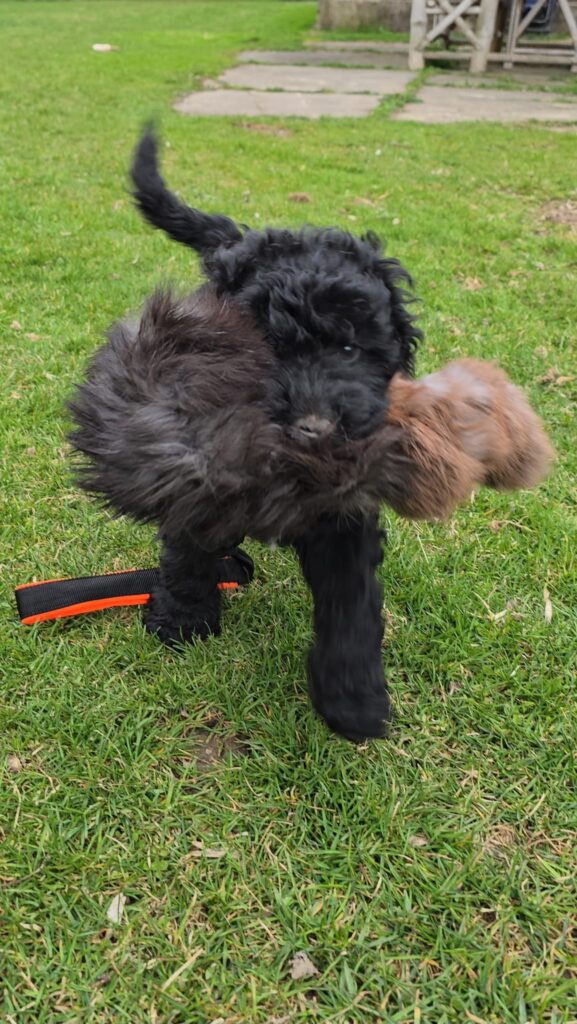
This week, the adventure of socialization continued with many new experiences and daily outings. The puppies especially enjoyed playing in the stream and exploring the paddocks. With great curiosity, they discovered their surroundings and gained valuable new experiences along the way.
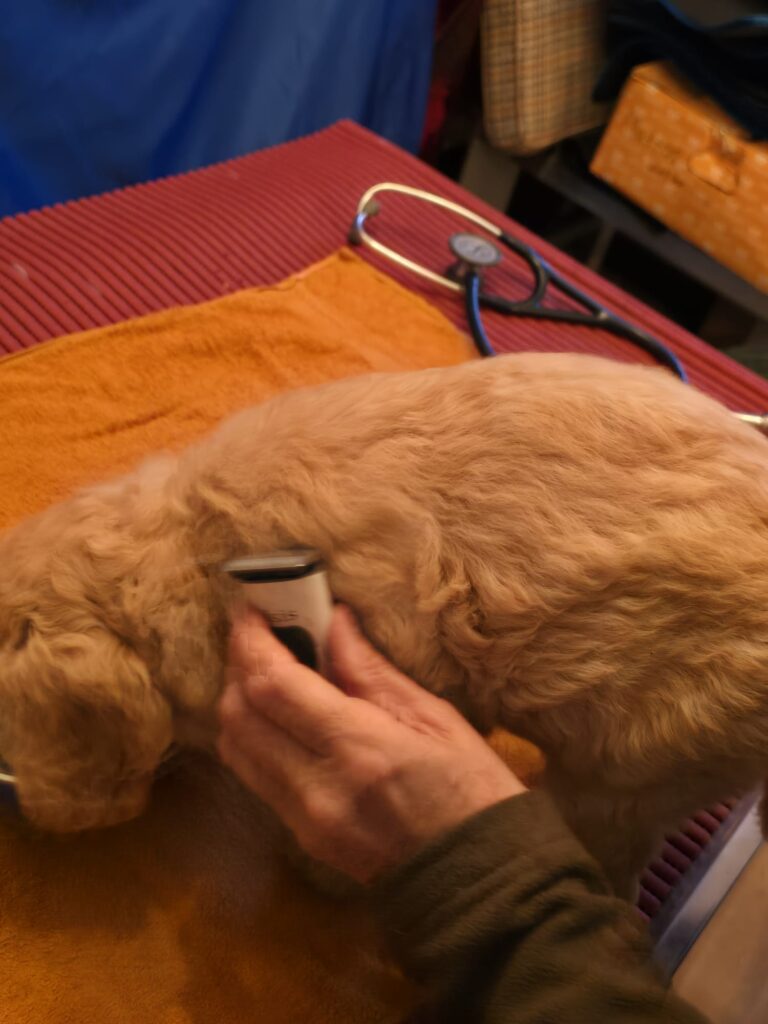
Of course, exposure to everyday noises also remained an important part of their routine. In addition to the grooming clippers, the puppies became familiar with the vacuum cleaner, various kitchen appliances, the lawn mower, and even bicycles. Through regular and positive exposure, they are becoming increasingly confident and relaxed when encountering a wide variety of environmental stimuli.
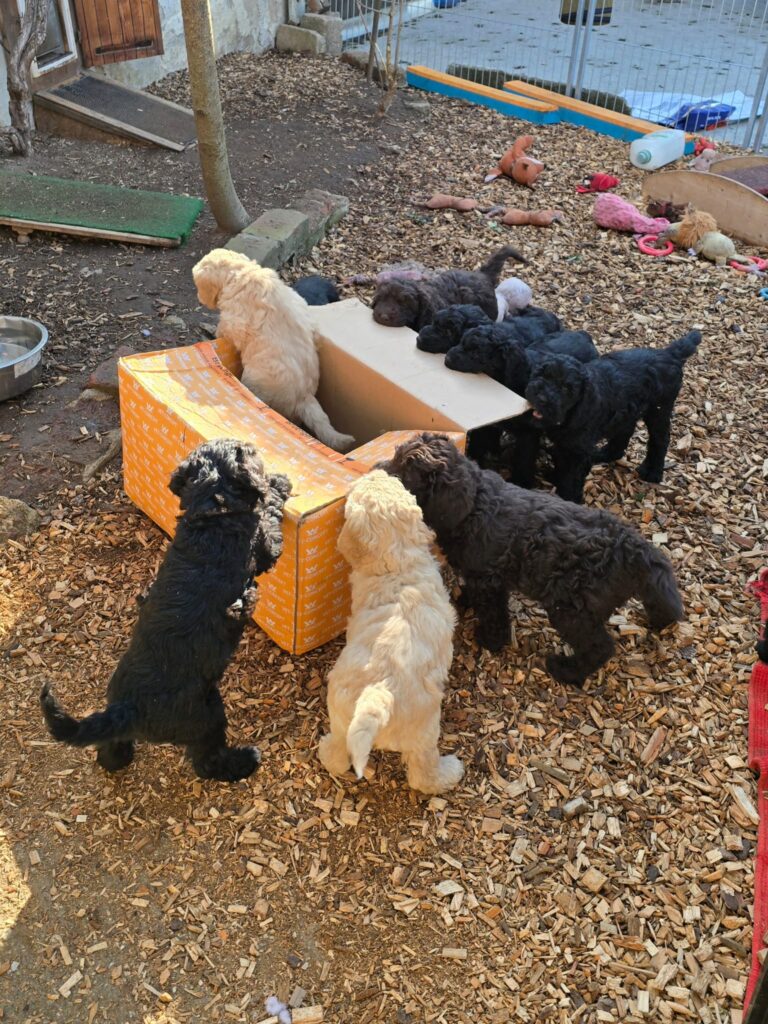
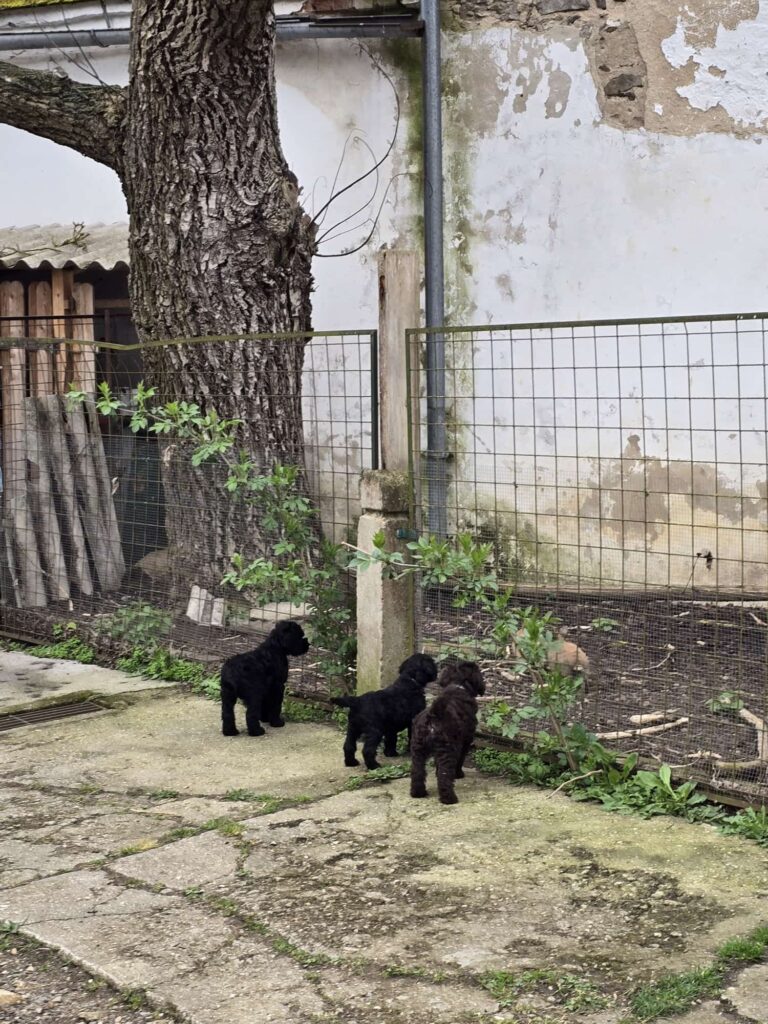
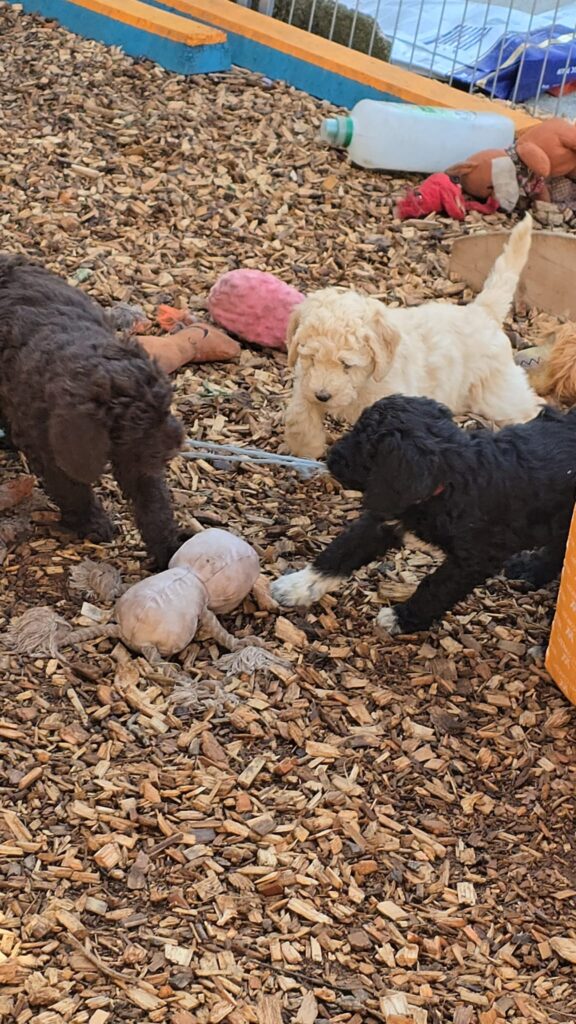
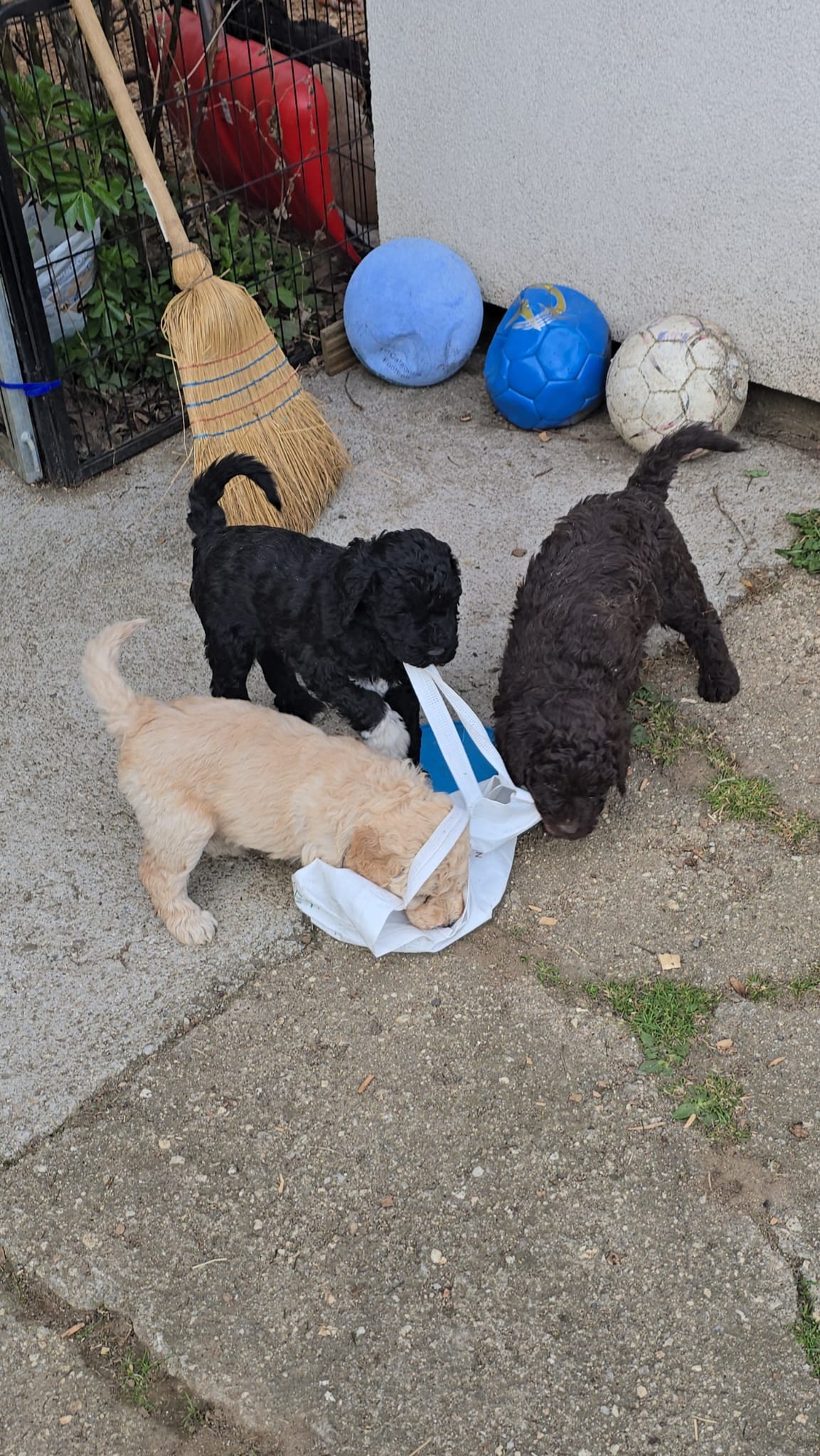
The rabbits also attracted plenty of attention and sparked great interest among the puppies. Other favorite activities at the moment include tearing apart cardboard boxes and engaging in enthusiastic tug games, where they happily test their strength and playfulness.
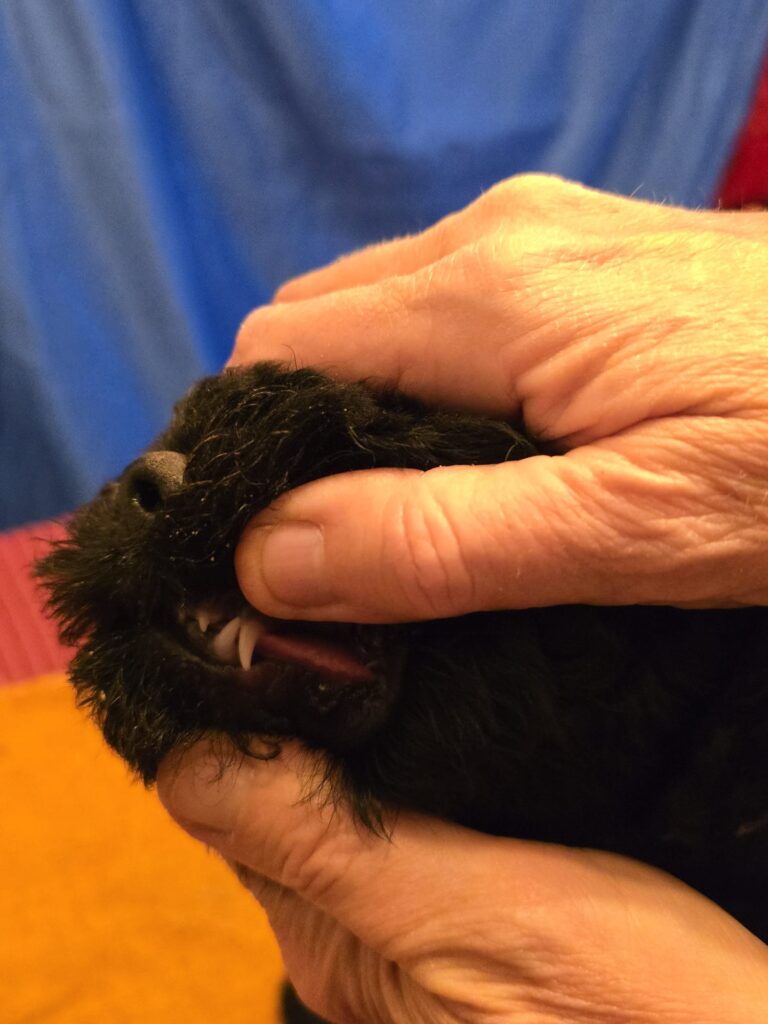
An important milestone was also on this week’s schedule: the official litter evaluation, including vaccinations, microchipping, and a blood sample for DNA testing. The little rascals handled this challenge brilliantly and remained remarkably calm and brave throughout the process.
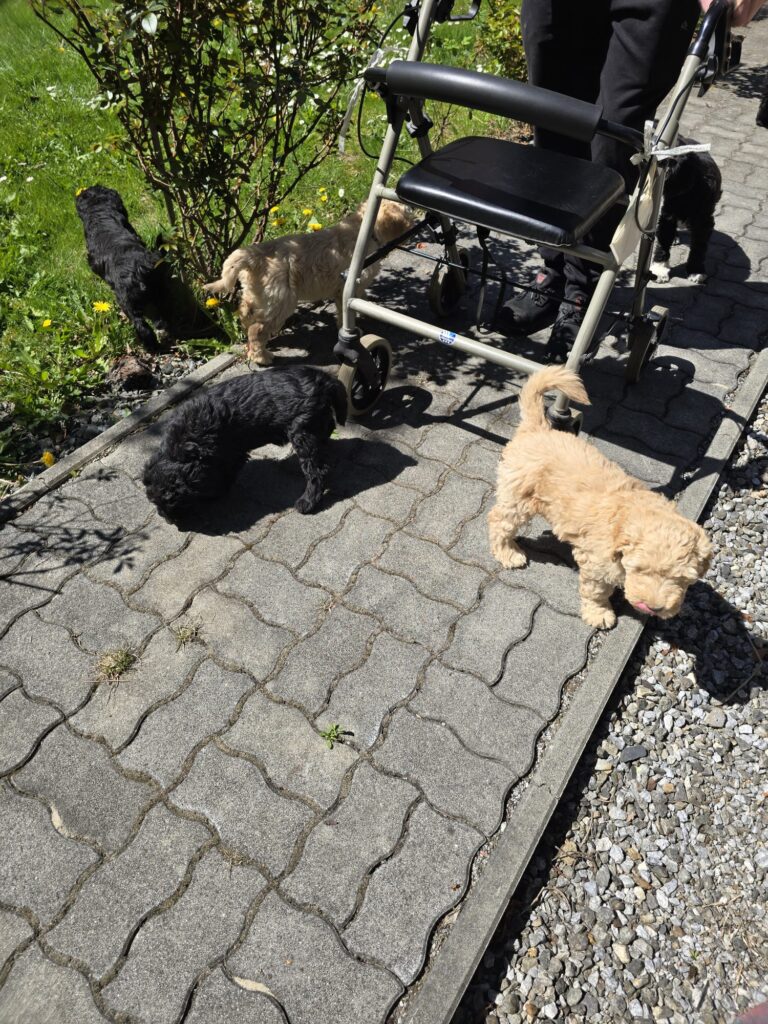
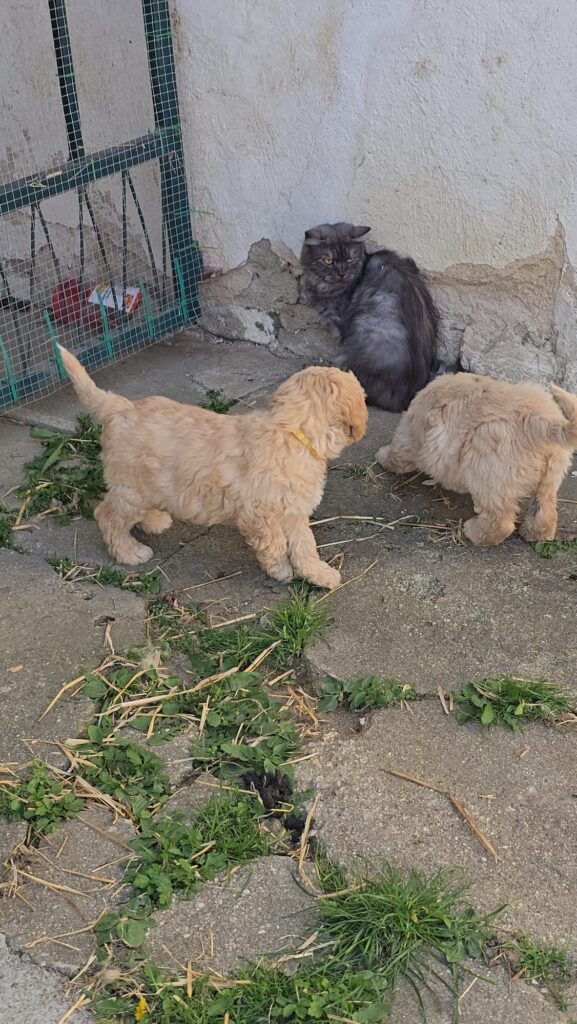
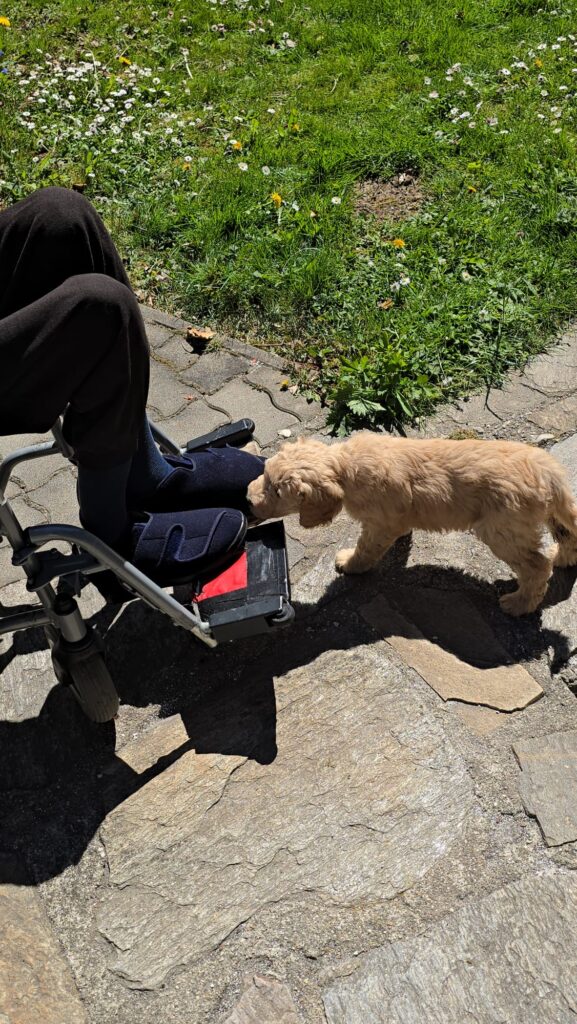
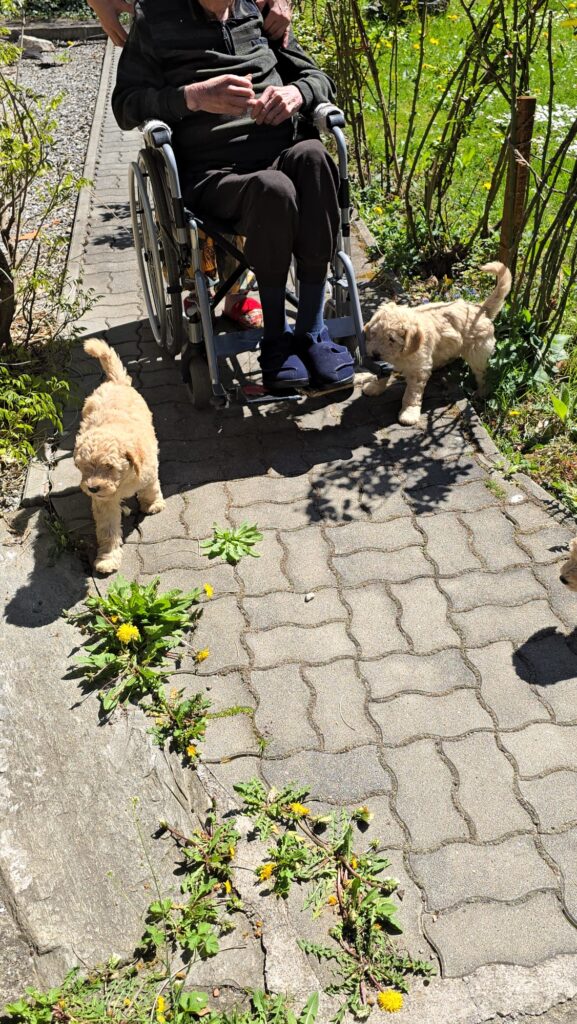
The week concluded with their second car ride. This time, our destination was my parents’ home. Once again, many new experiences awaited the puppies, including encounters with a wheelchair and a walker. These unfamiliar objects were examined with curiosity and accepted without hesitation.
It is wonderful to see how confidently and openly the puppies approach new situations and how much joy they take in discovering a little more of their world each day. 🐾
7th Week
This week, our puppies took part in their puppy assessments. These tests are always a valuable tool for us, helping us gain an even better understanding of each puppy’s personality and natural traits. This allows us to match the puppies as closely as possible with their future families and create the best conditions for a harmonious life together.
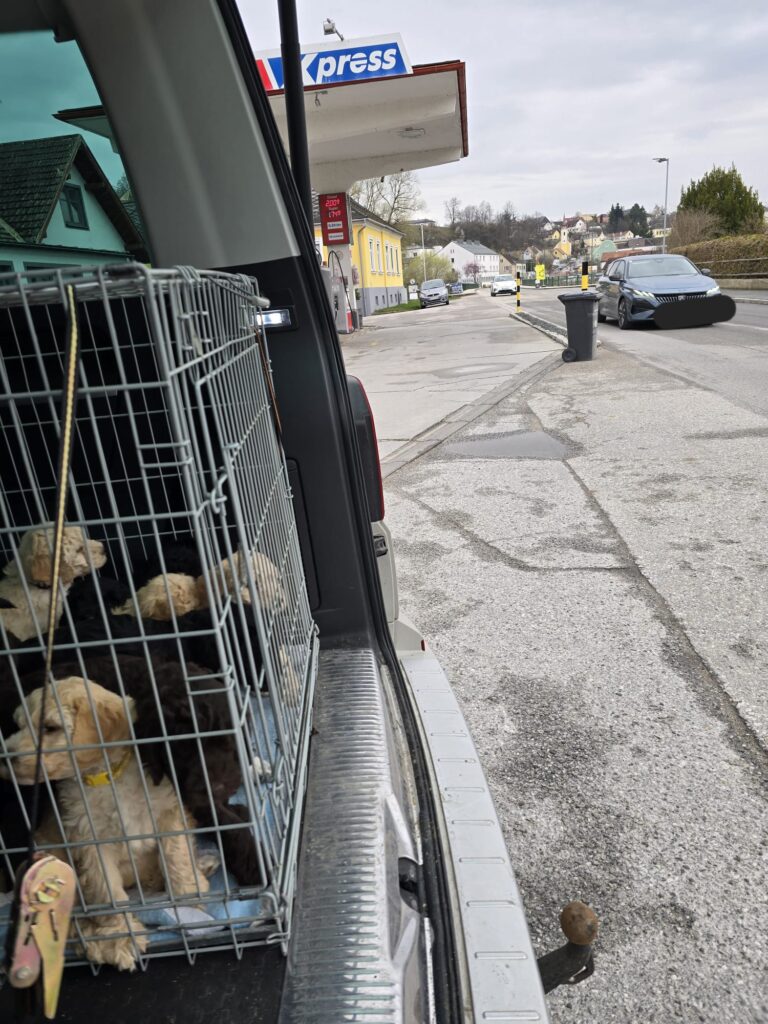
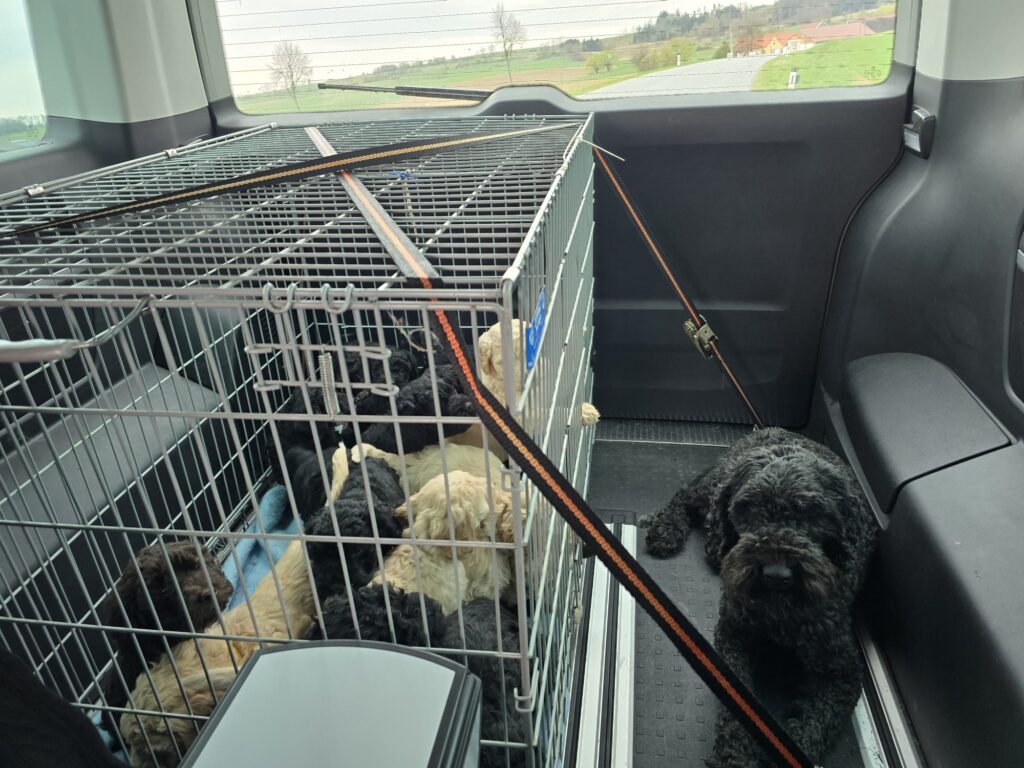
Another highlight was their first trip in the car. The journey was completely relaxed, and all of the puppies handled it effortlessly and without any complaints. A wonderful first step towards future travels and adventures.
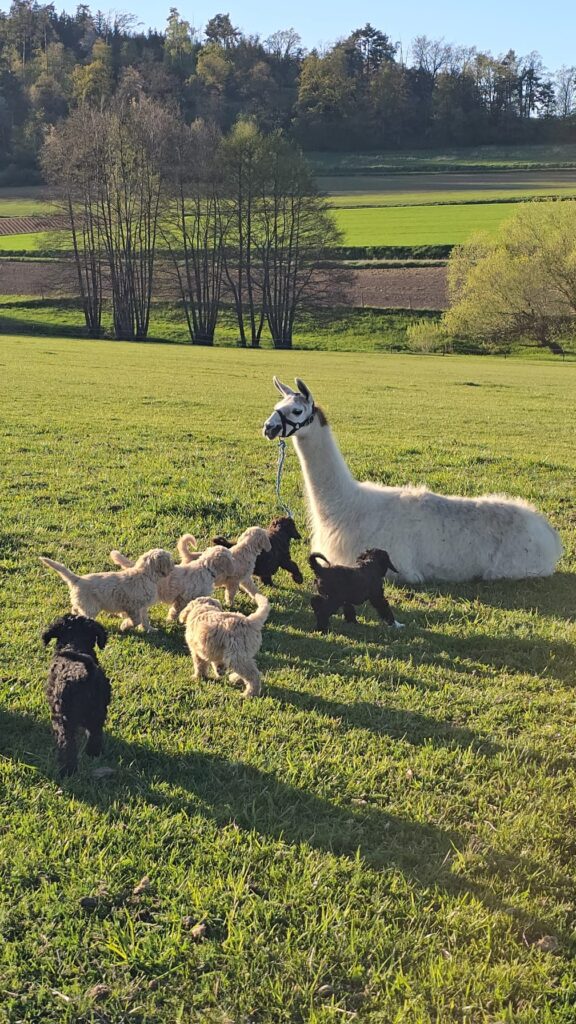
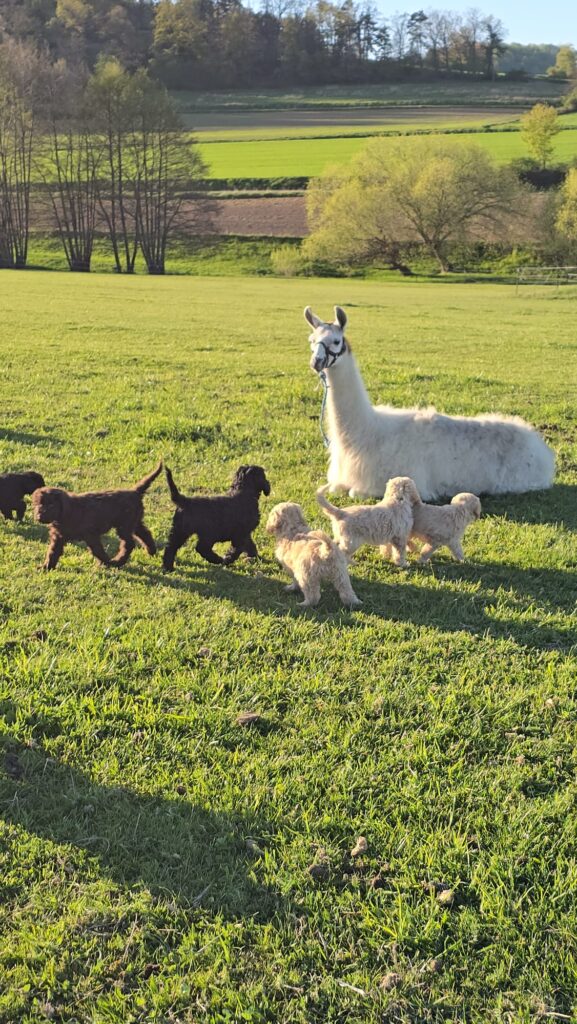
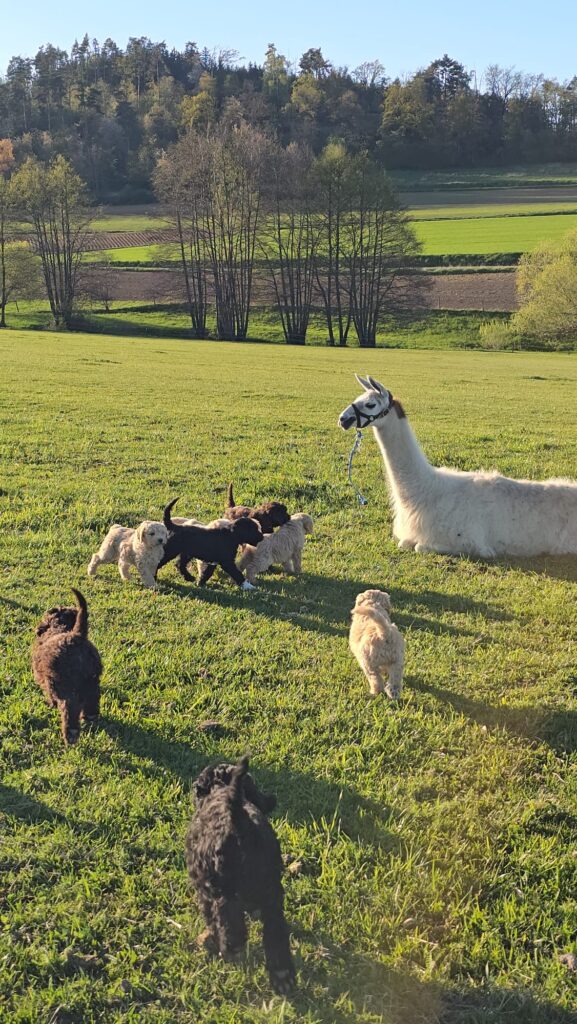
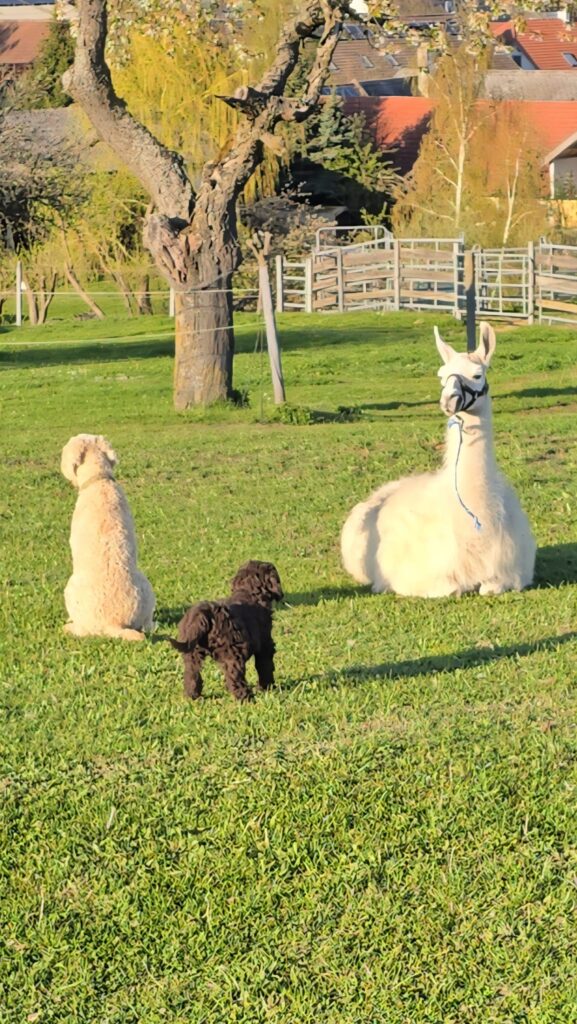
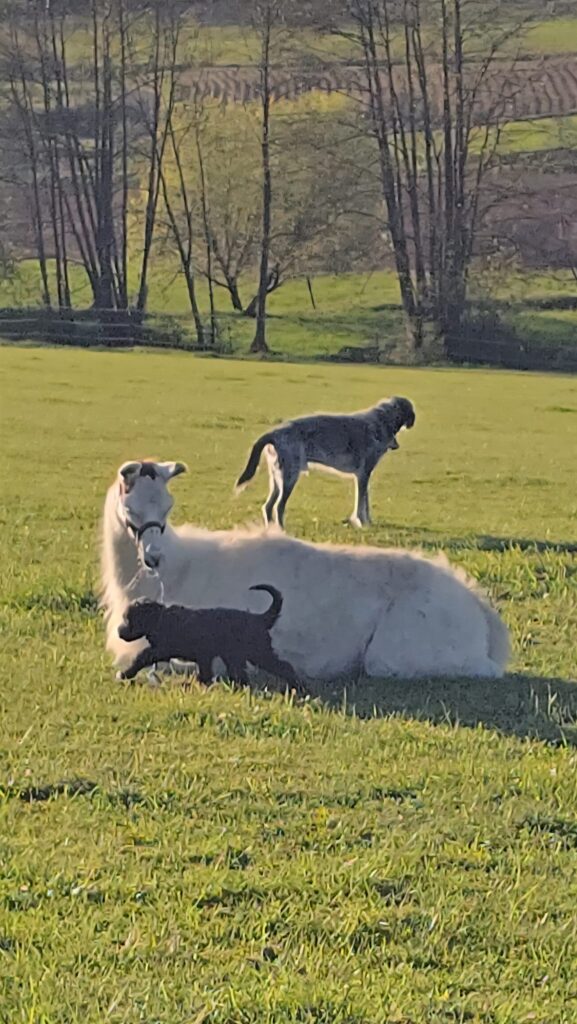
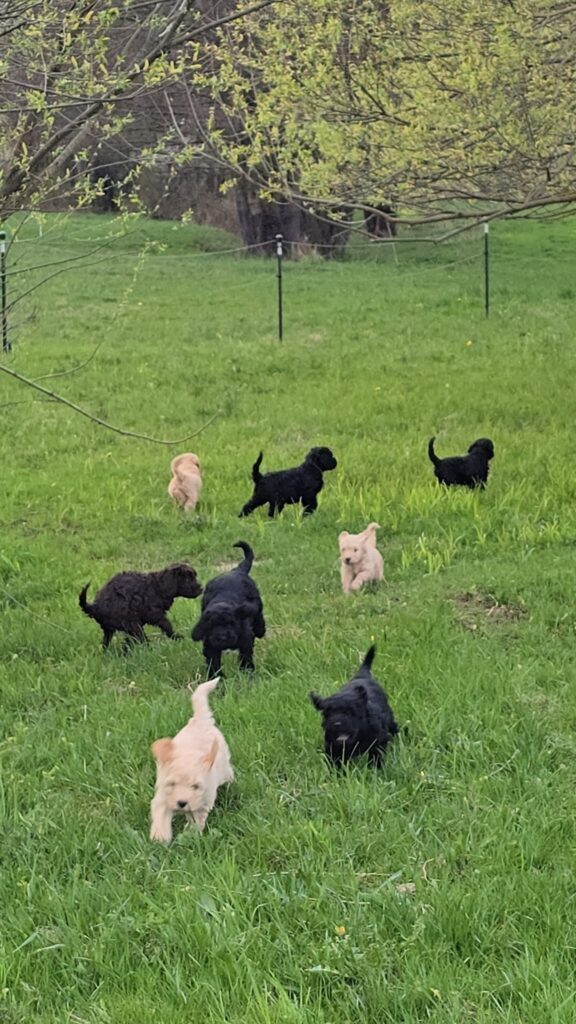
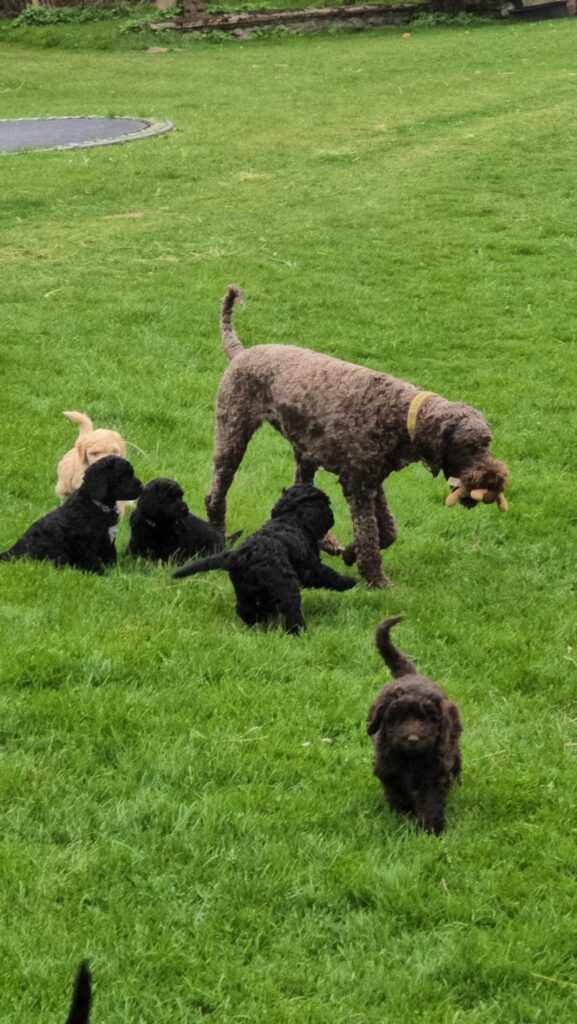
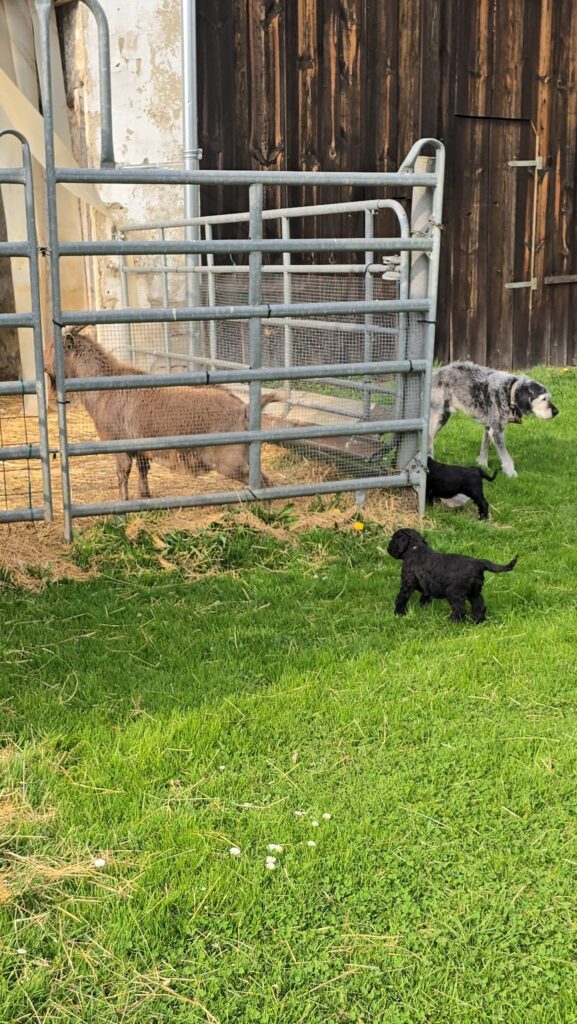
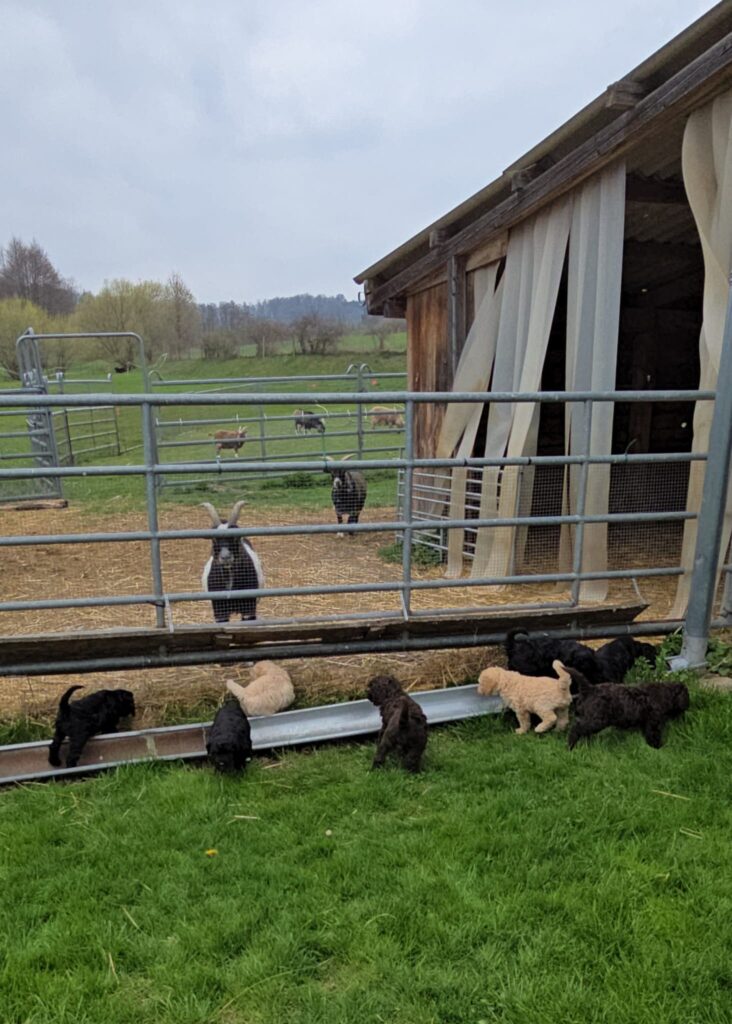
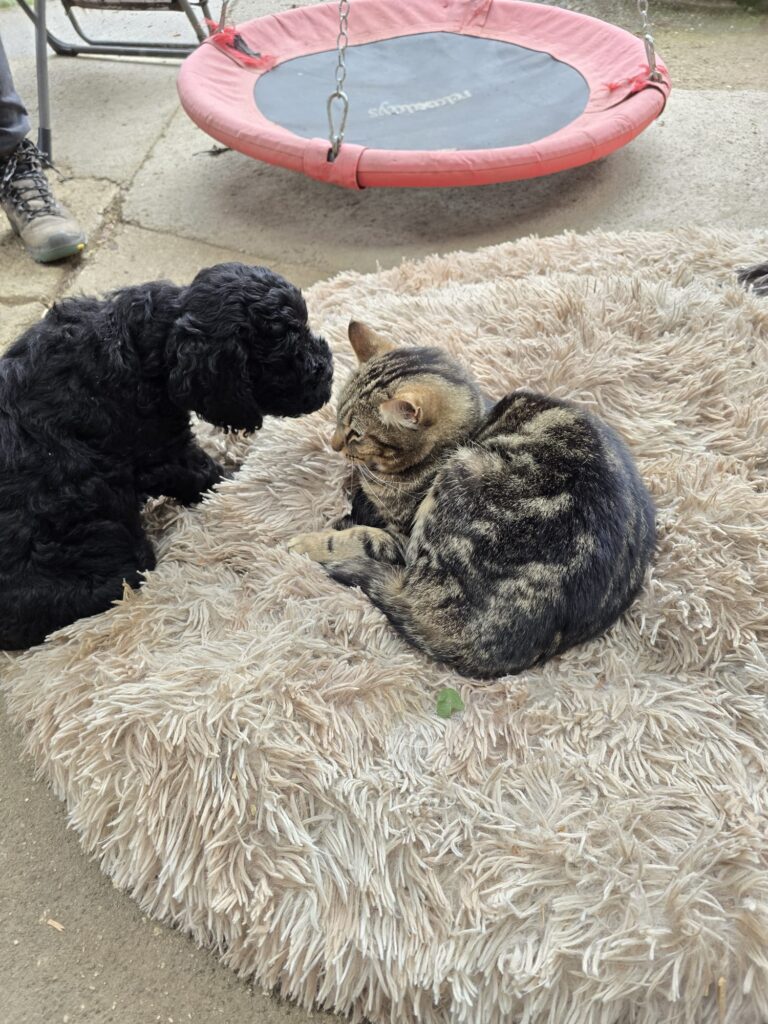
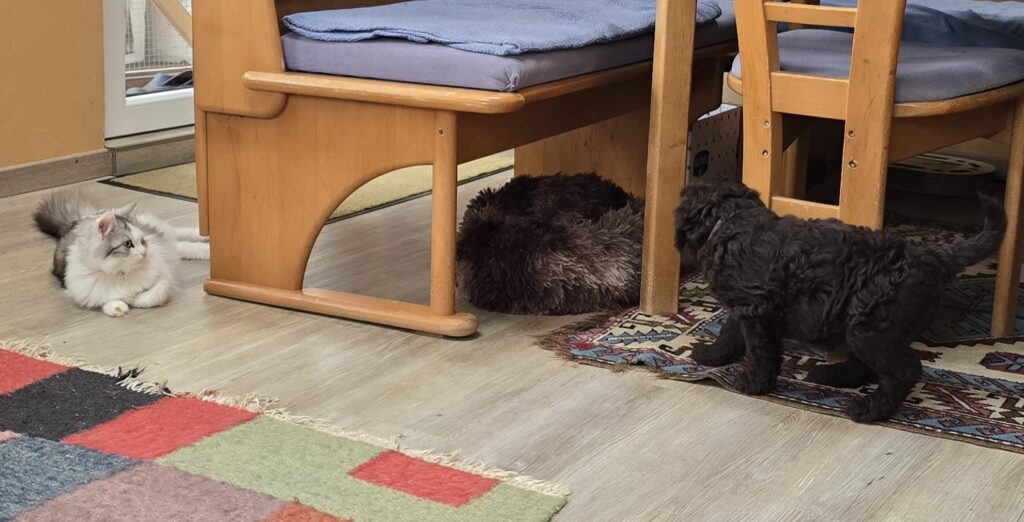
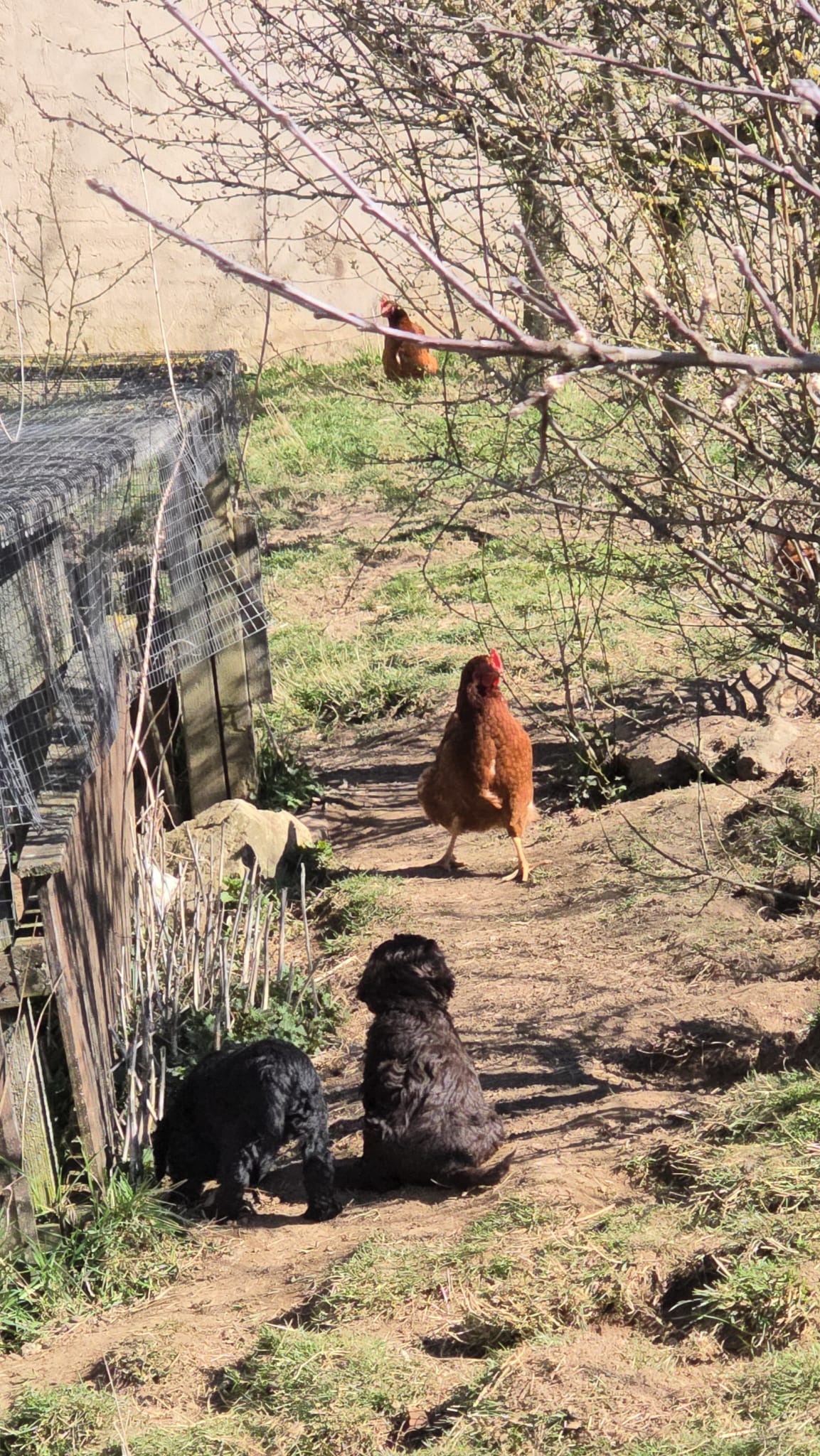
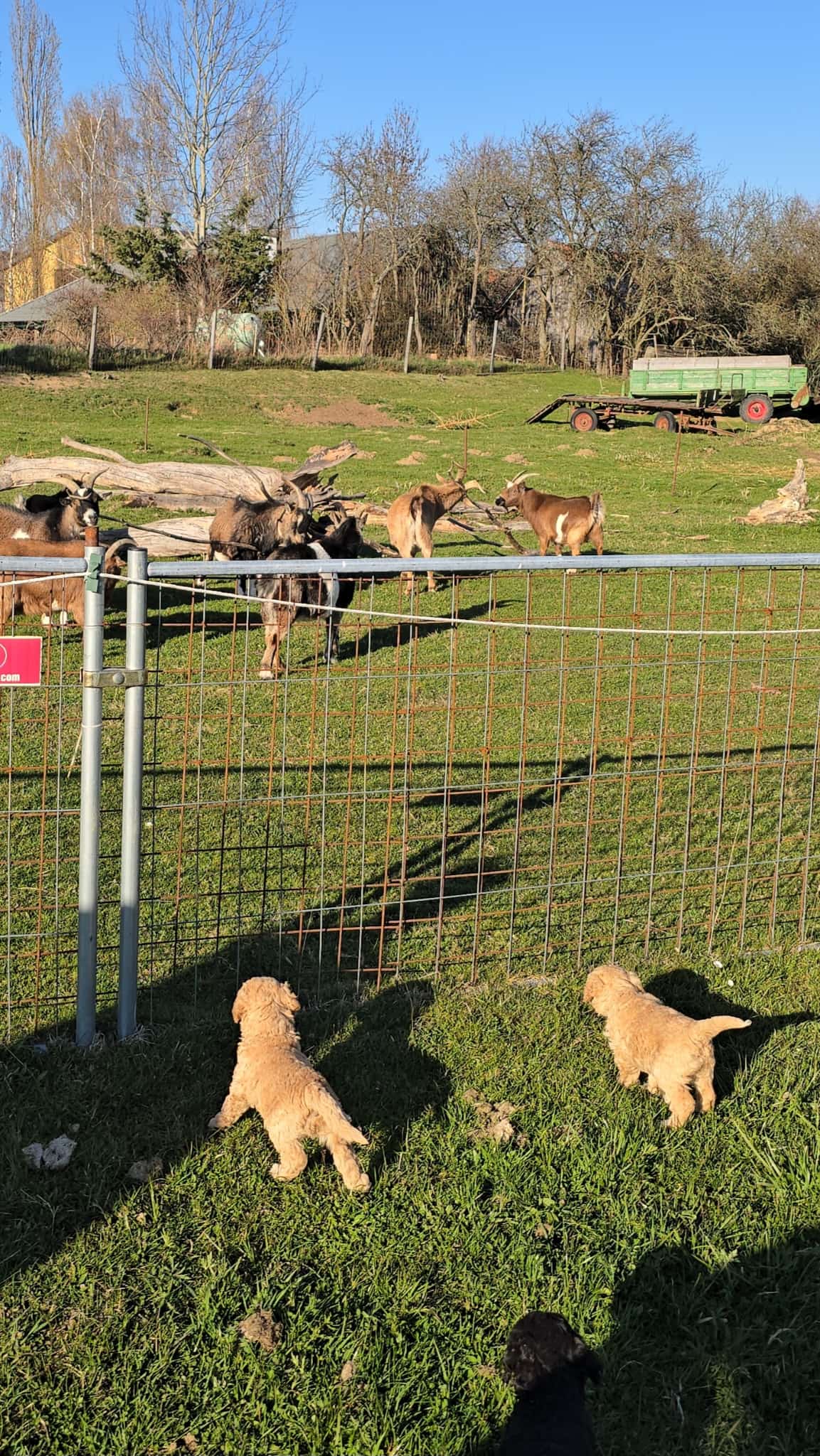
Of course, their socialization program continued as well. The puppies maintained regular contact with our cats and, during outings, had the opportunity to meet the other animals on the farm. They encountered goats, chickens, horses, and our llama—many exciting experiences that will help them remain calm and confident in a variety of situations later in life.
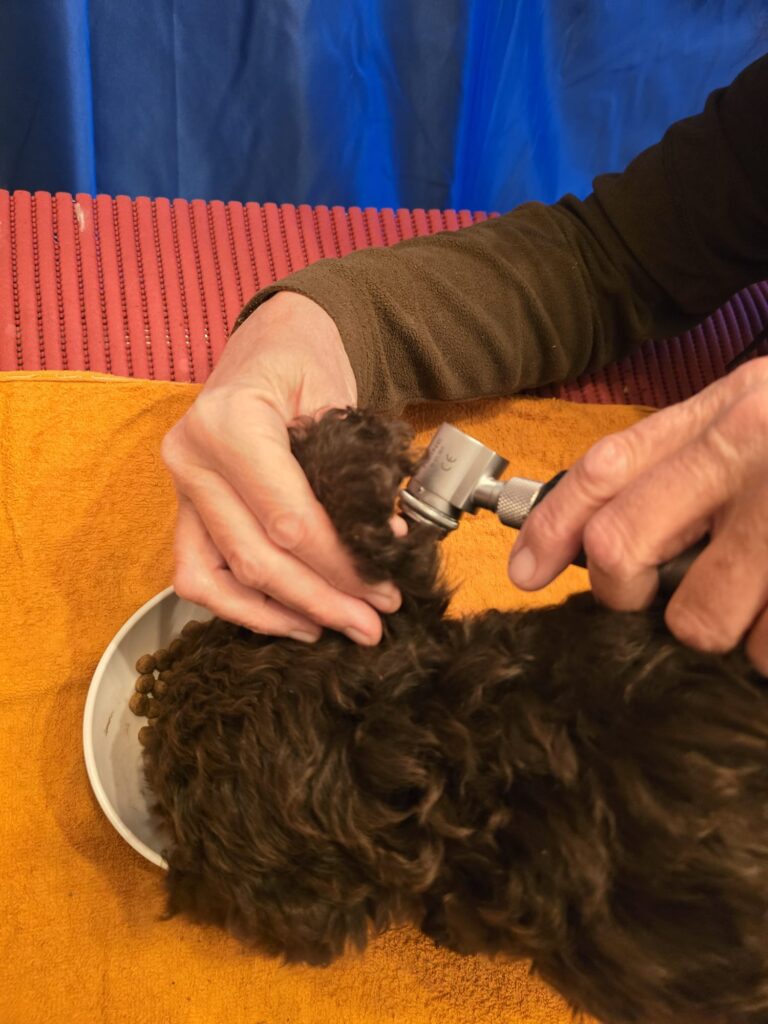
Like all of our puppies, they also participated in medical training. Through positive and playful exercises, they became familiar with different types of examinations and handling. This creates an important foundation for future veterinary visits and grooming procedures, allowing them to experience these situations with as little stress as possible.
We are incredibly proud of the development of these little explorers and are delighted every day to see how curious, open-minded, and confident they are as they discover the world. 🐾
6th Week
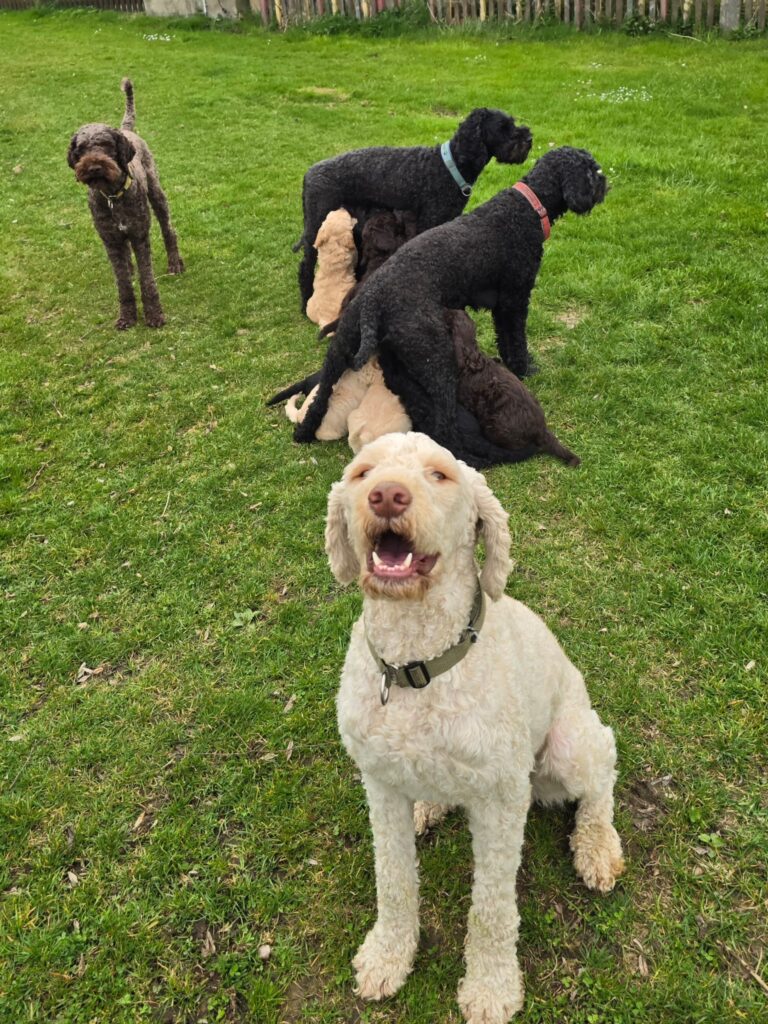
Another exciting week has passed. The puppies are growing and learning at an incredible pace – you can practically watch them develop day by day.
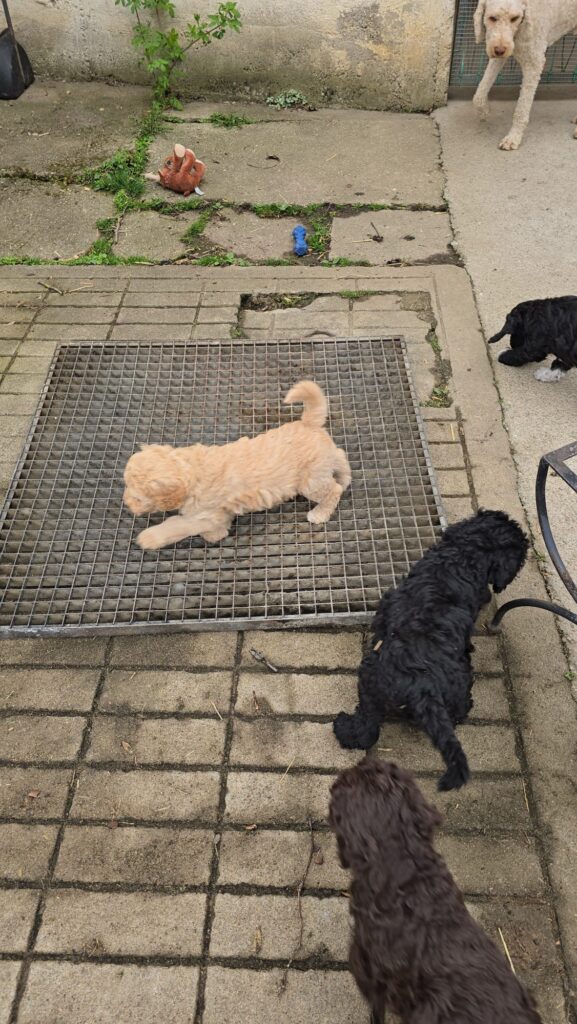
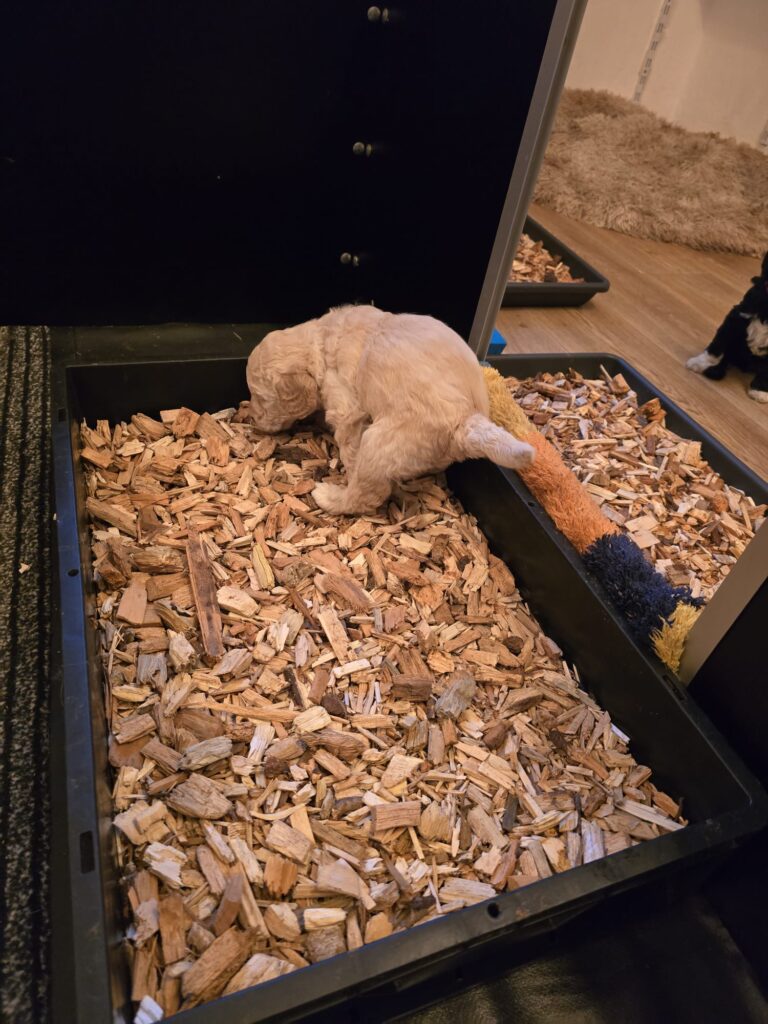
Their nighttime routine is now very well established: they sleep reliably from 11:00 p.m. to 6:00 a.m. If they do need to go during the night, they usually use the box filled with wood chips. Overall, they are already impressively house-trained, as long as they have the opportunity to go in and out freely. If they can’t go outside, they mostly use the designated boxes, with only occasional accidents.
On Monday, all puppies completed their puppy tests. These provide an important foundation for assessing their individual characters, helping me match each puppy with the right family according to their preferences.
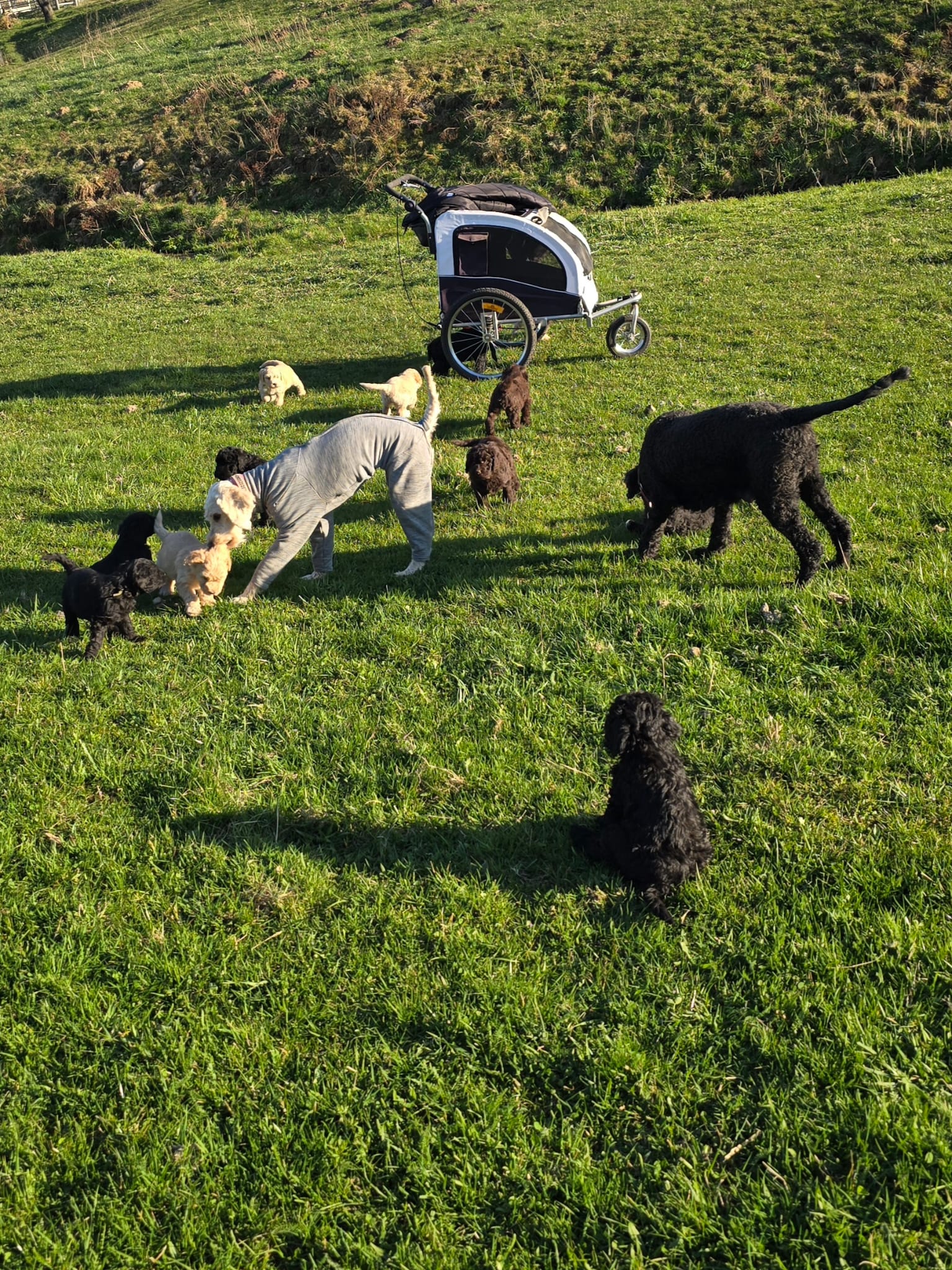
We also continued our socialization program: they have already experienced their first car ride – and not a single one got sick! During the trip, they were also able to observe passing cars. We took more little outings around the farm: visiting the goats, watching the chickens, and of course, they see cats every day.
They are also regularly exposed to everyday noises, such as moving large trash bins. Thanks to frequent visitors, they have already met a wide variety of people – from very young to older, male and female, in all shapes and sizes.
The only thing still missing? A man wearing a hat – but we’ll take care of that soon. 😊
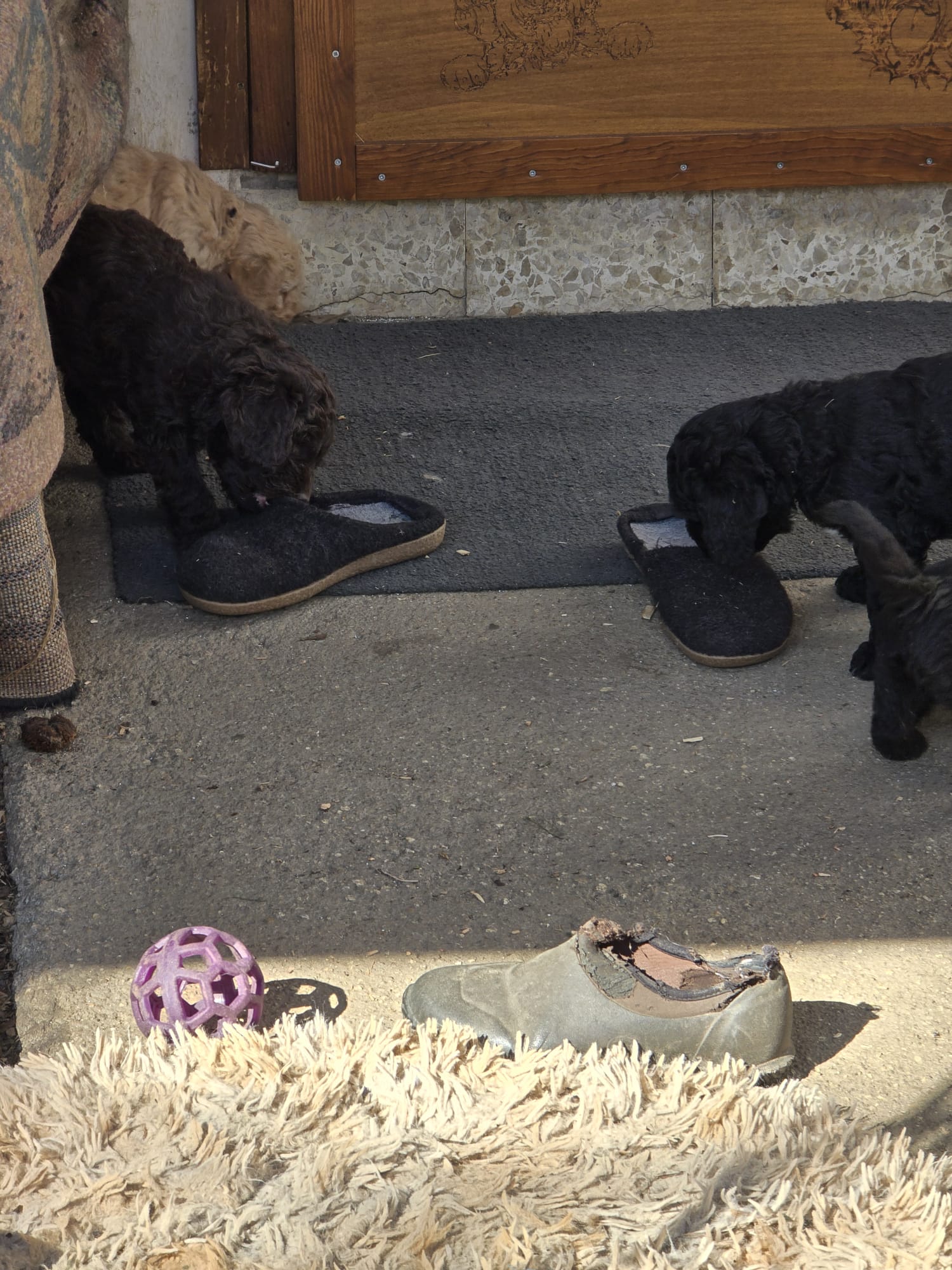
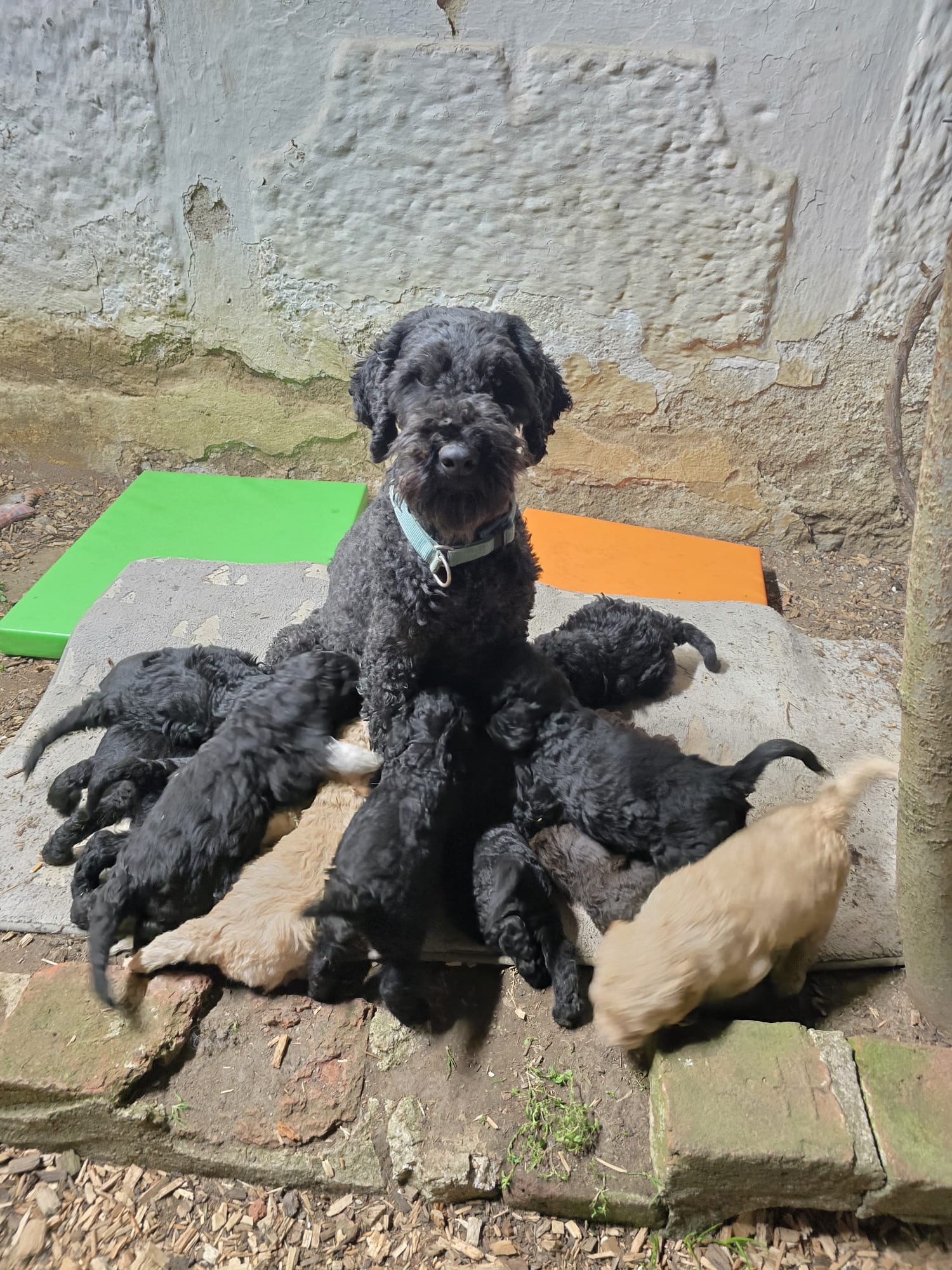
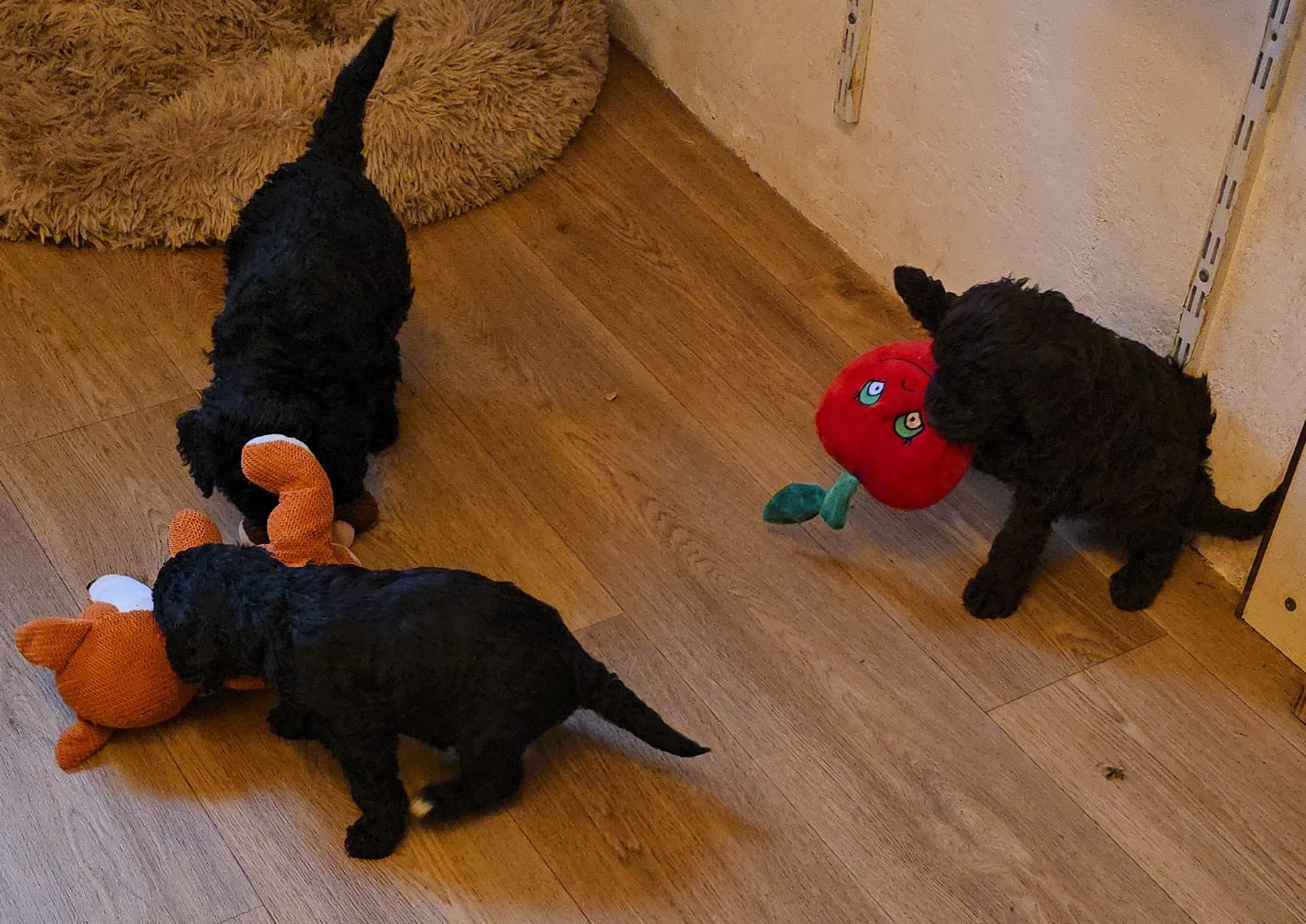
5th Week
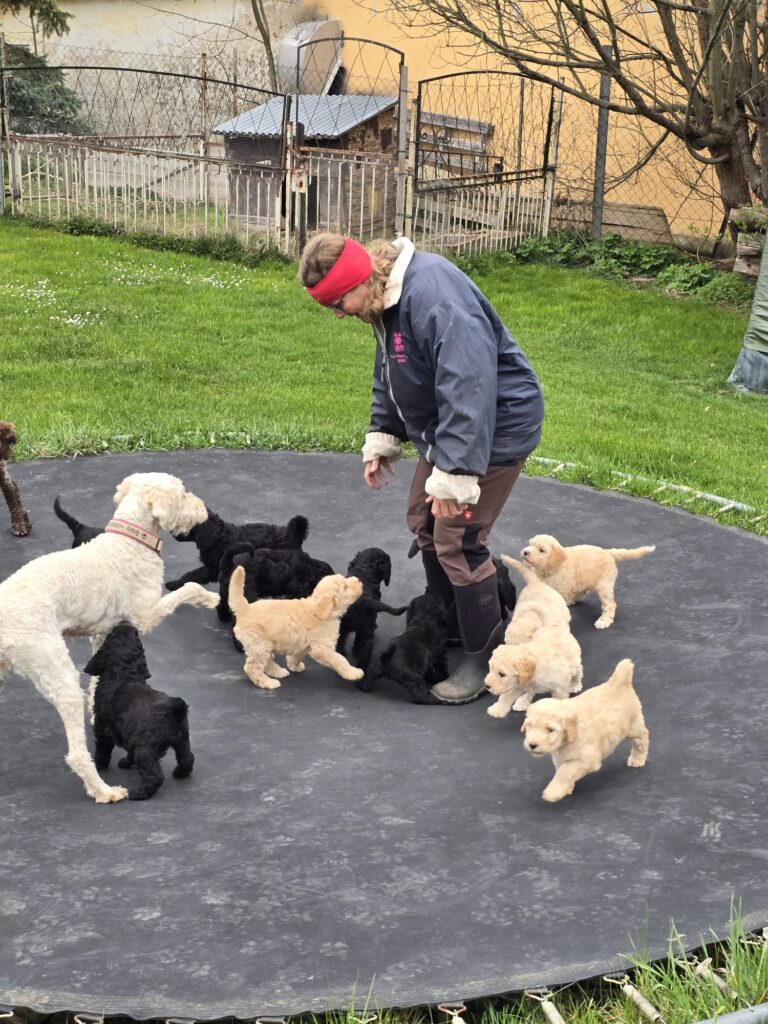
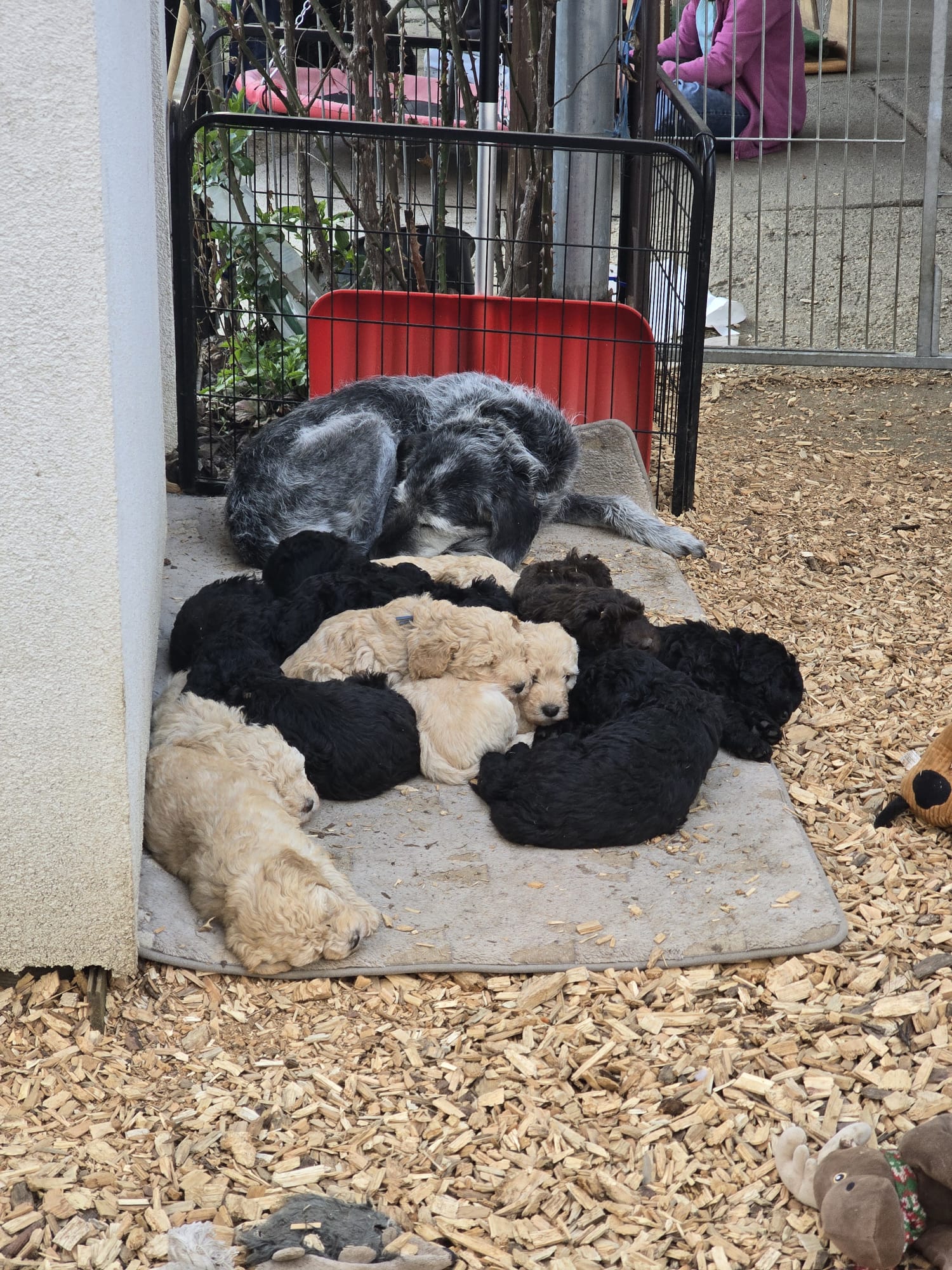
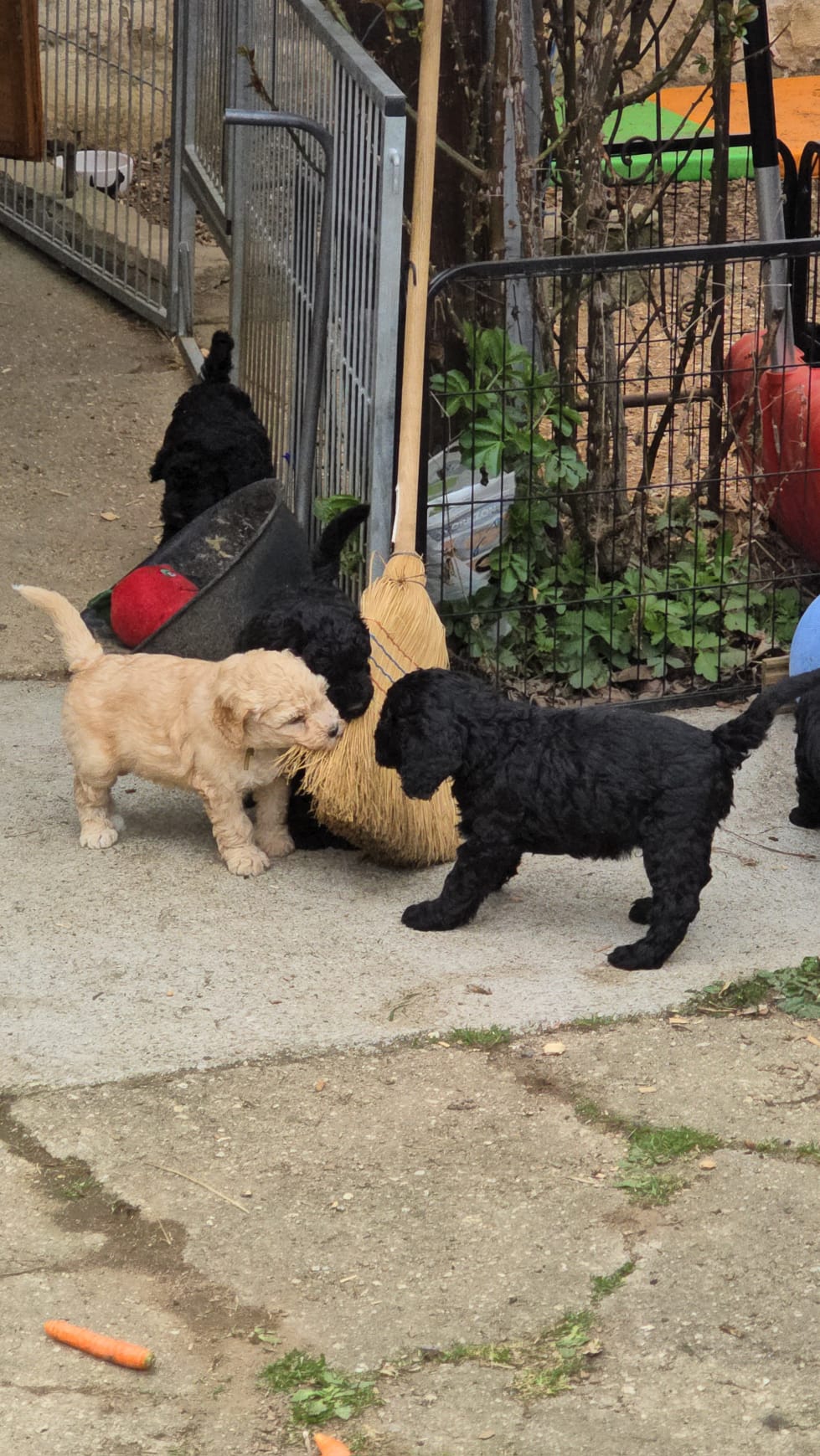
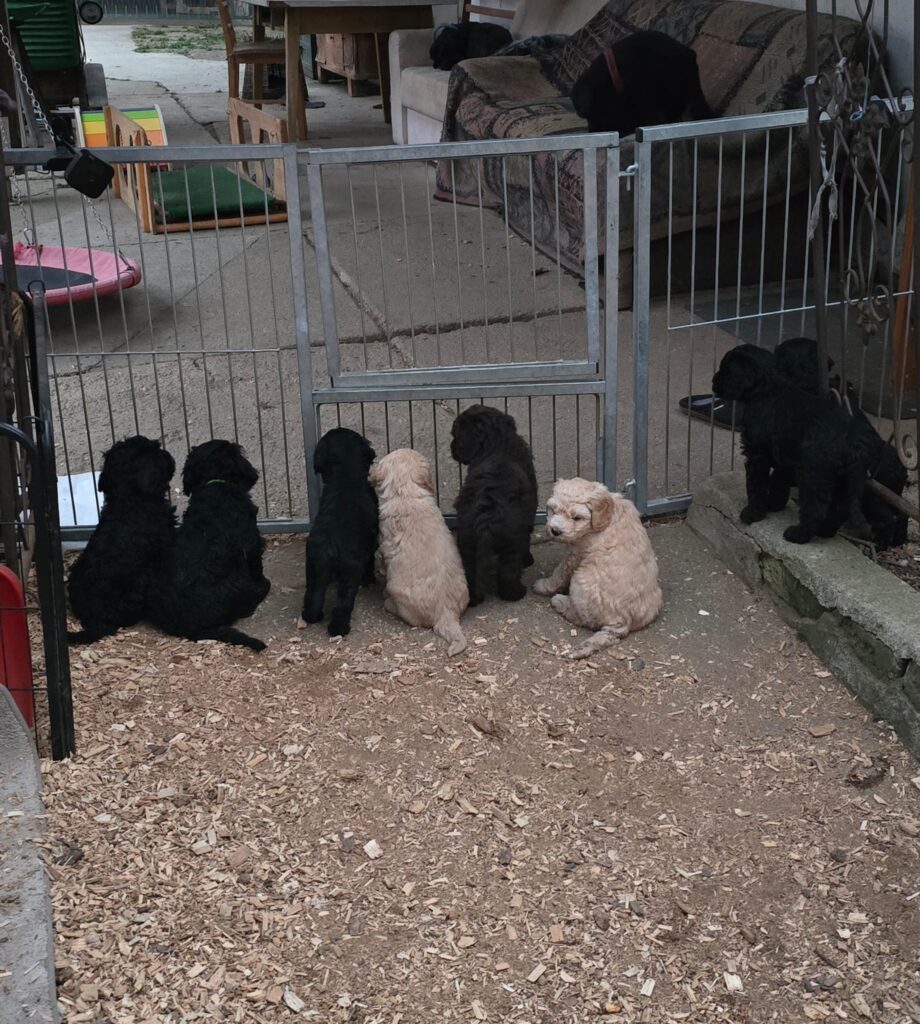
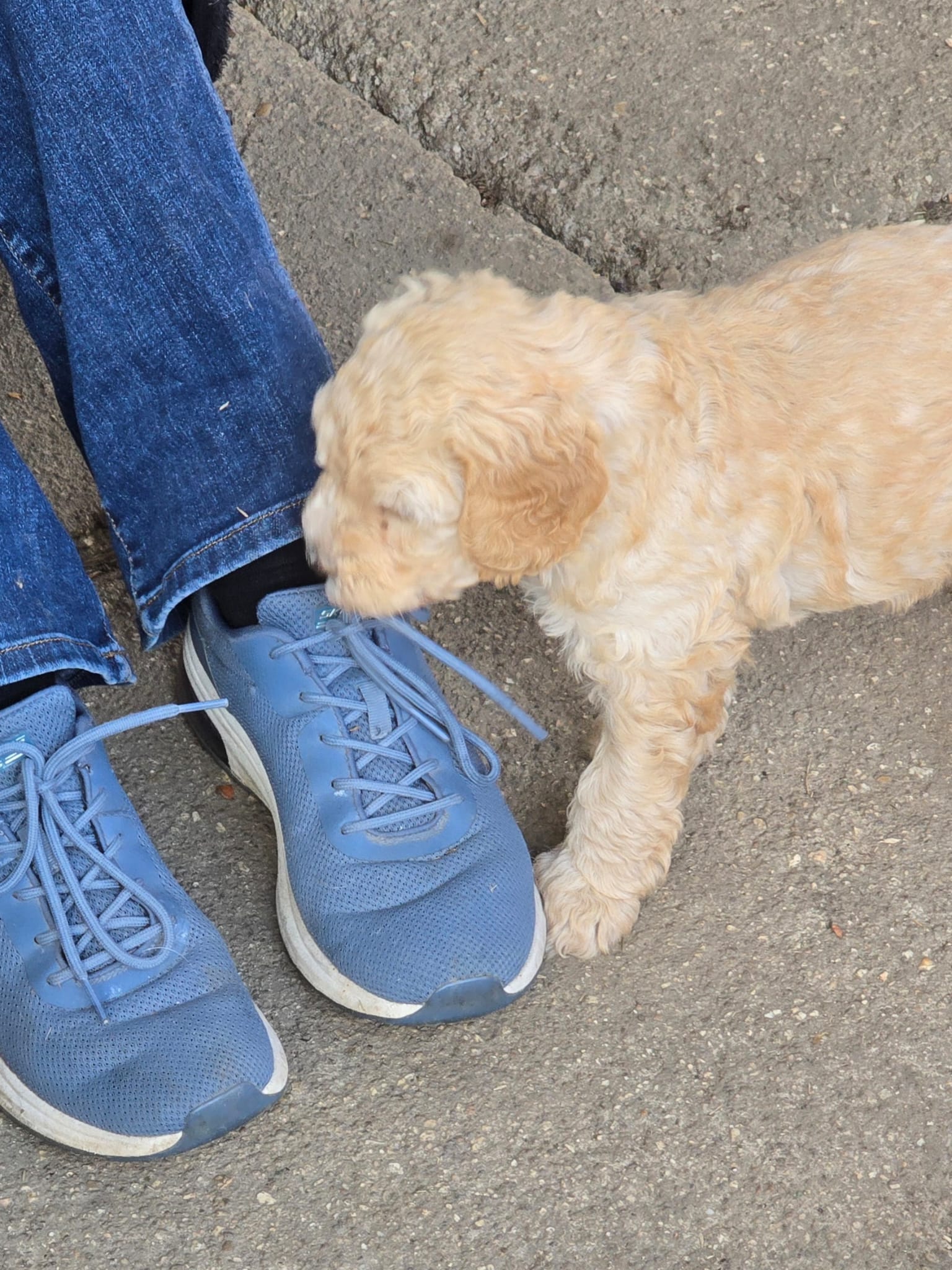
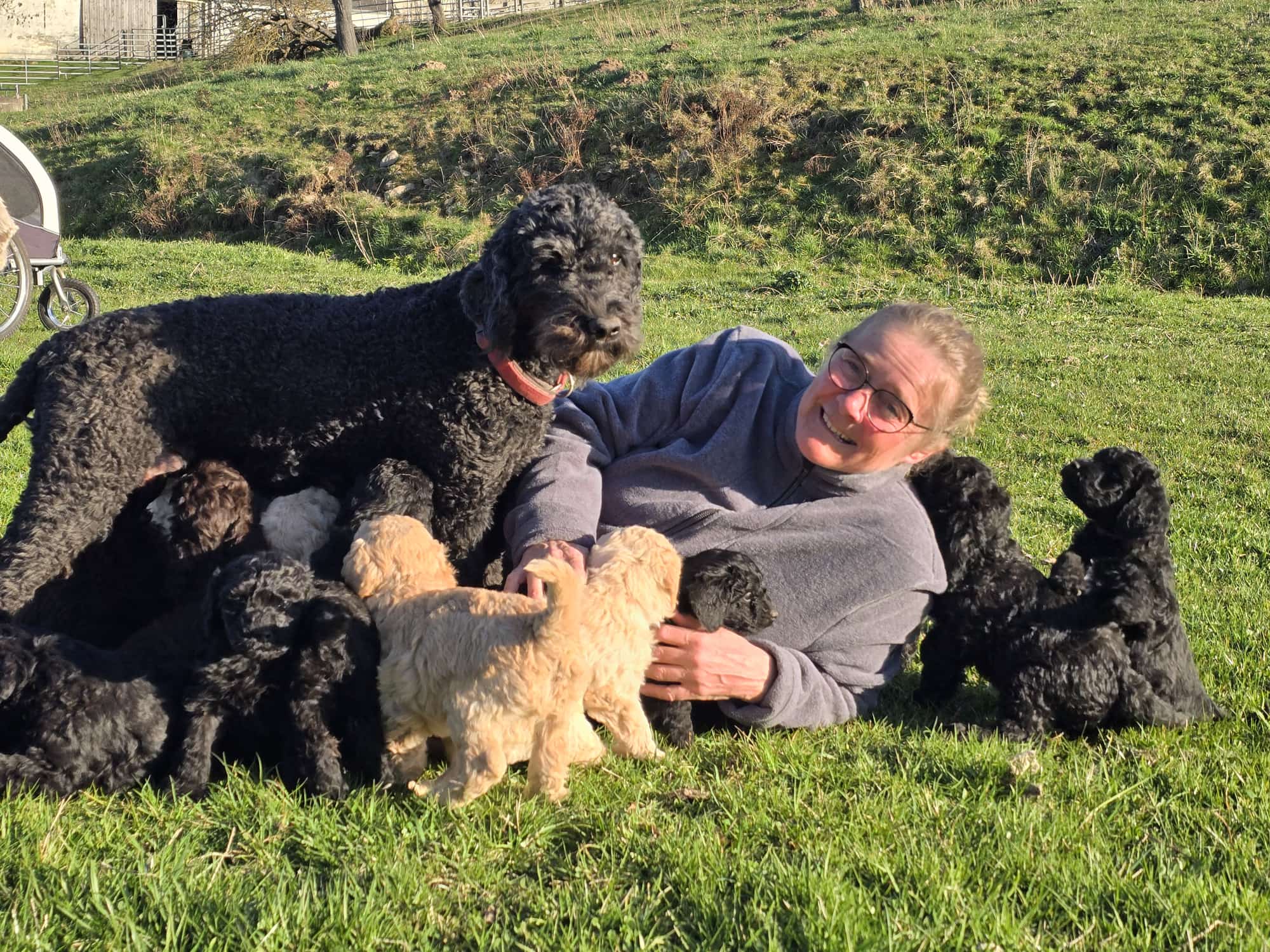
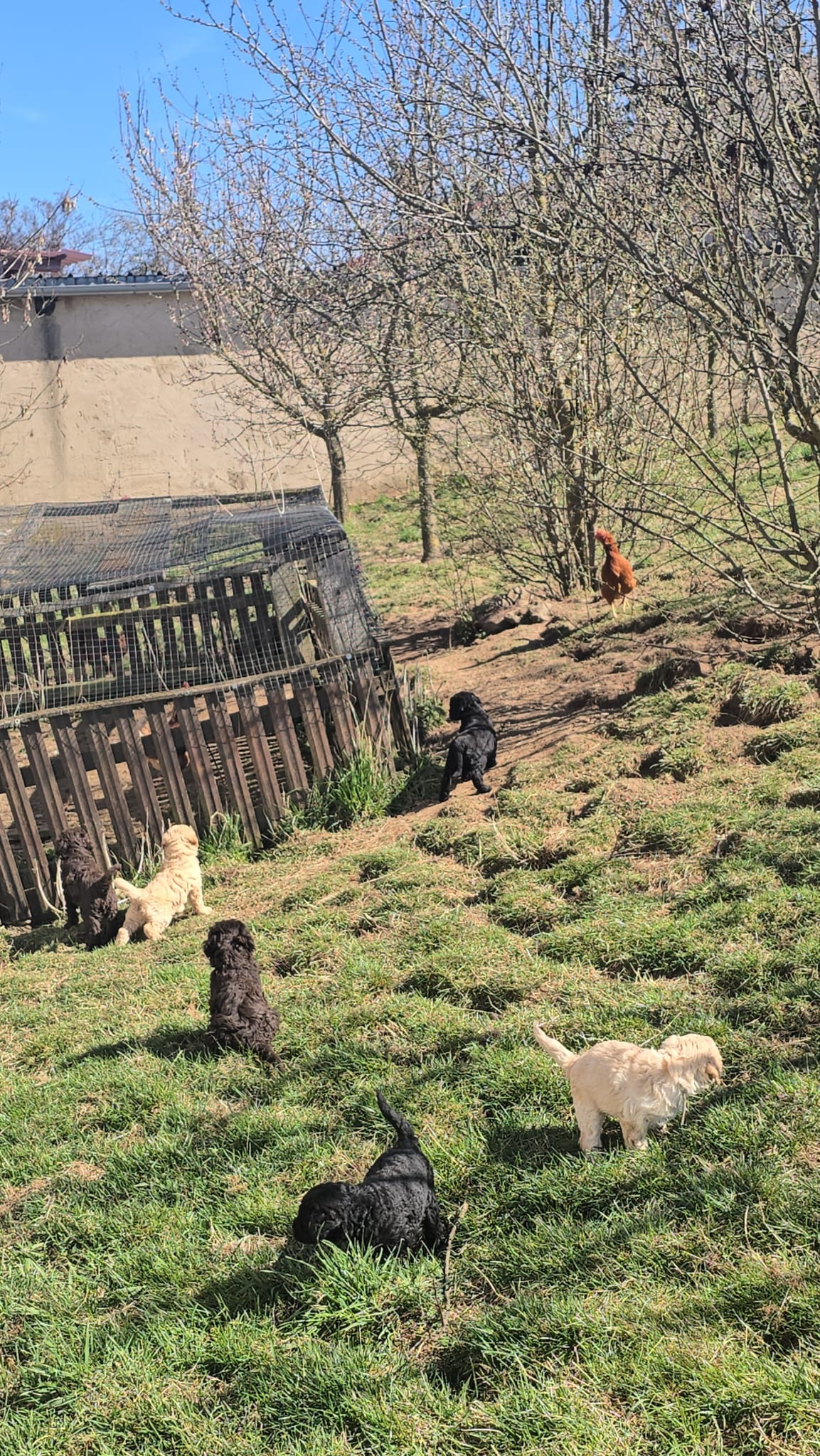
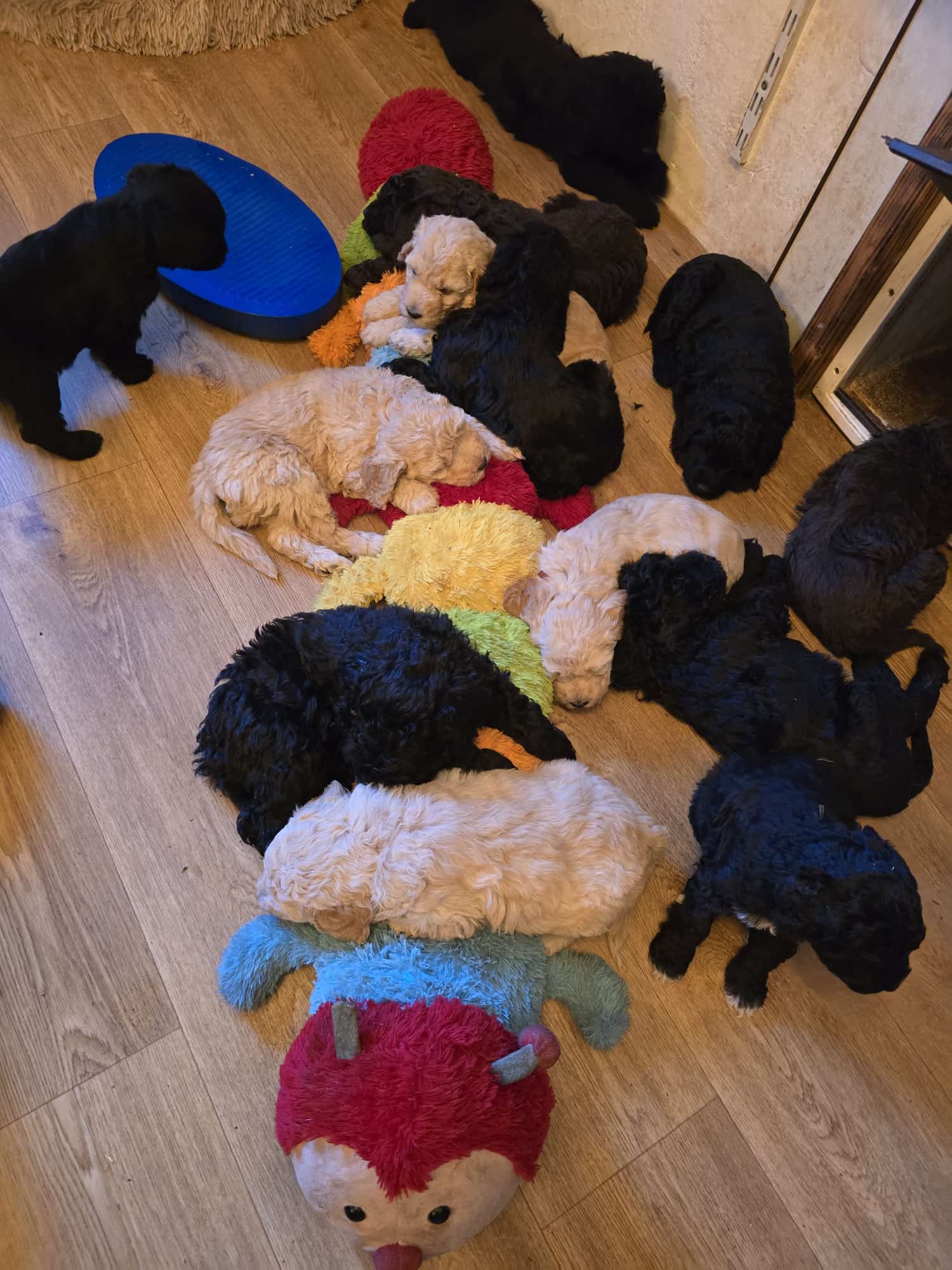
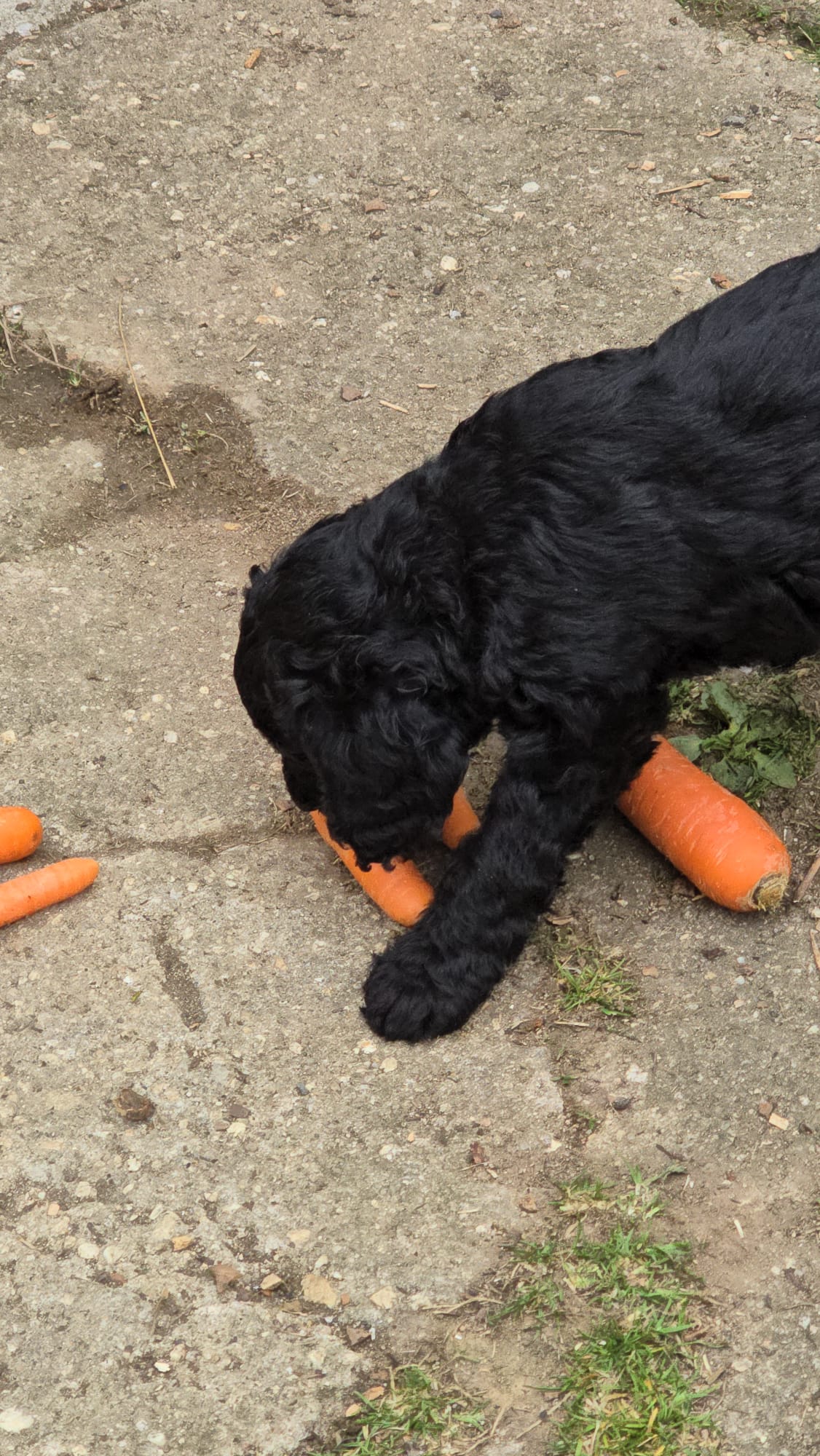
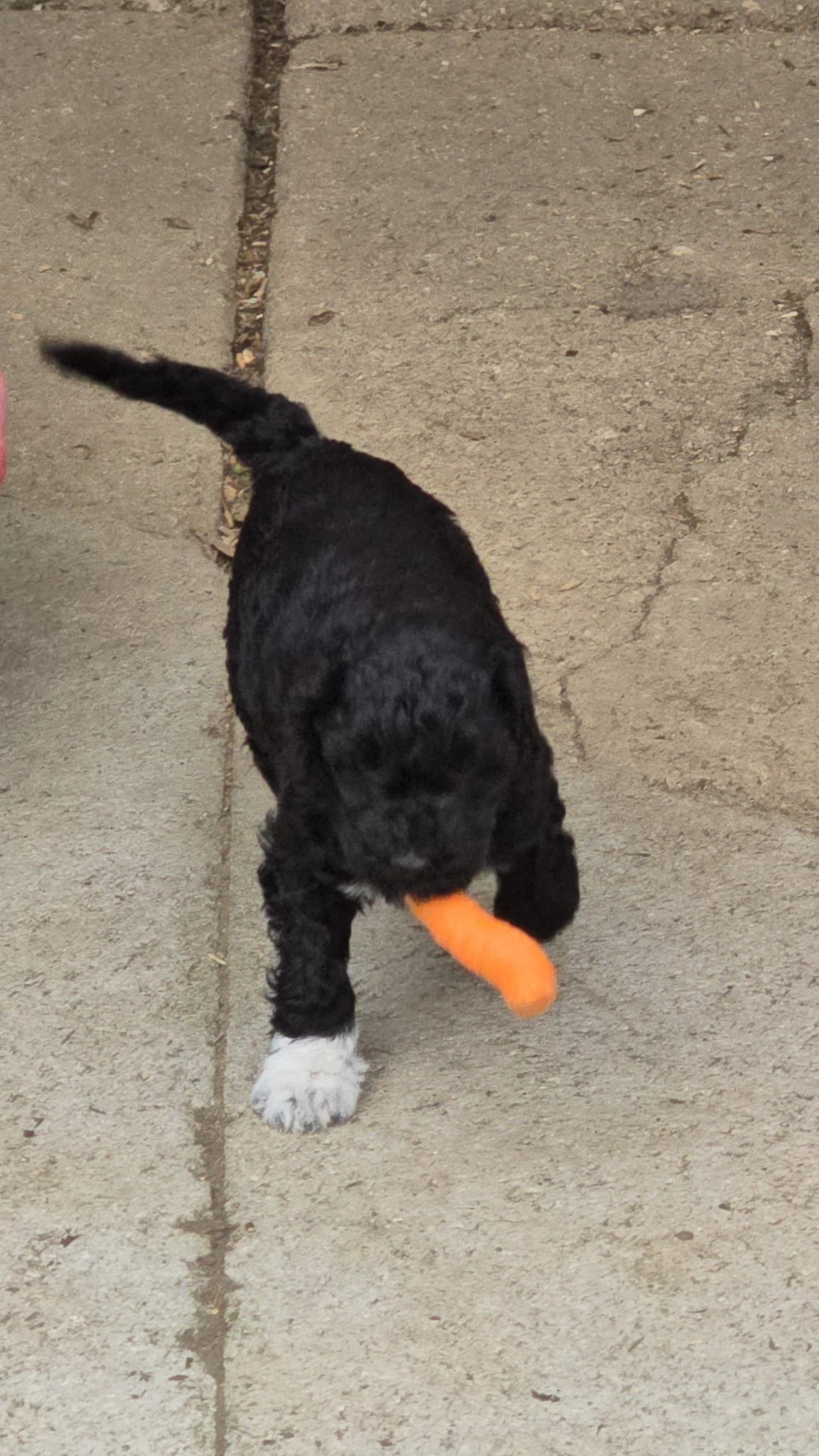
It’s incredible how fast time flies – and even more amazing how much the puppies learn with each passing week. This week, they had the chance to meet some of their future owners as well as other visitors, approaching these new experiences with curiosity and openness.
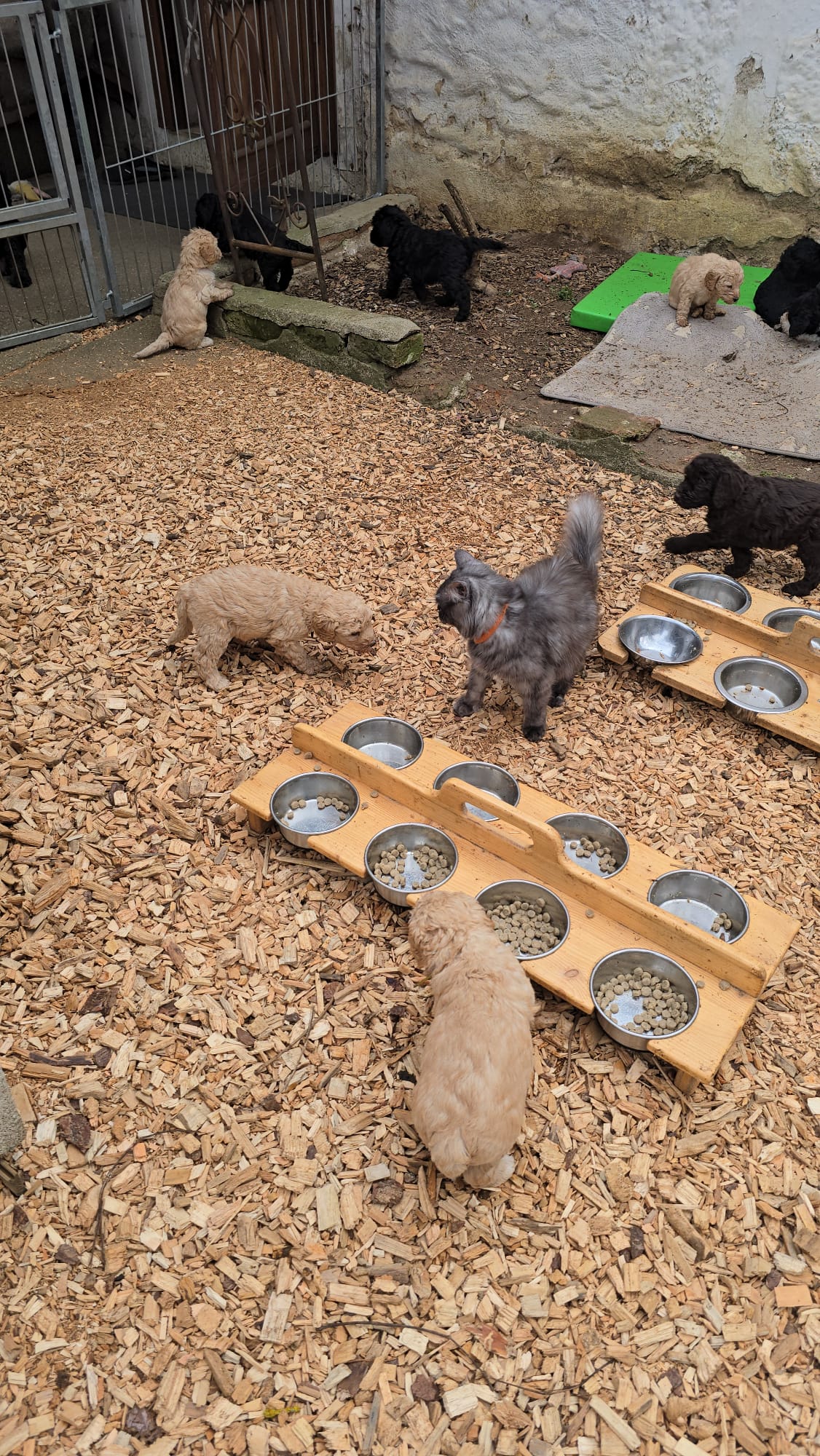
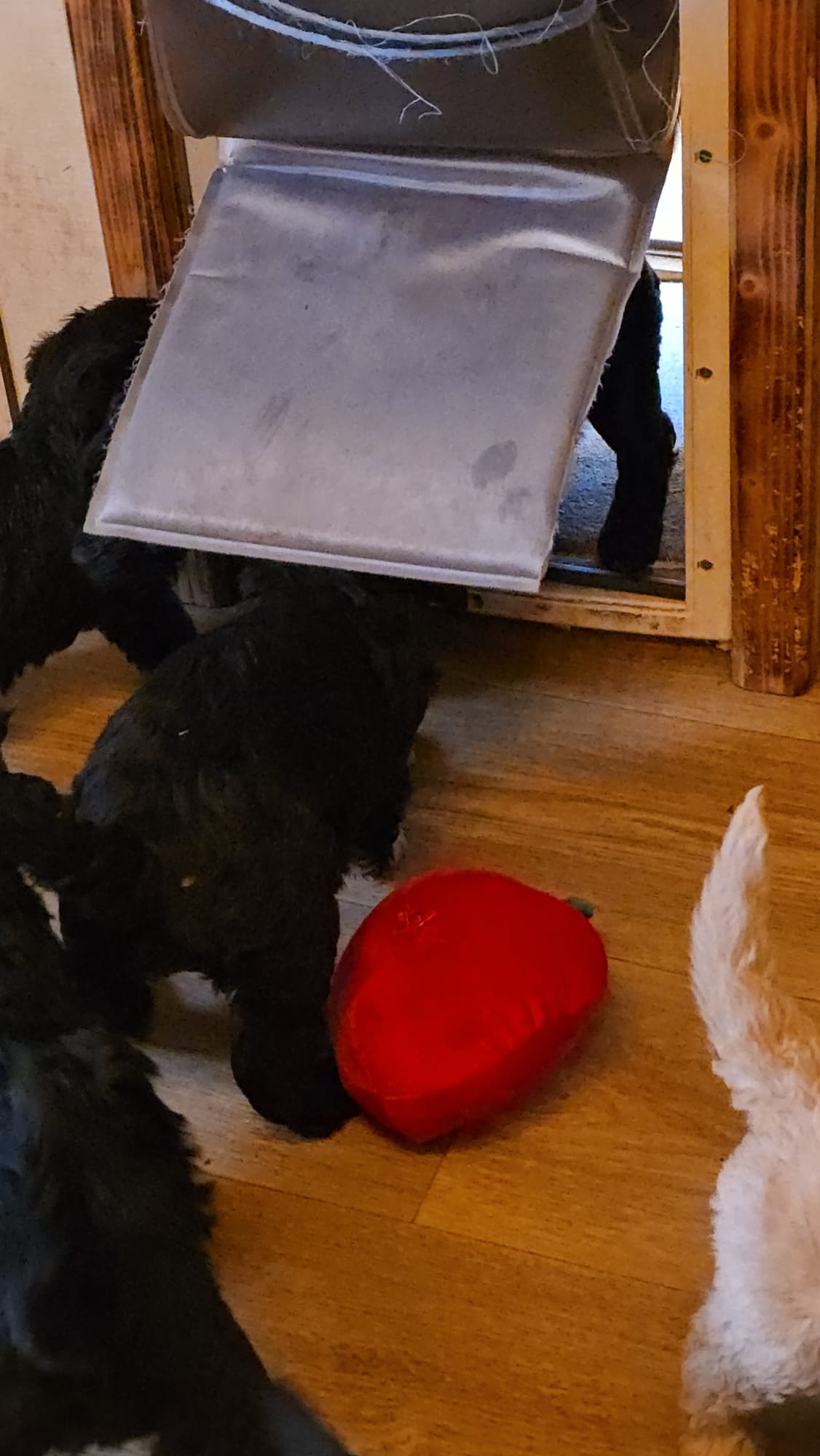
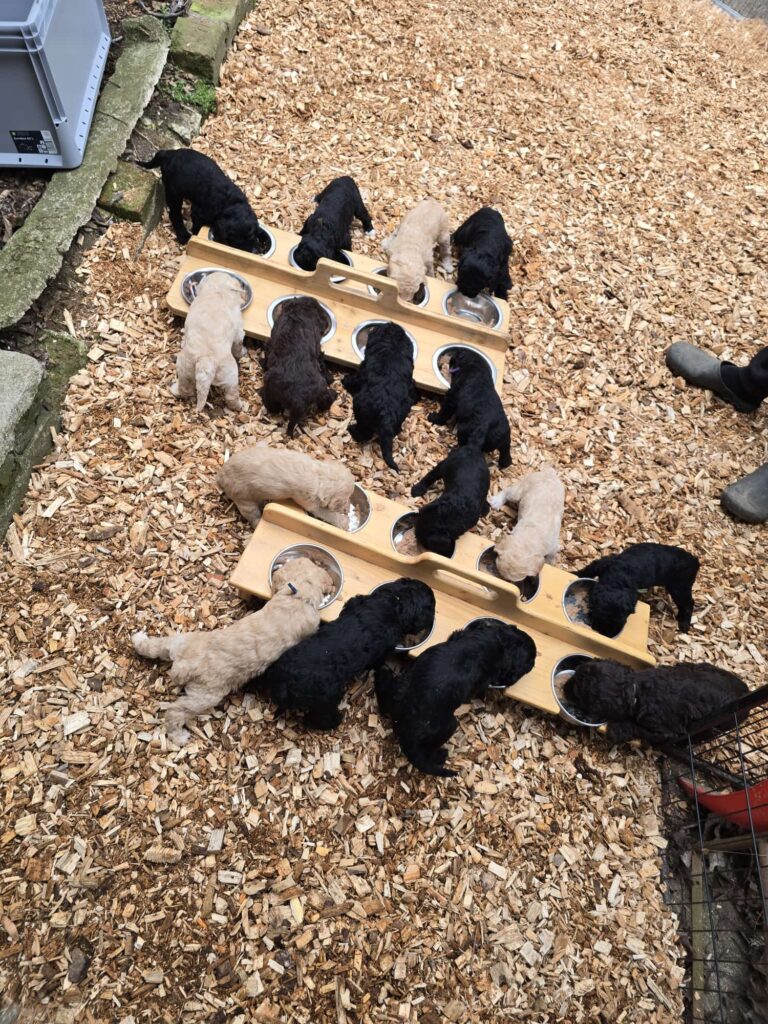
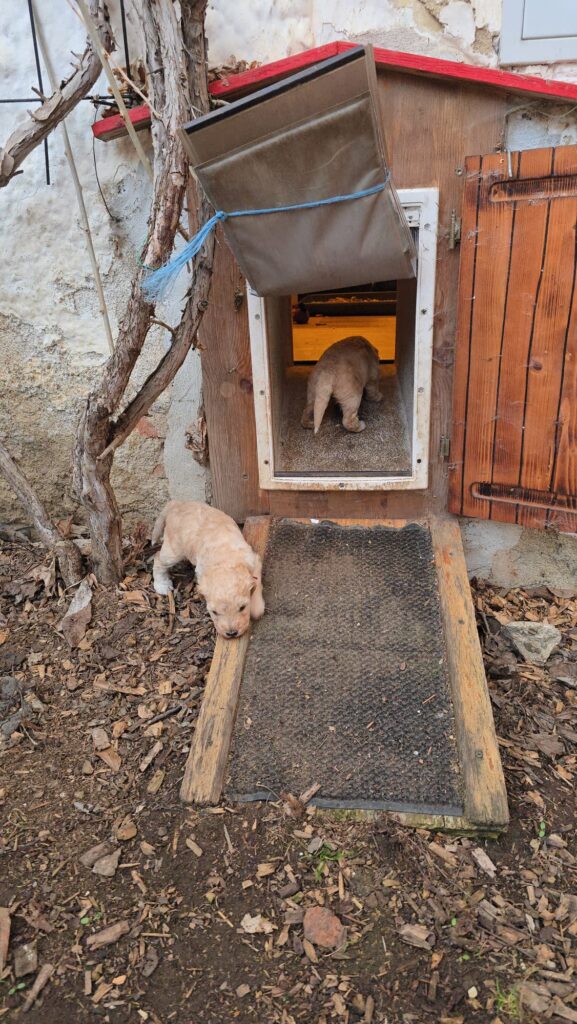
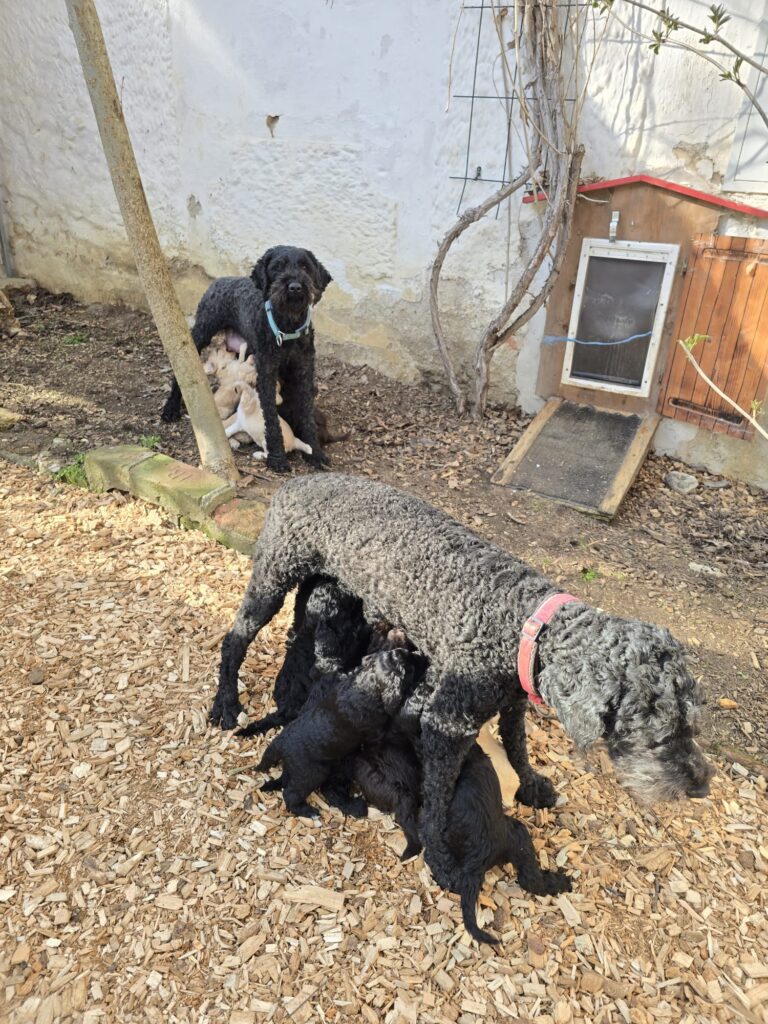
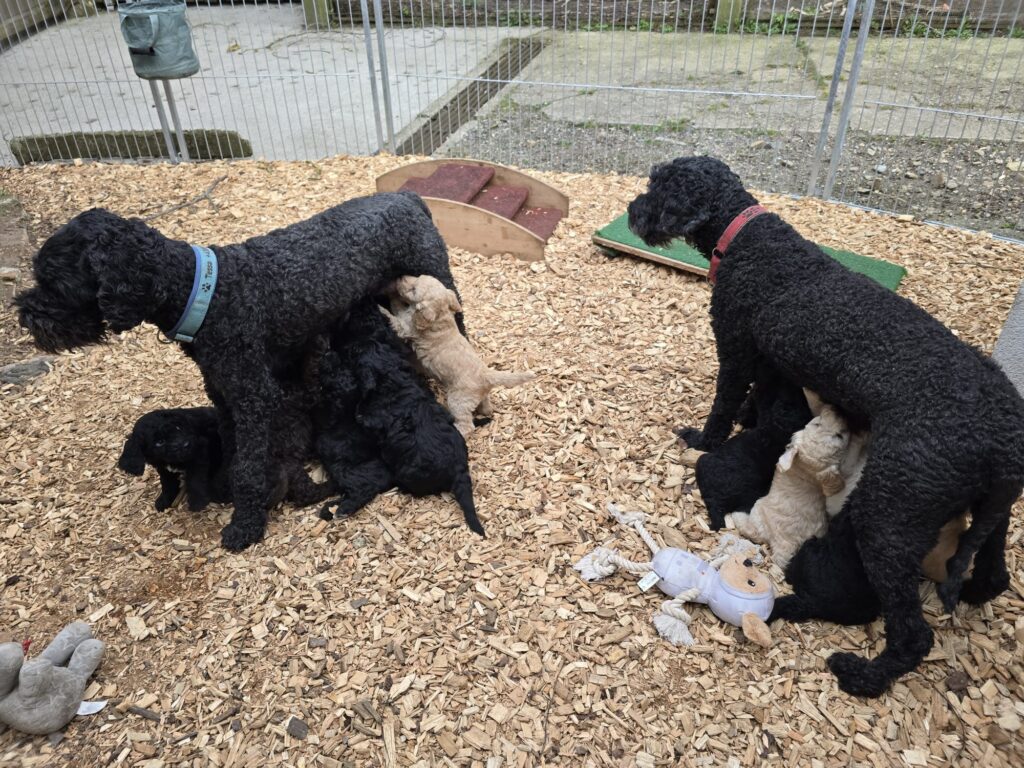
A big step toward independence also took place: in addition to their mother’s milk, they were finally introduced to their first solid food. As expected, they mastered this new challenge confidently from day one. Despite the still chilly temperatures, they went outside right after eating, beginning to learn early on to do their business outdoors. Inside, they are increasingly using their designated boxes, and by the end of the week, there are hardly any accidents left (except in the boxes). Most of their business is now done outside.
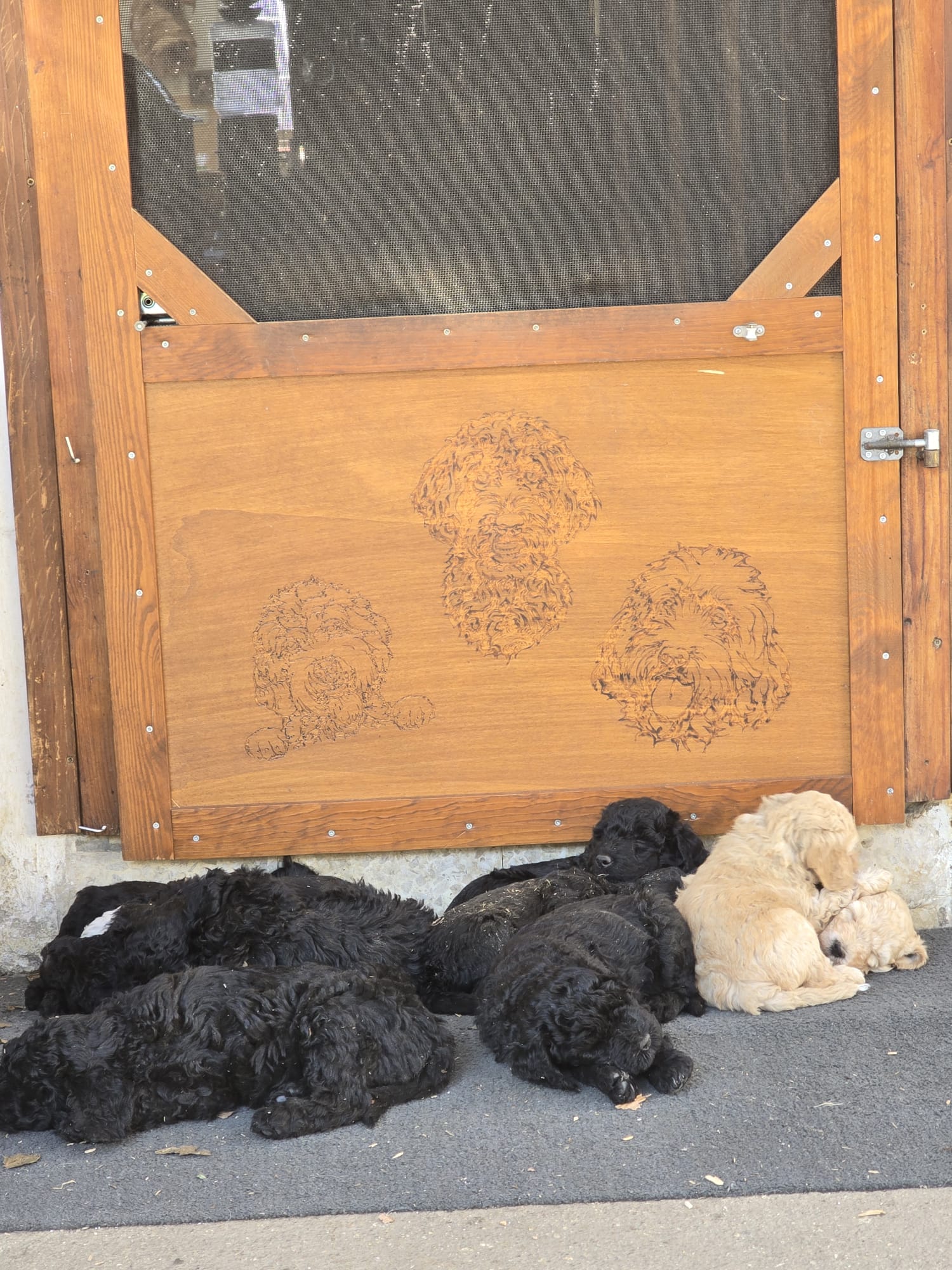
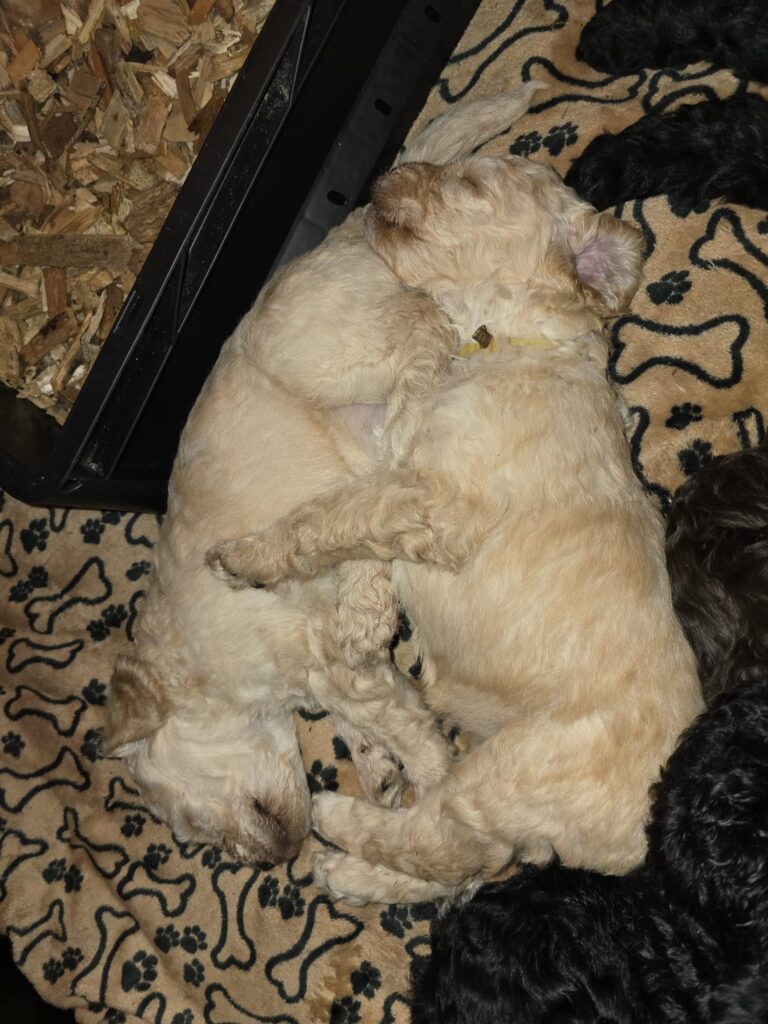
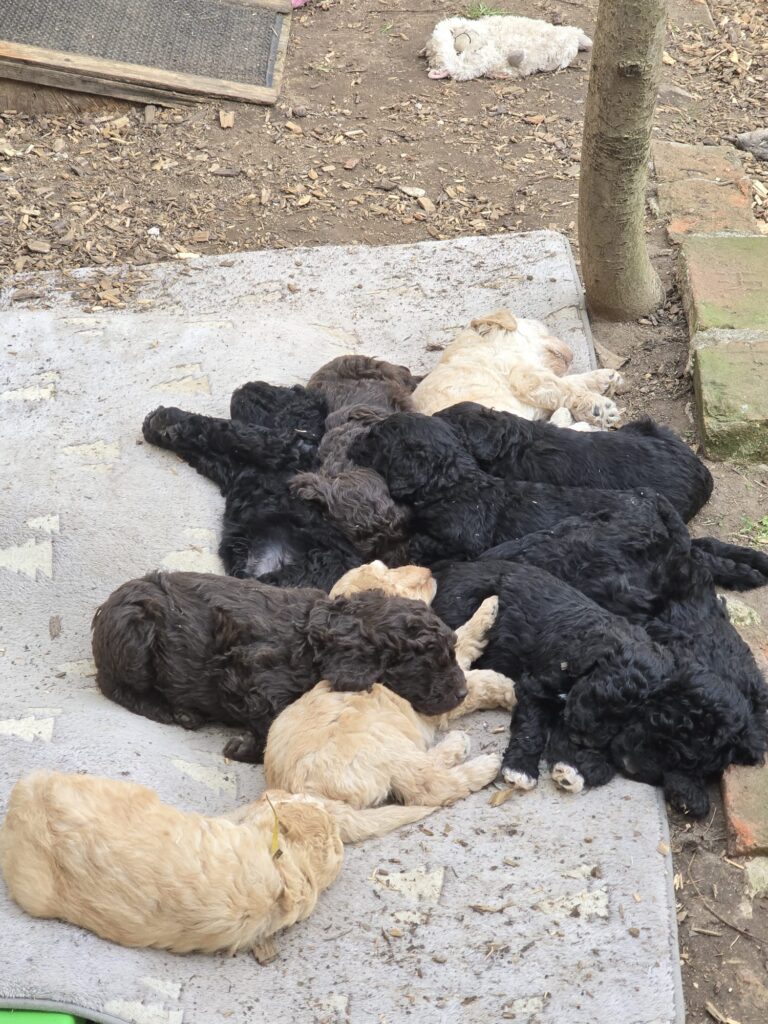
While they initially needed help going in and out, they now dash around independently and full of energy. Their daily rhythm is also becoming more established: sometimes they already sleep through the night from 11 p.m. to 6 a.m. During the day, they alternate between two to three hours of sleep and active phases of about half an hour to an hour, spent playing, romping, eating, or nursing.
It is especially lovely to see how well they already respond to my legendary “Puppy, Puppy” – a call that many puppy owners continue to use as a reliable emergency recall even years later.
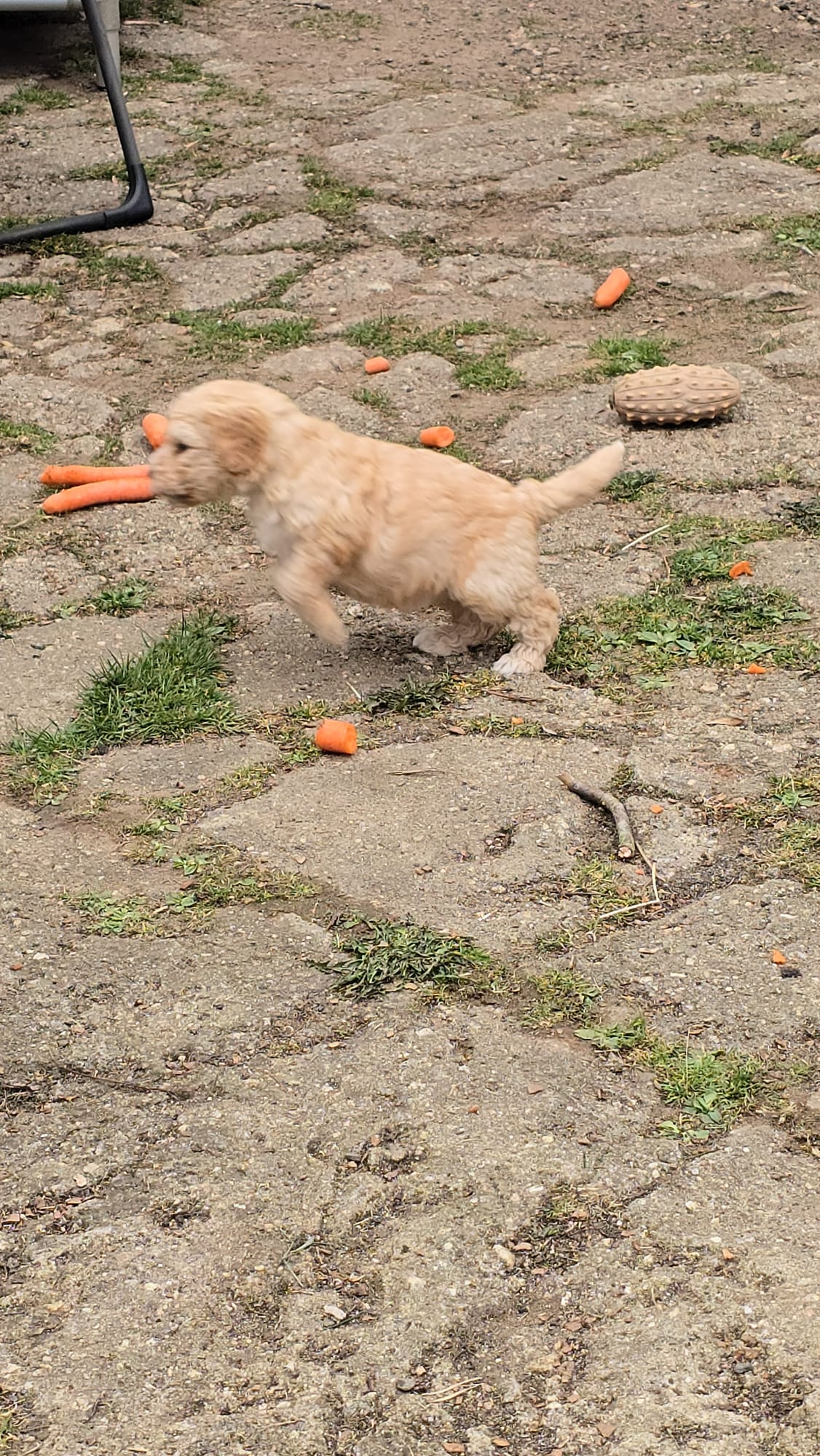
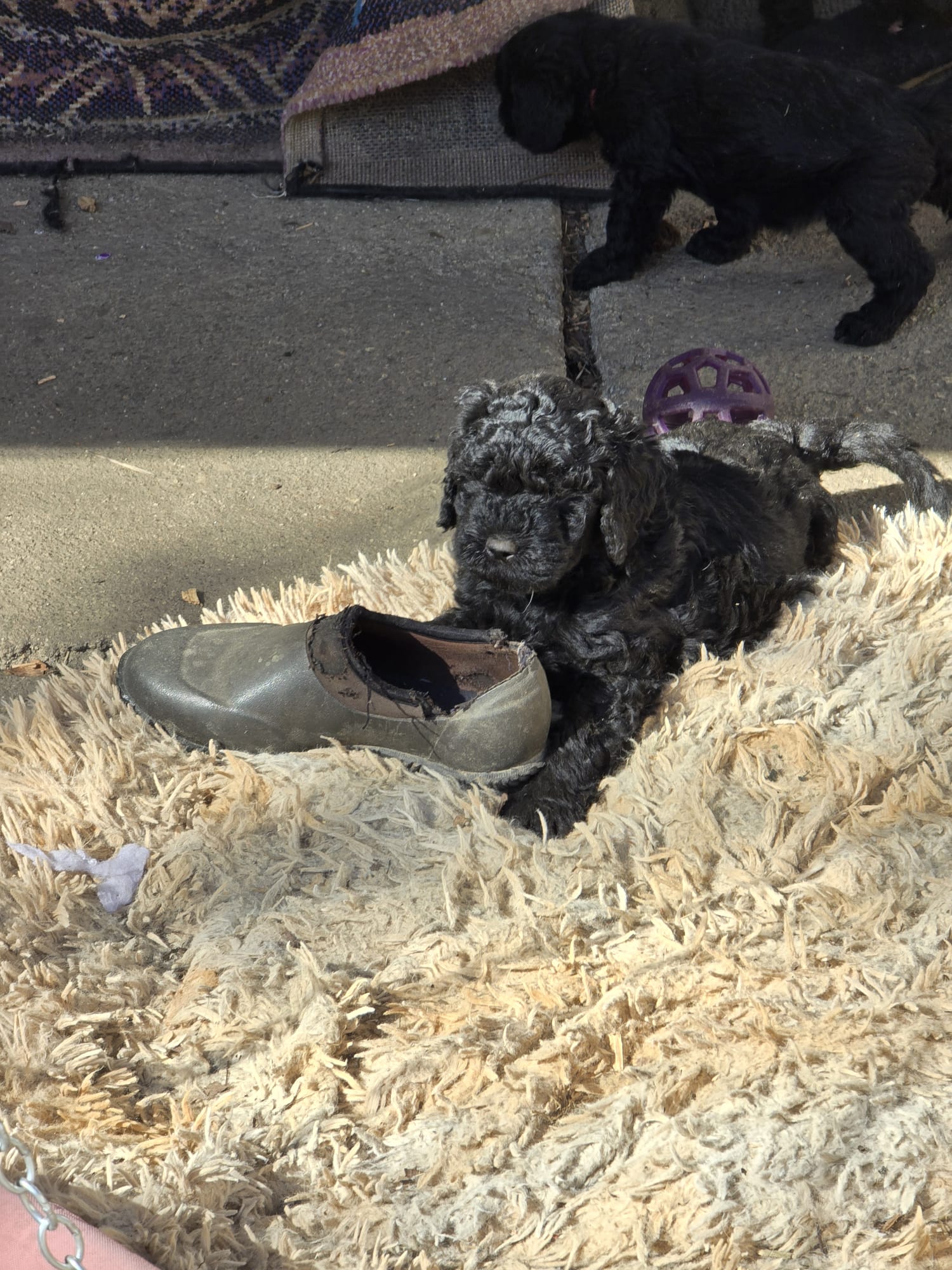
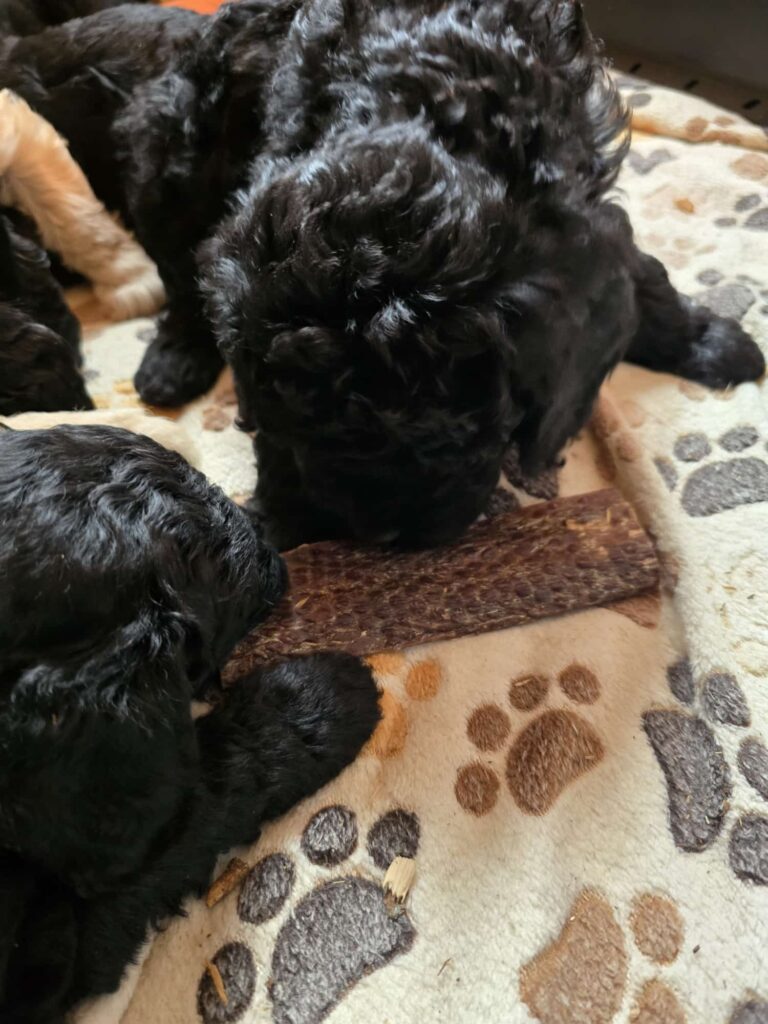
In their play area, they are actively developing their motor skills with a small staircase and a wobble board. Their next deworming was also completed, they were introduced to their first chew items, and they continue to get used to various everyday sounds, such as the clipper.
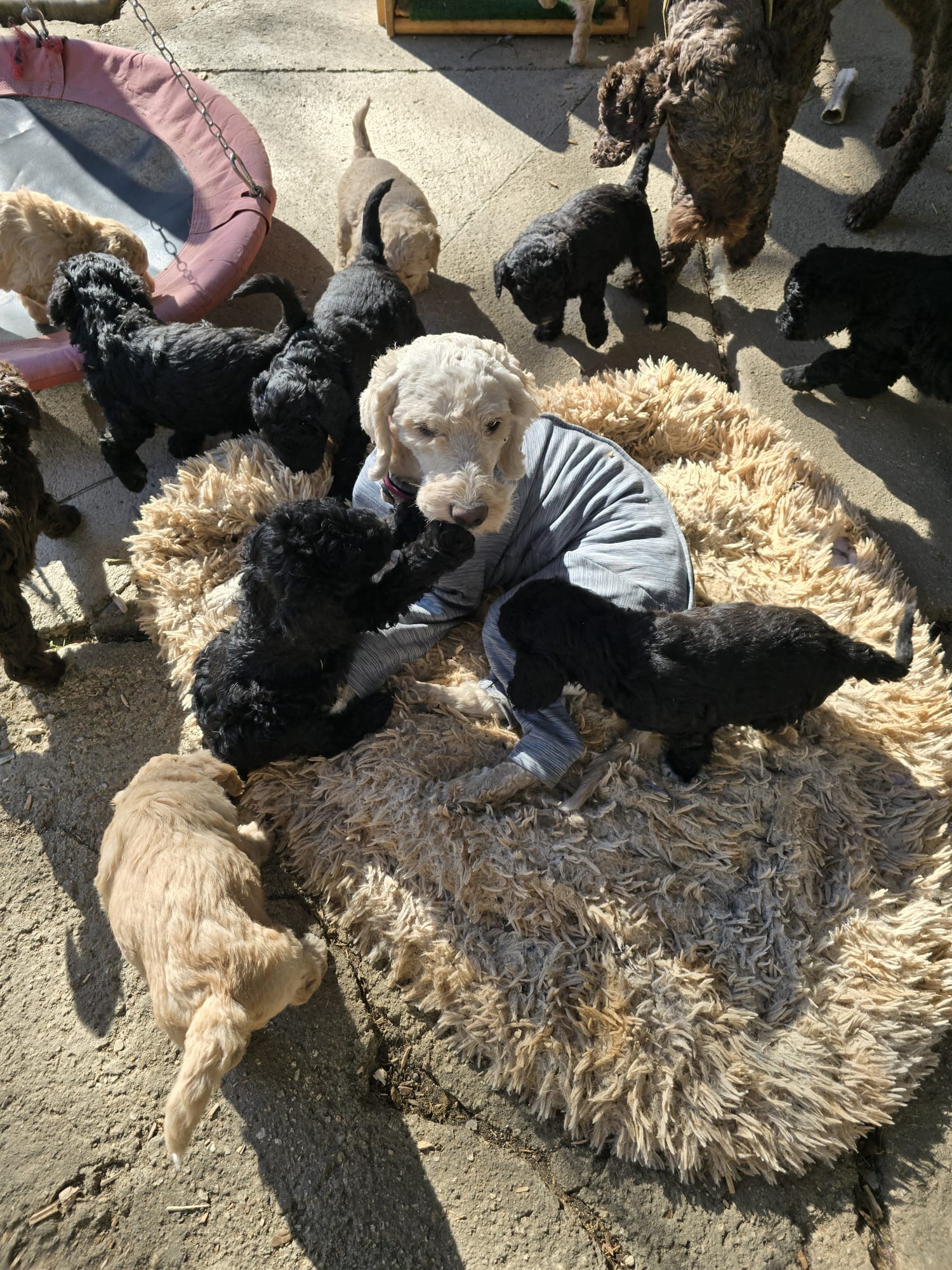
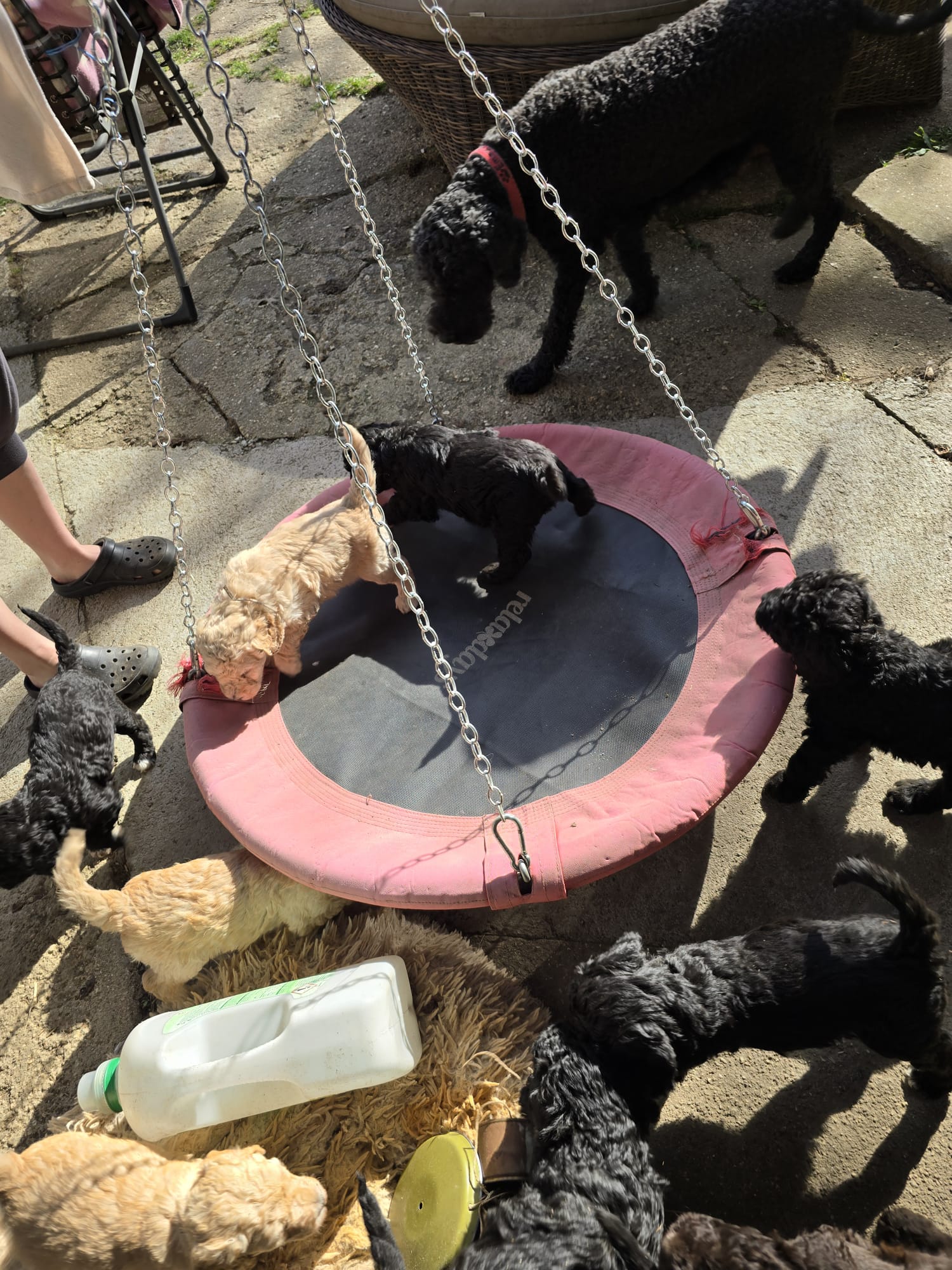
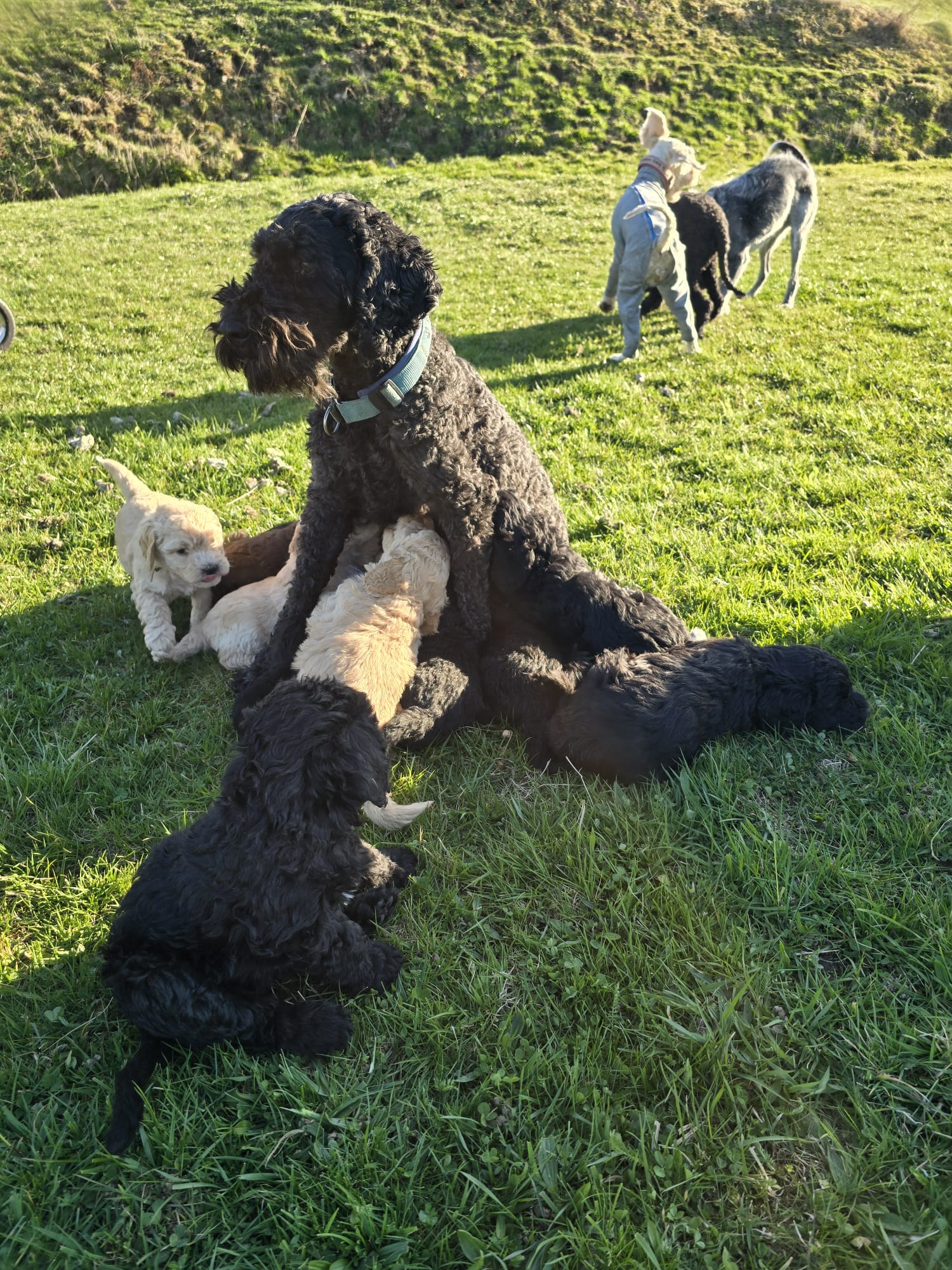
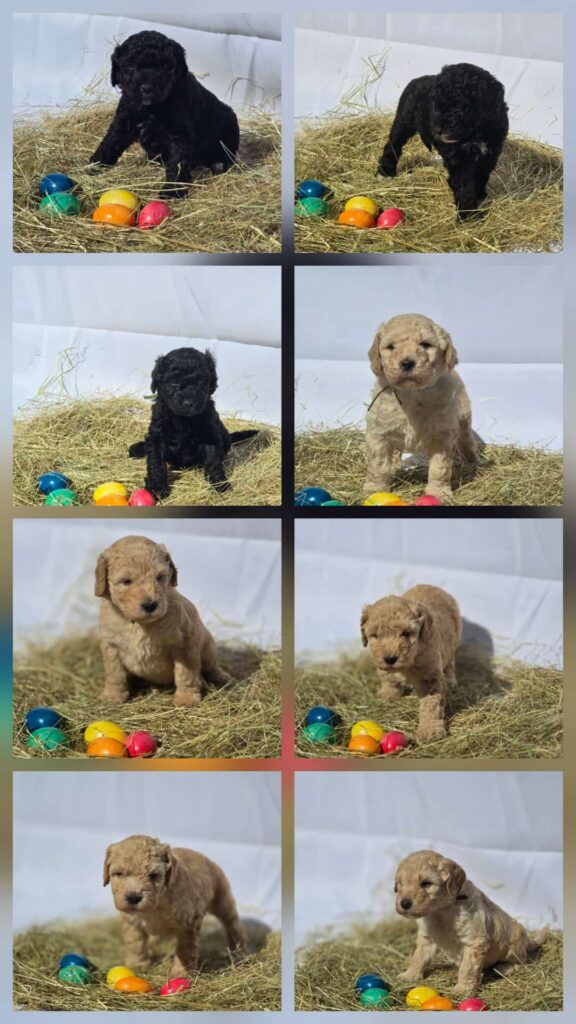
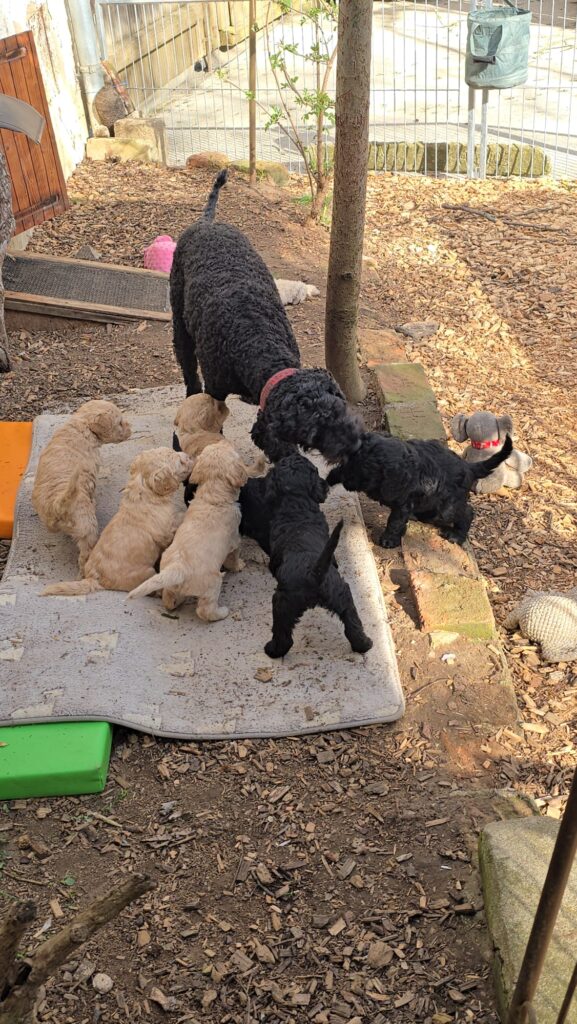
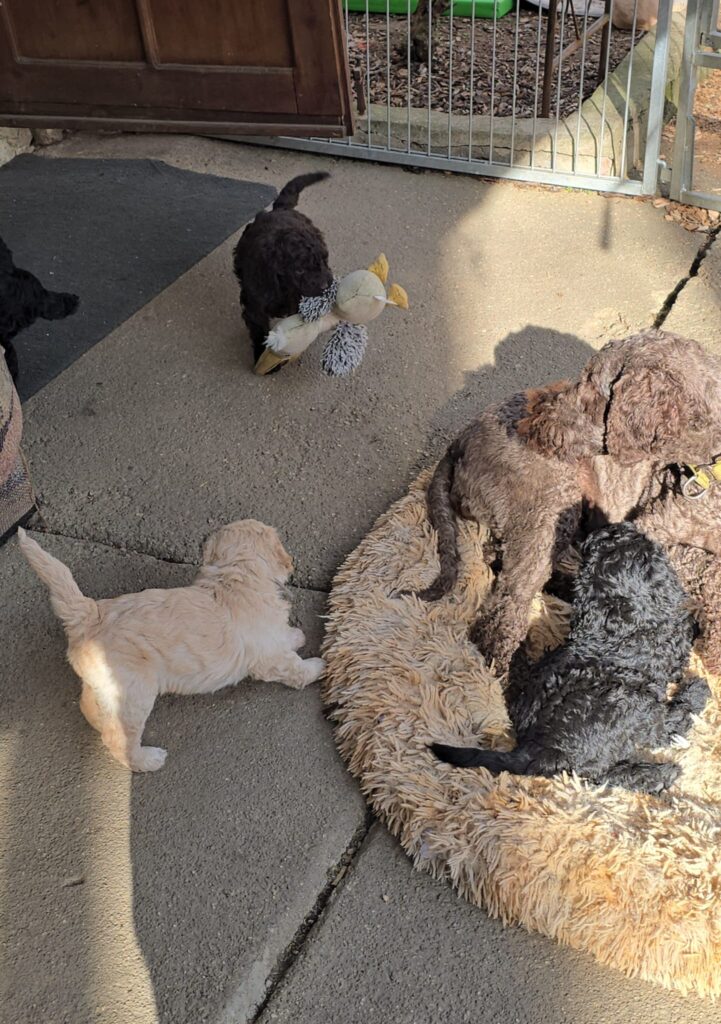
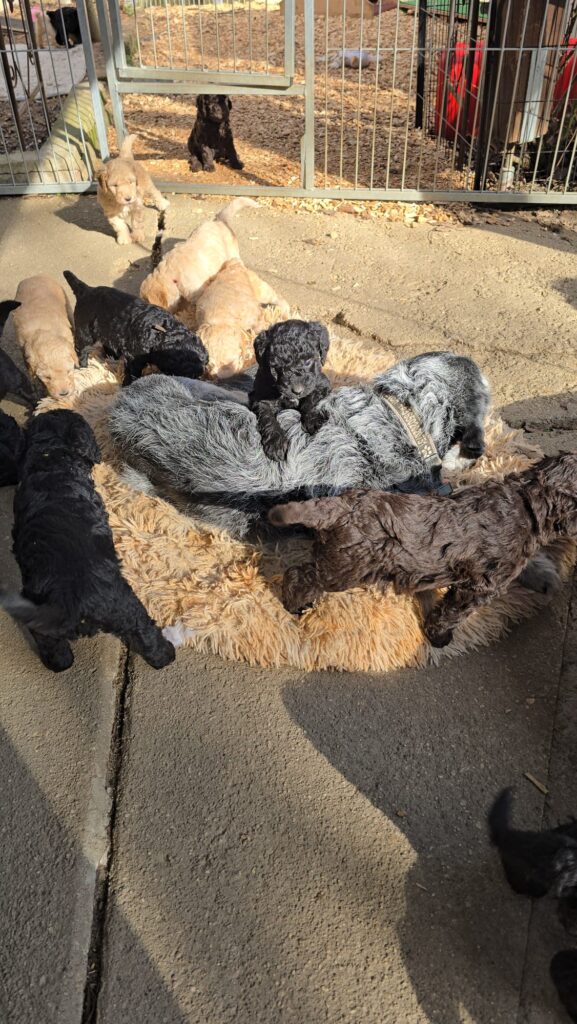
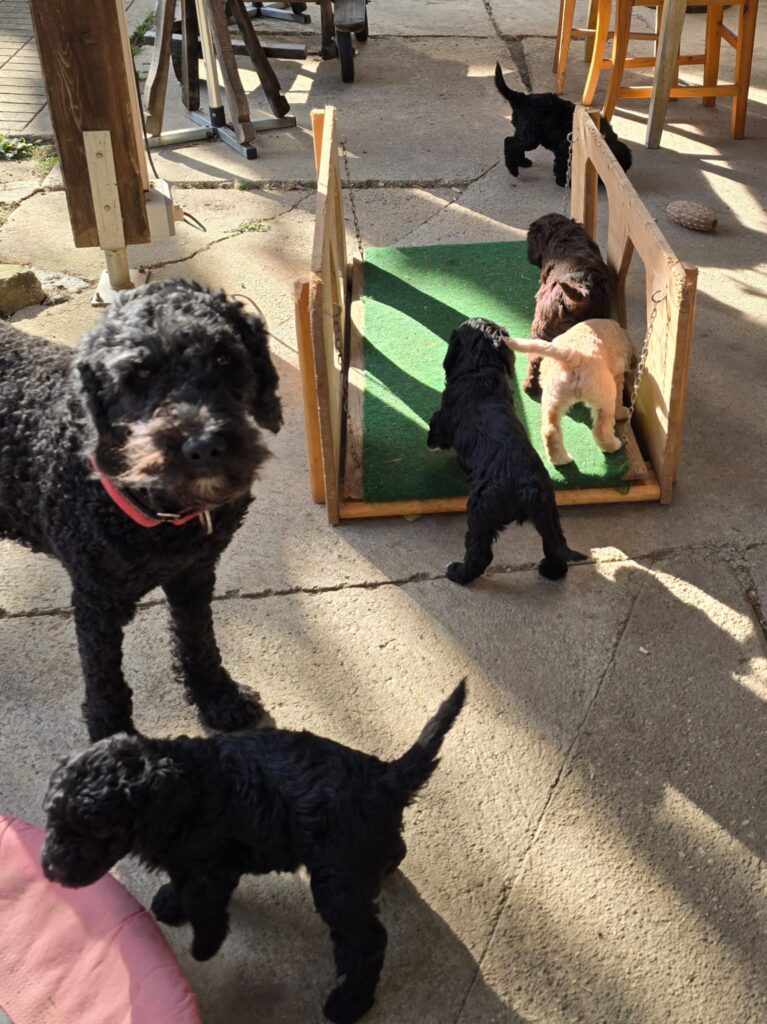
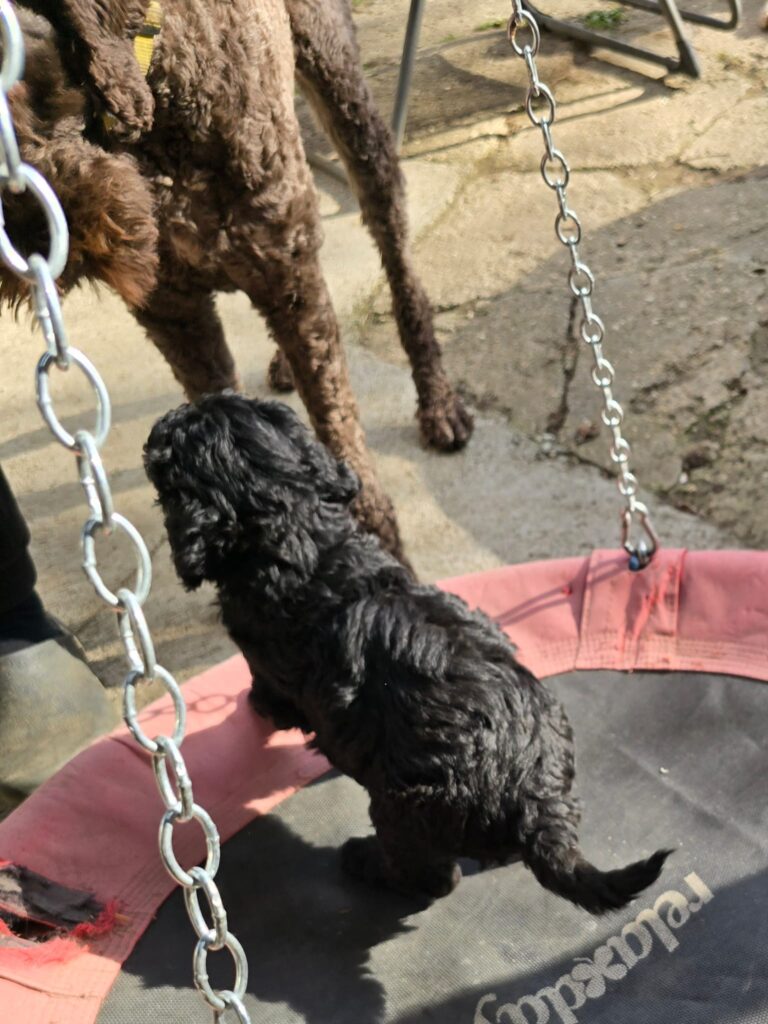
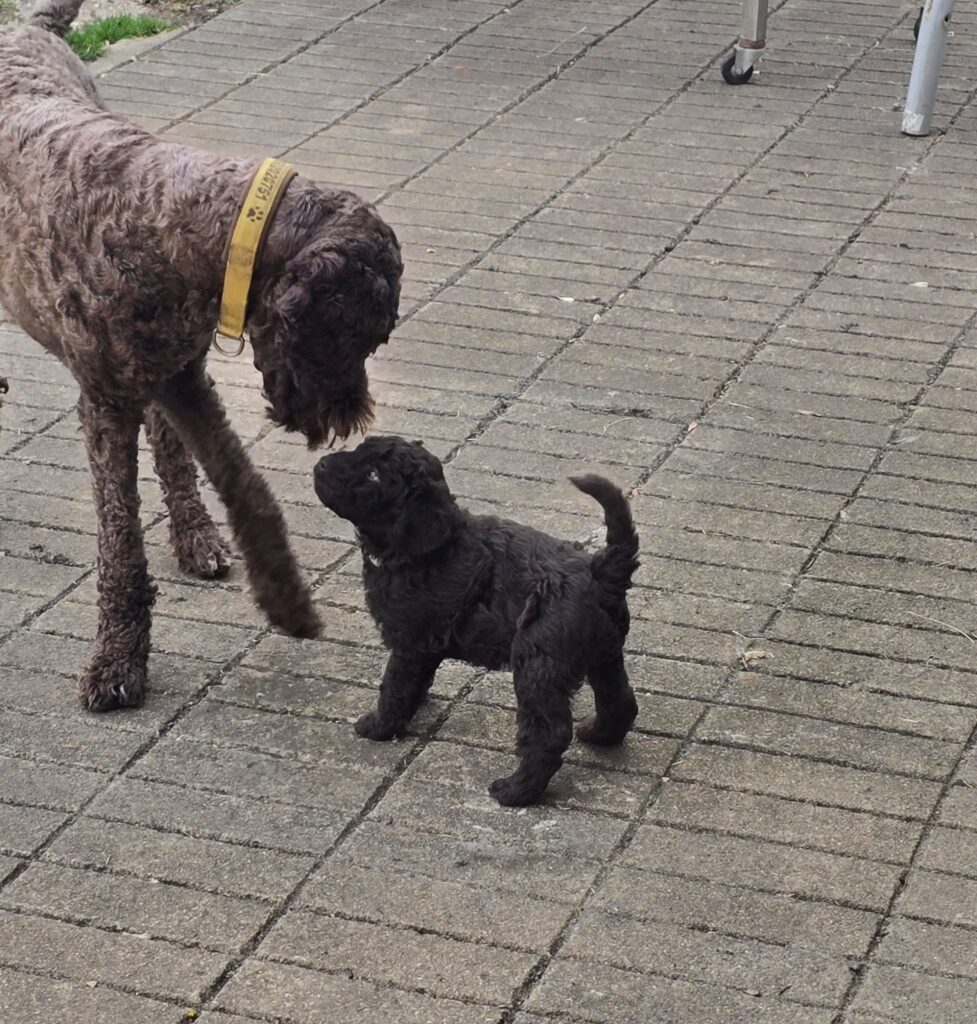
A special highlight of the week was Easter Sunday, when they enjoyed their first outing into the yard. There, they explored new surroundings and discovered the balance board and nest swing – another exciting milestone in their development.
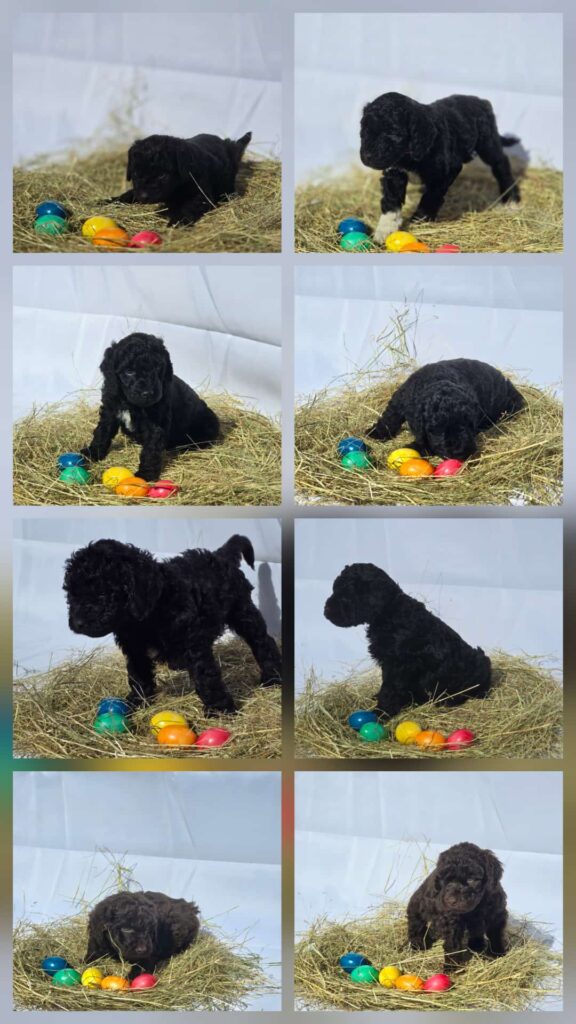
4th Week
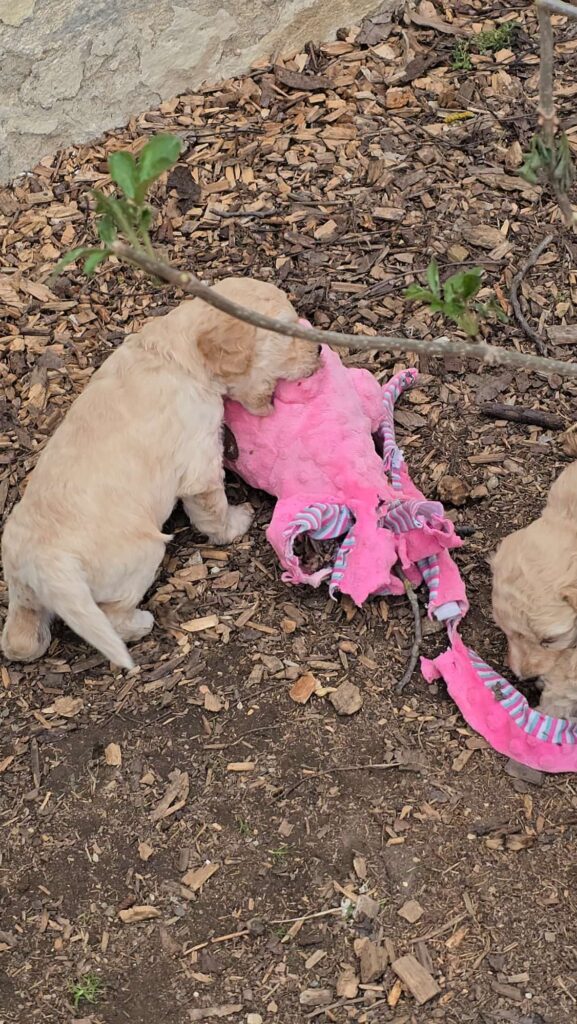
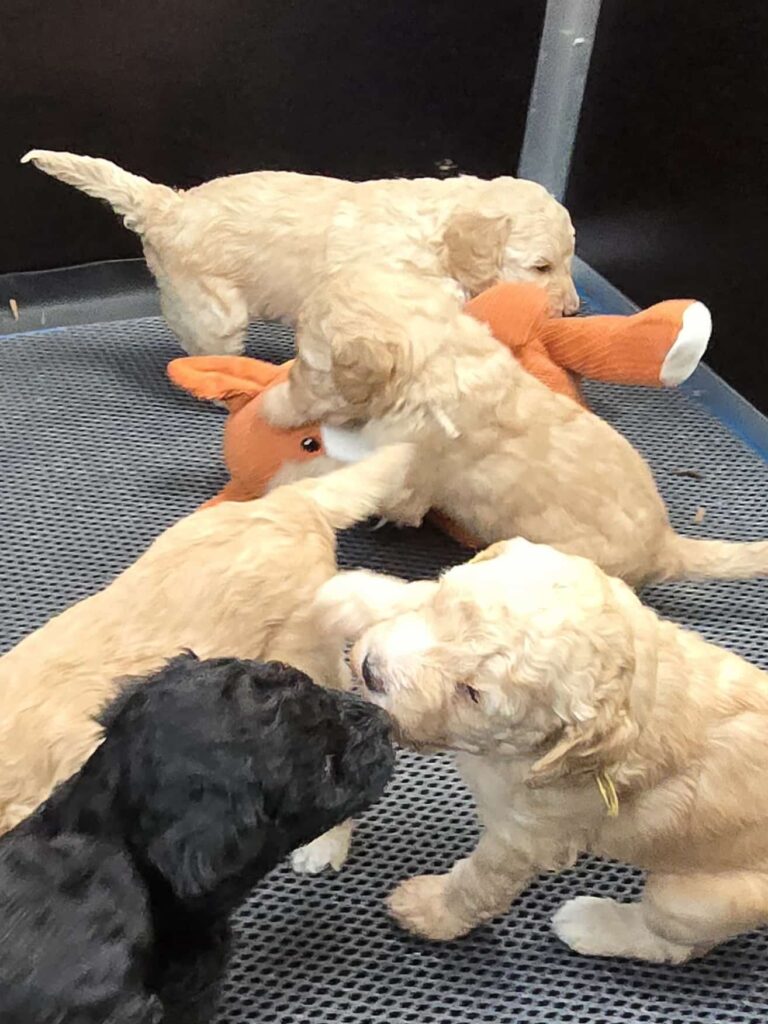
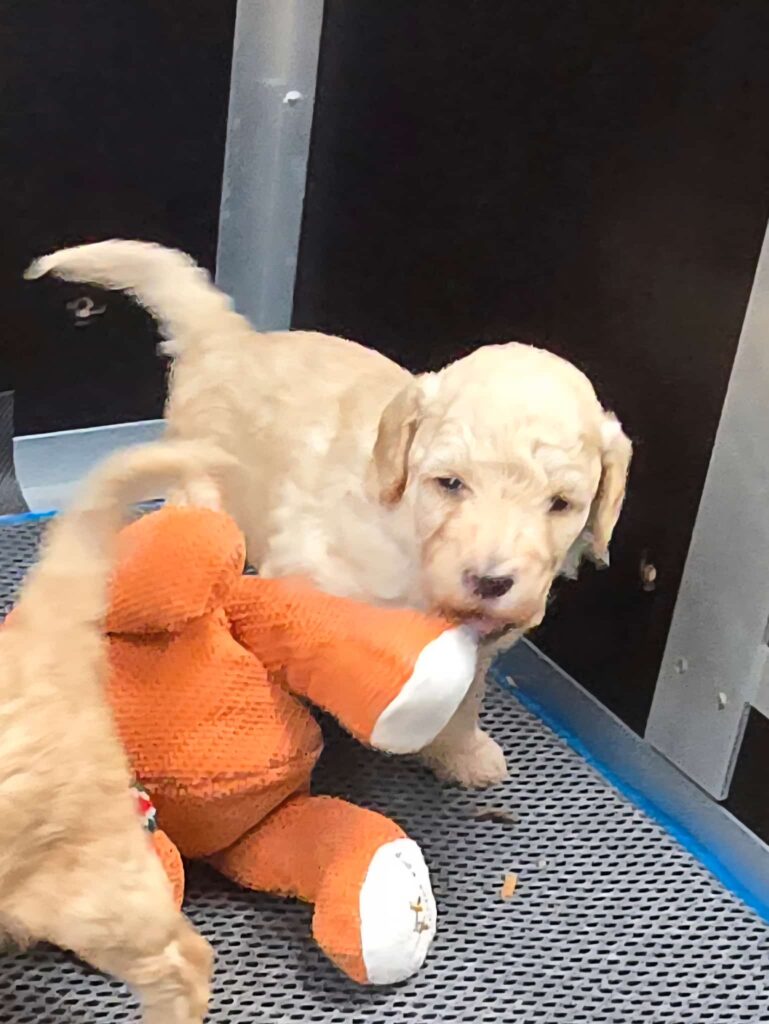
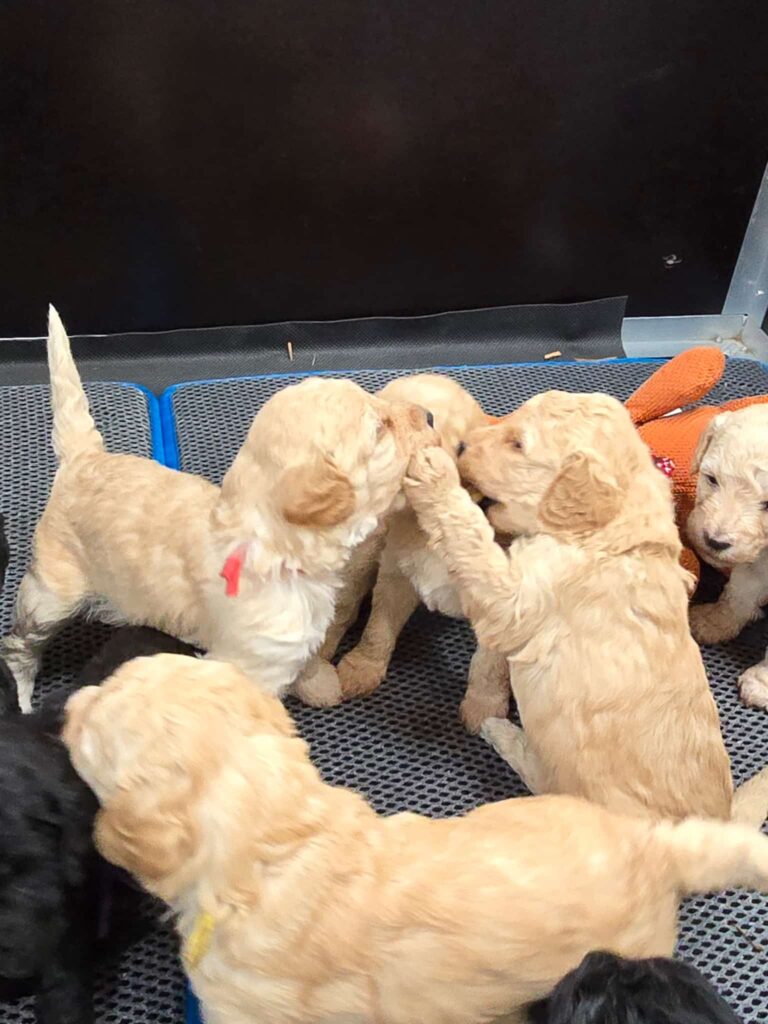
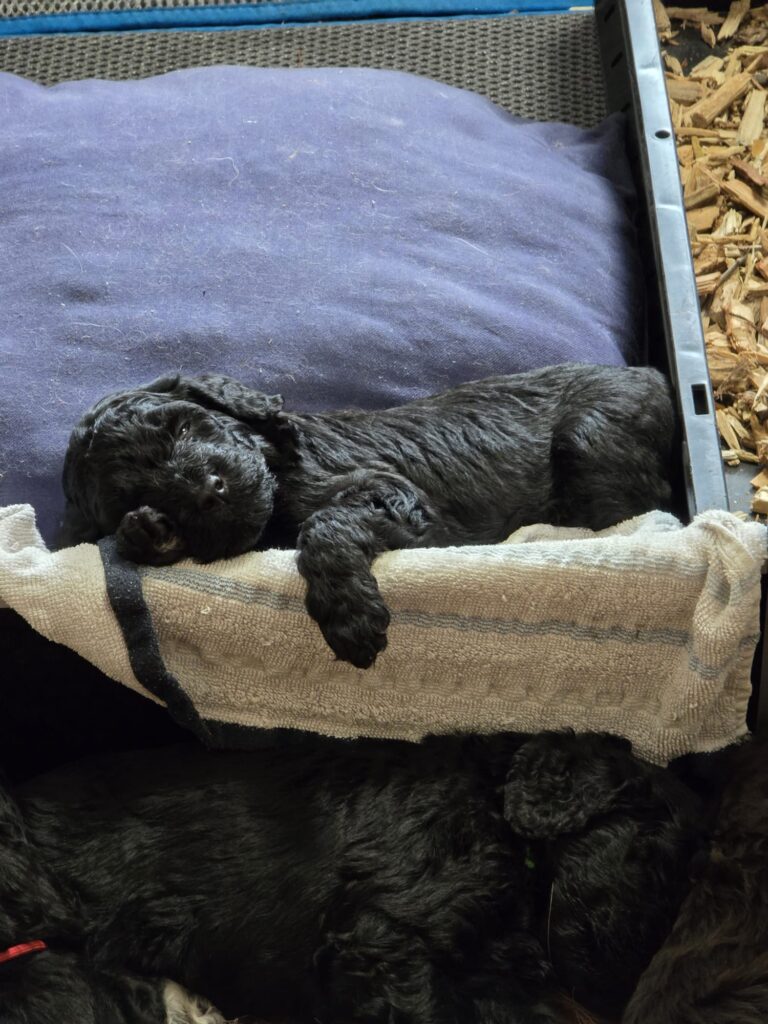
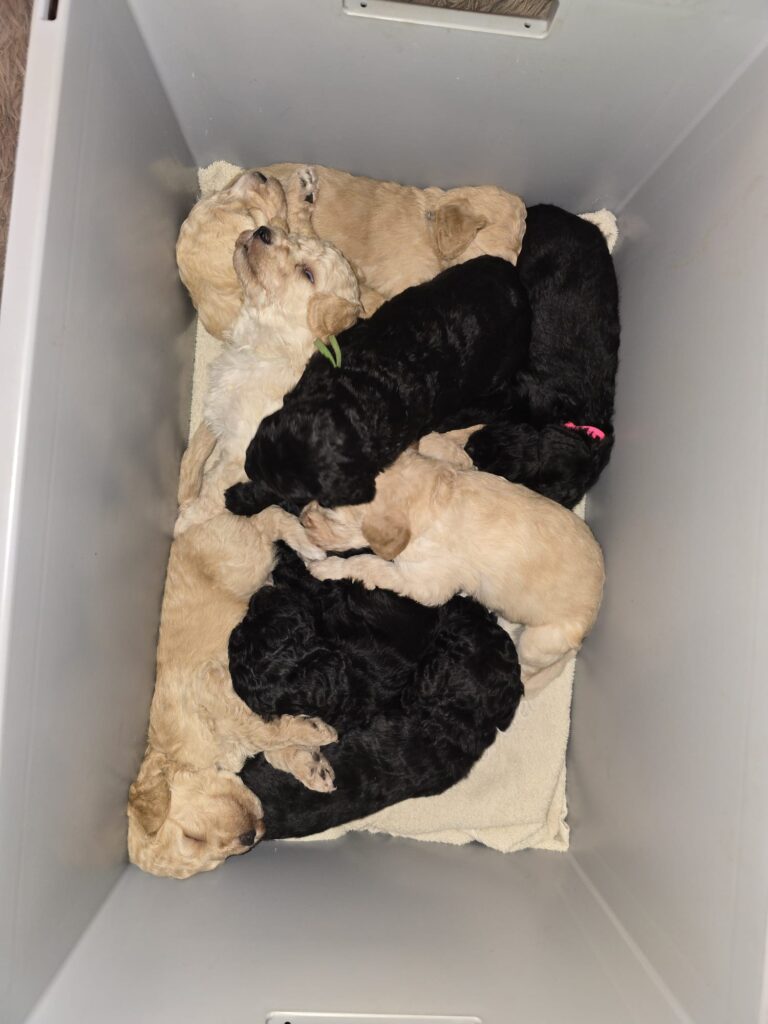
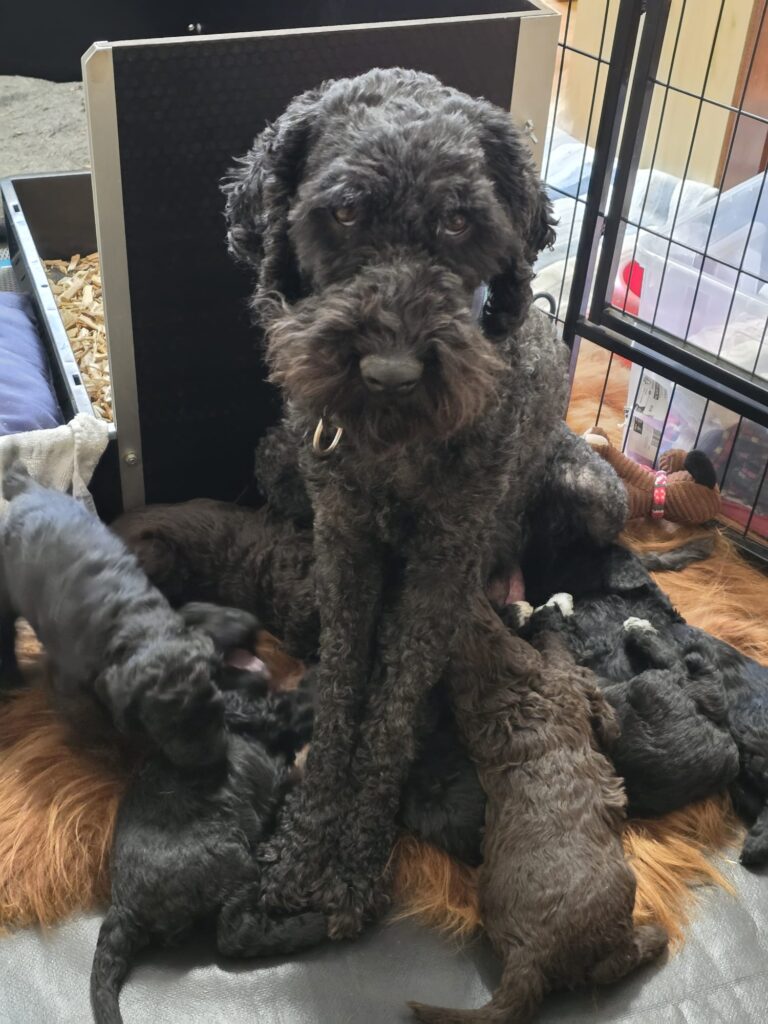
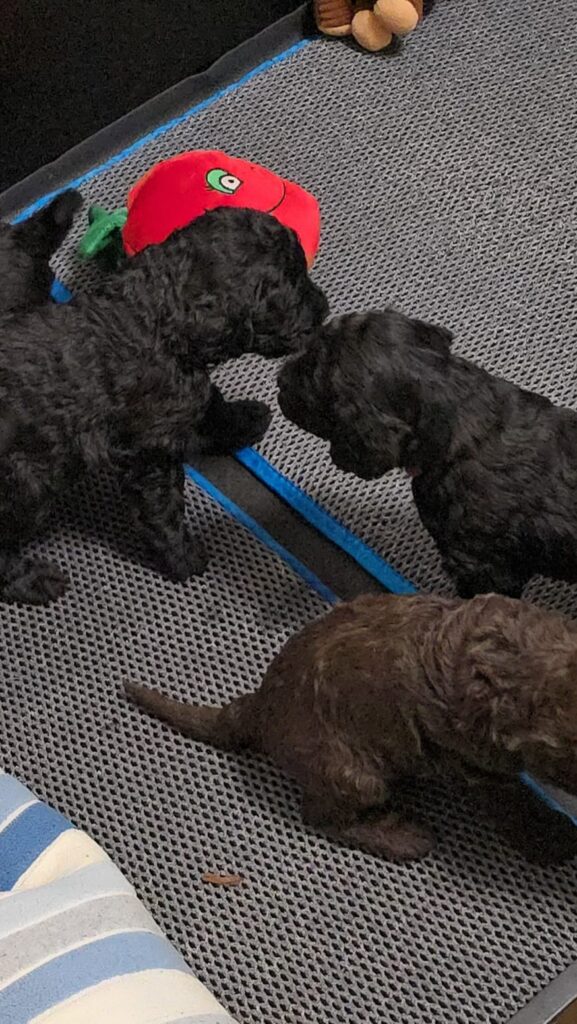
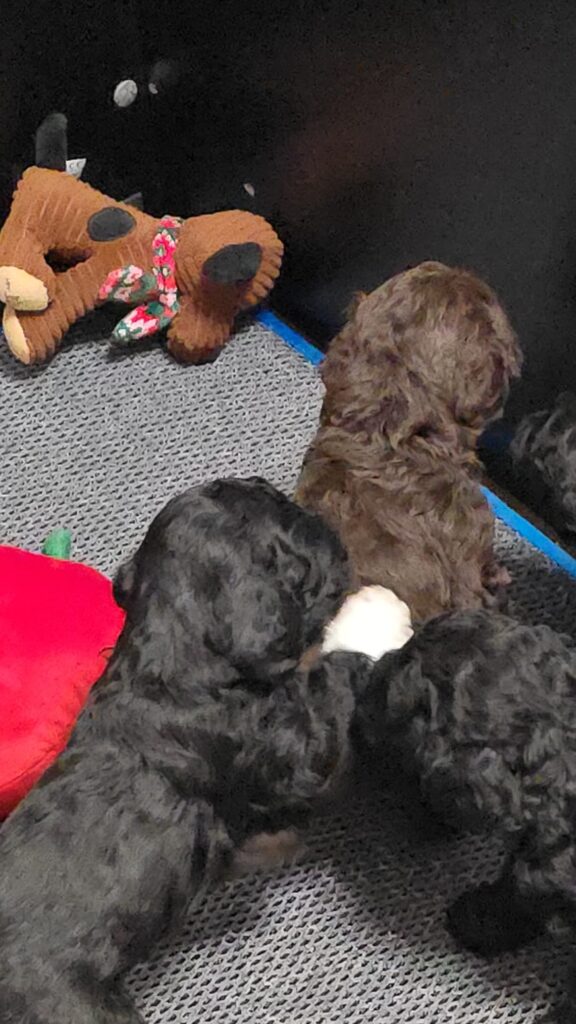
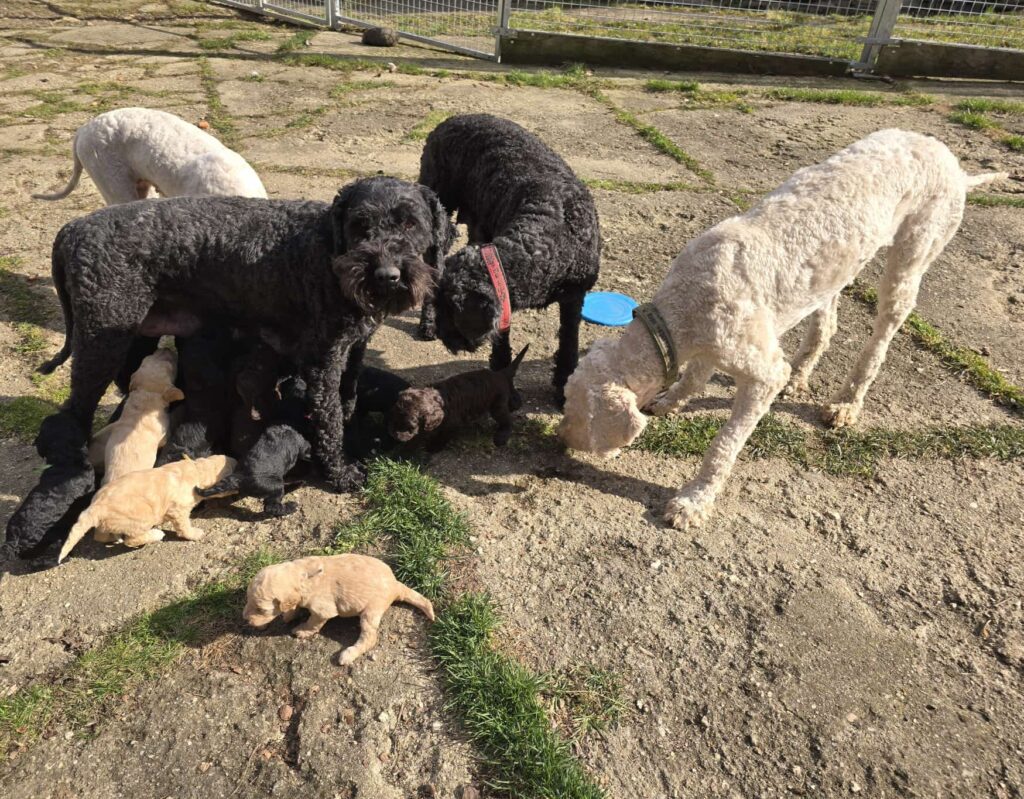
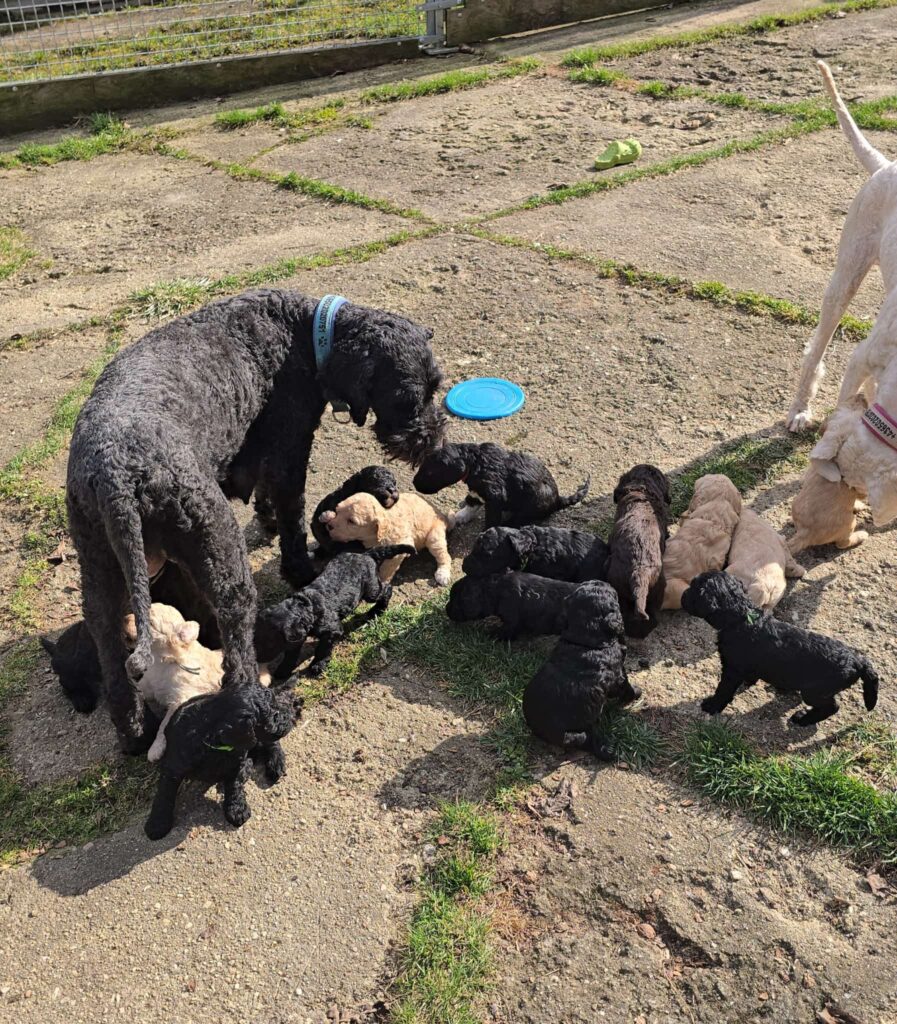
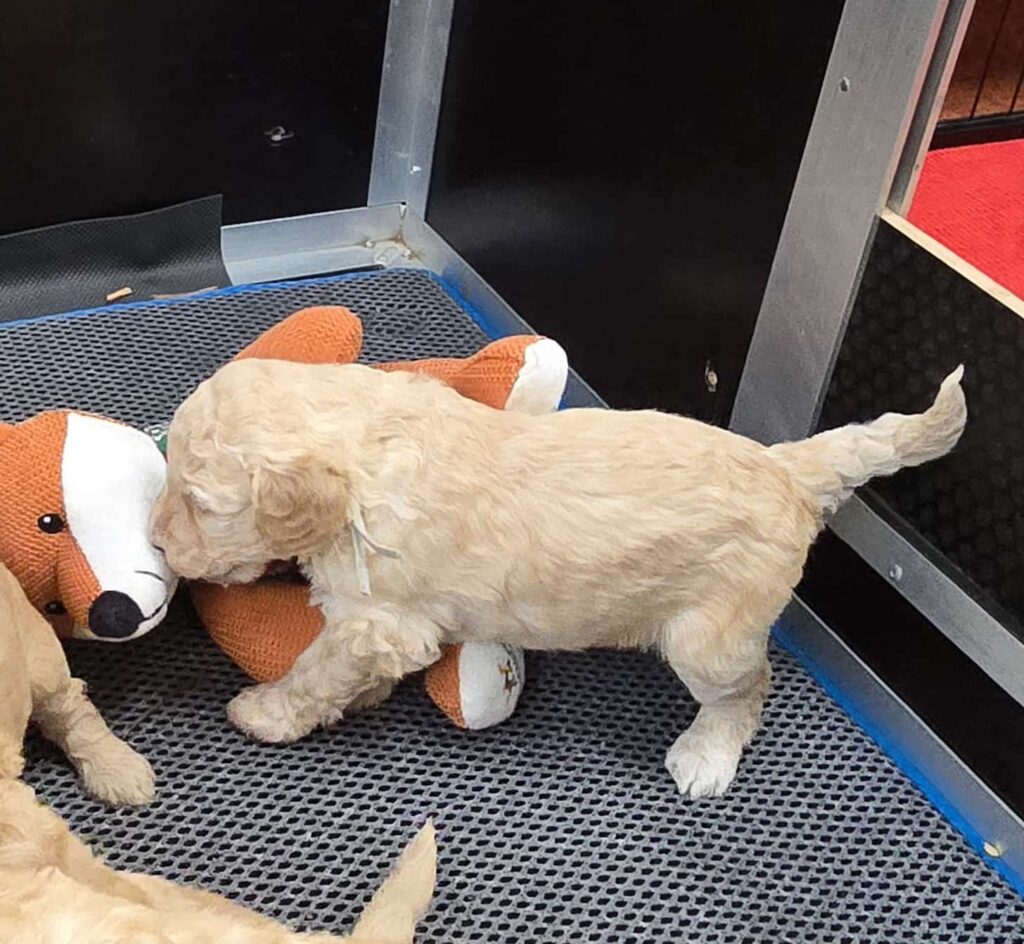
The tiny puppies are now gradually turning into little dogs. They show increasing interest in toys and are starting to play with one another more and more often.
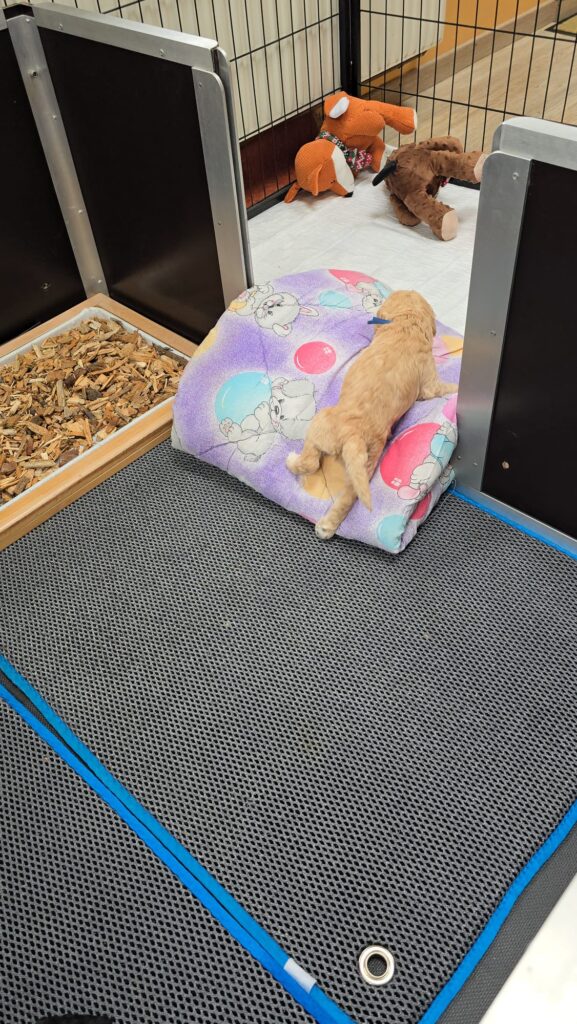
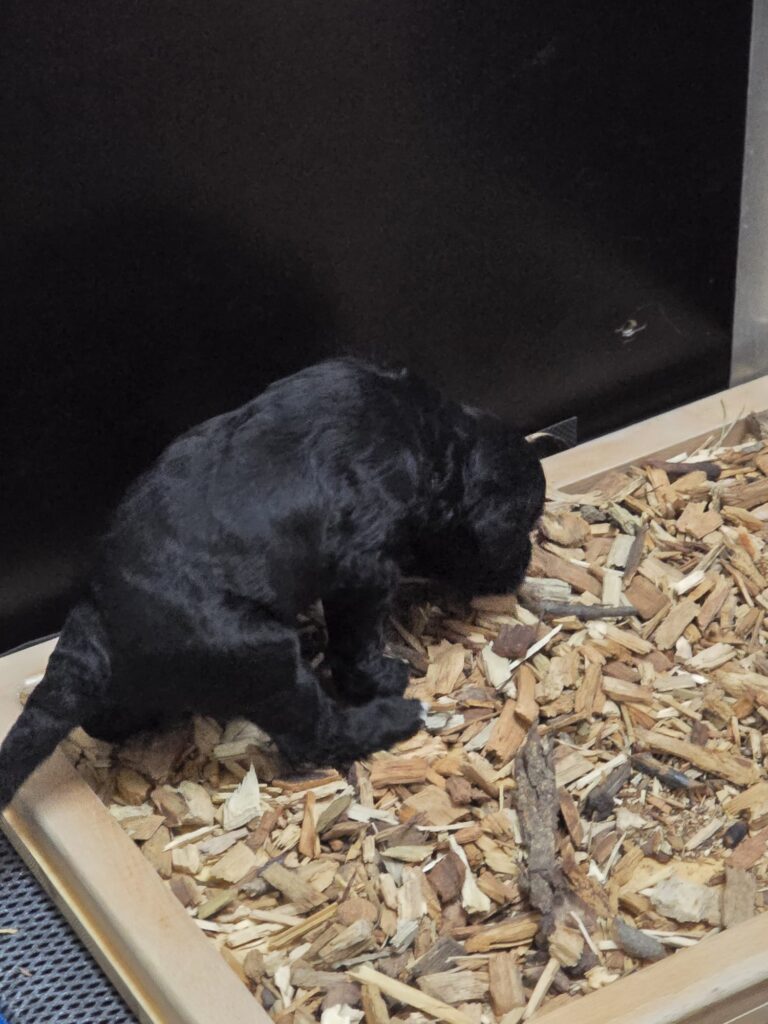
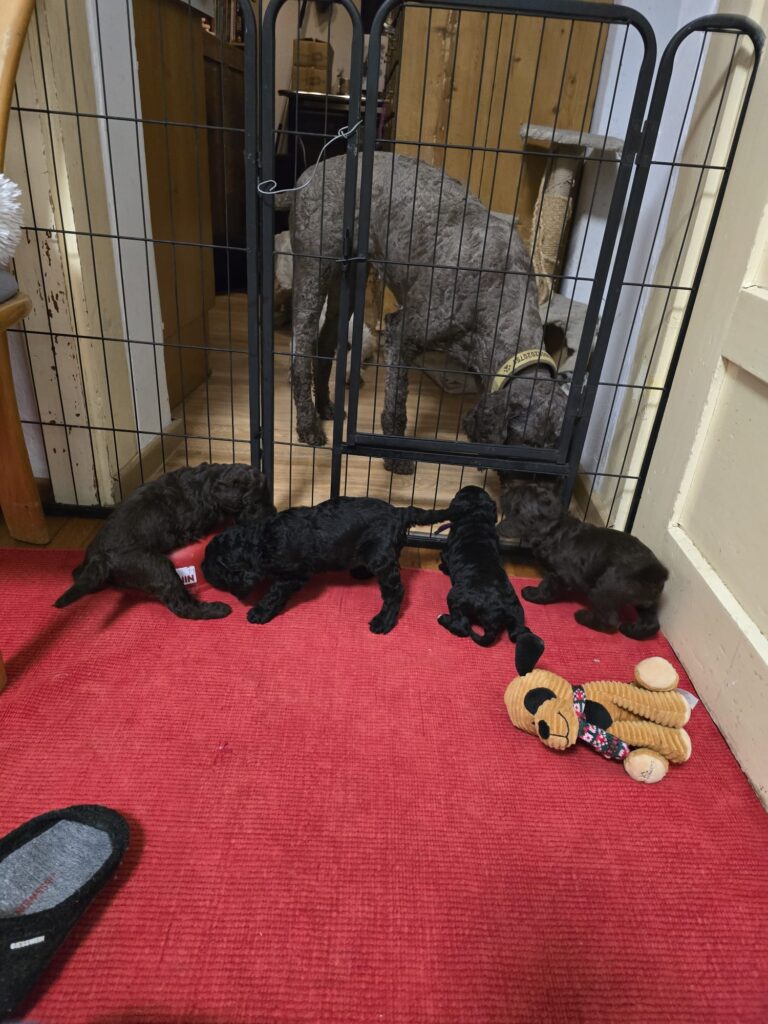
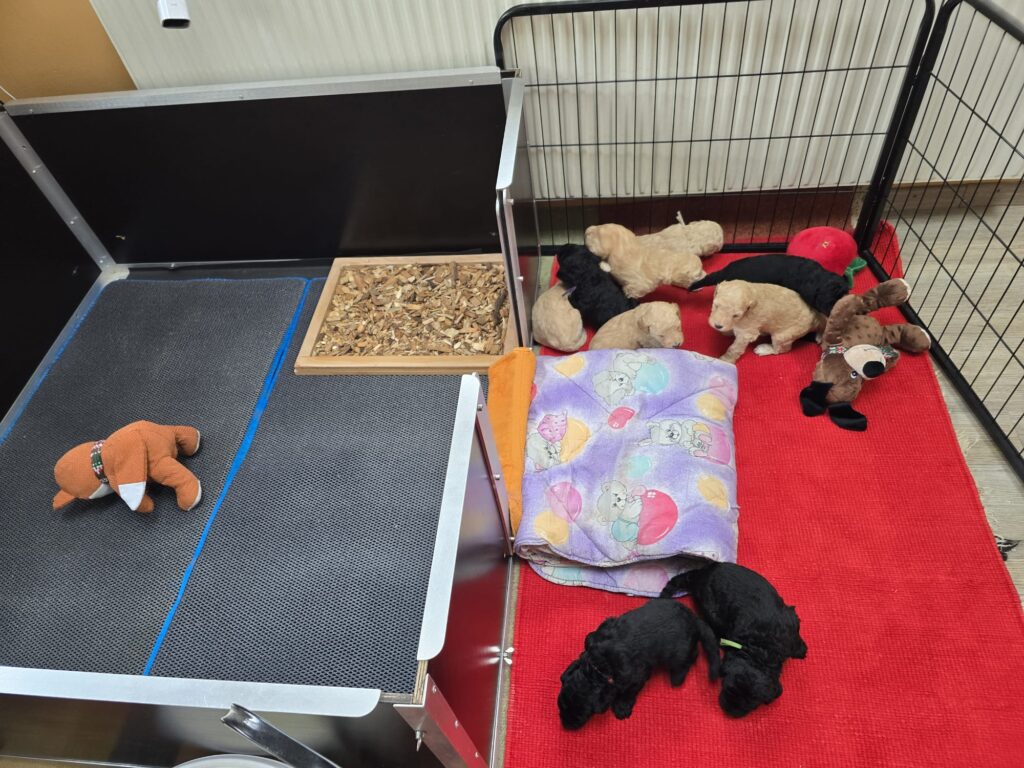
To encourage house-training, a box filled with wood shavings is introduced as a “potty.” At first, the puppies still have trouble reaching it, so small steps are needed to help them climb in. But after just a short time, they master this challenge with ease.
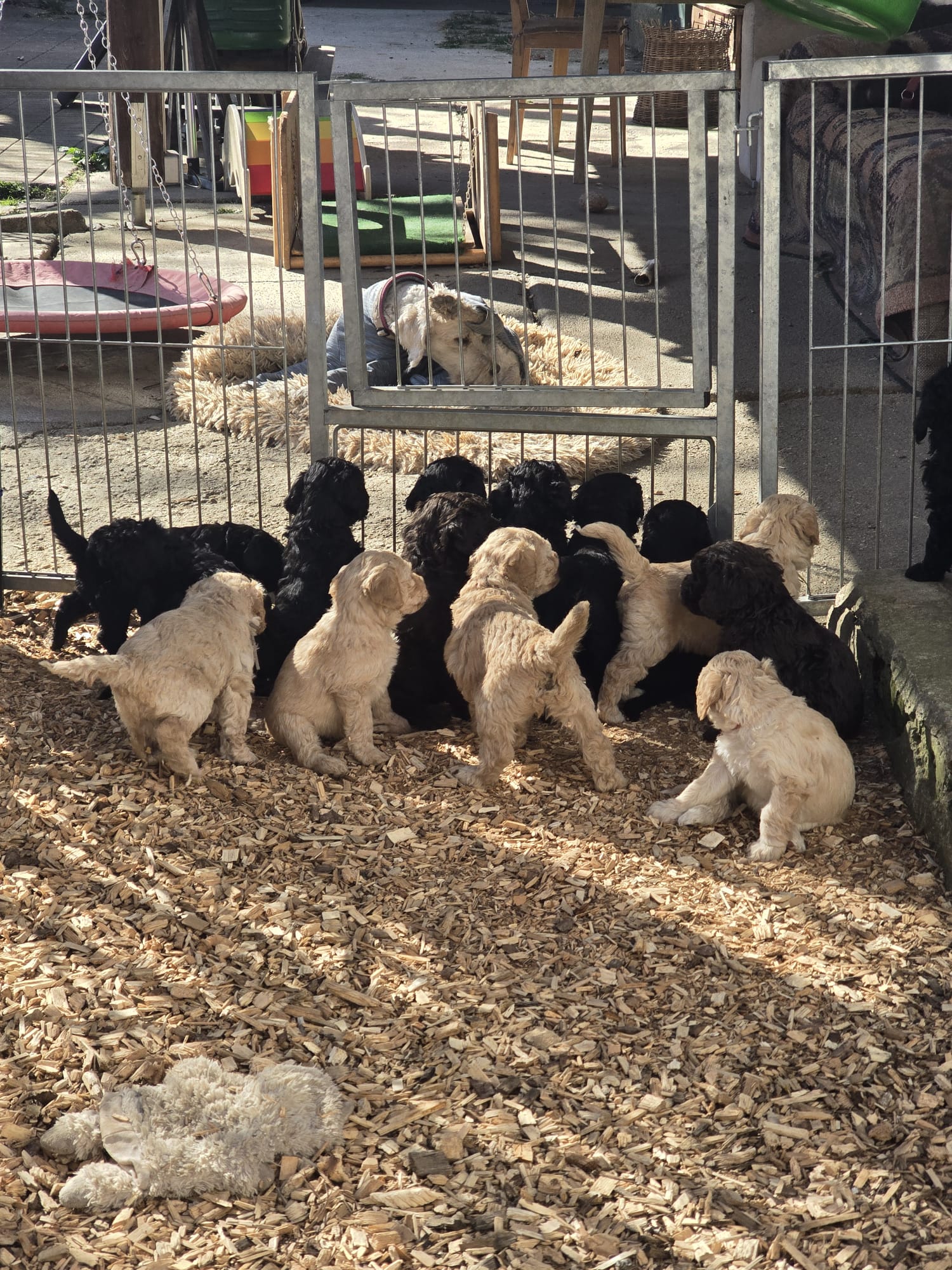
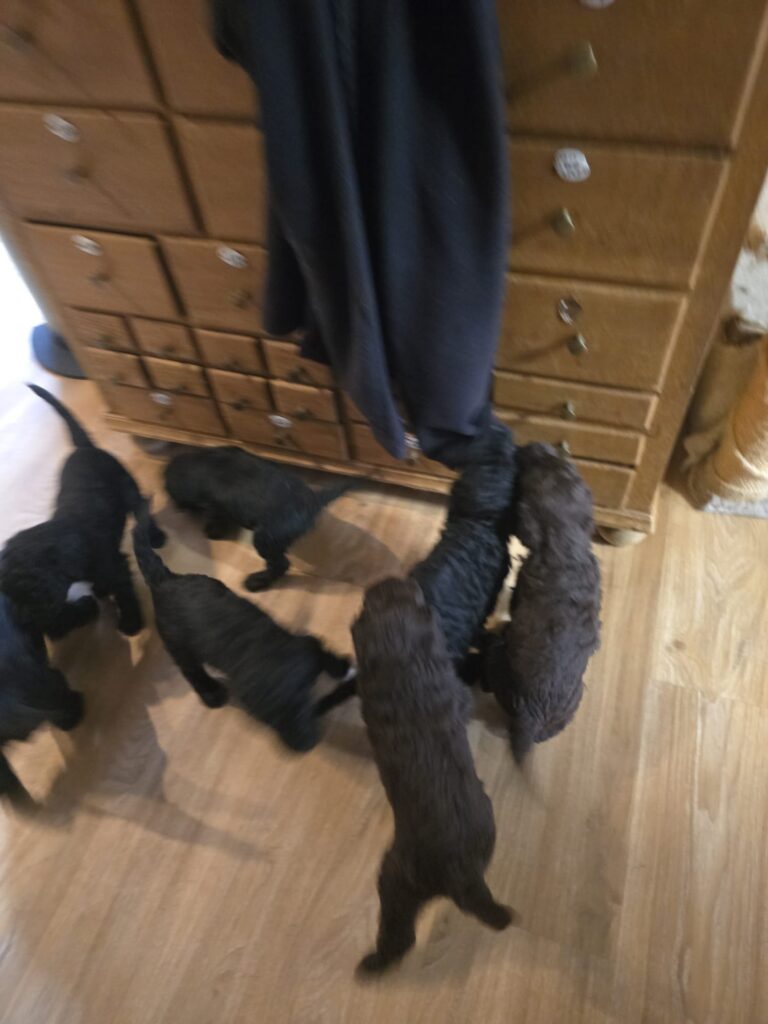
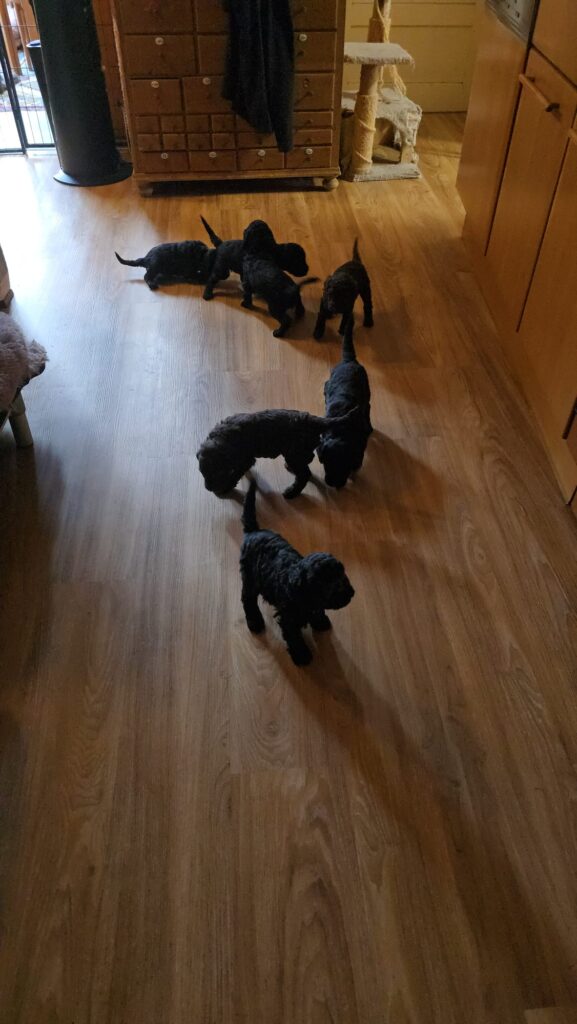
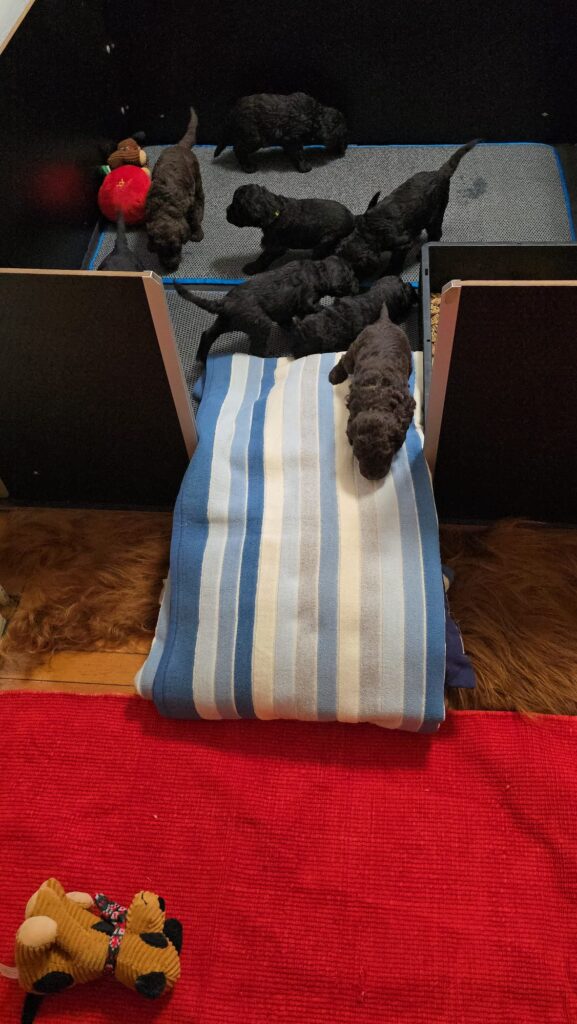
In addition, the puppies are allowed to explore outside the whelping box for the first time. Short excursions beyond that follow as well—at first still a bit unsteady on the unfamiliar, sometimes slippery ground, but they become more confident with each attempt.
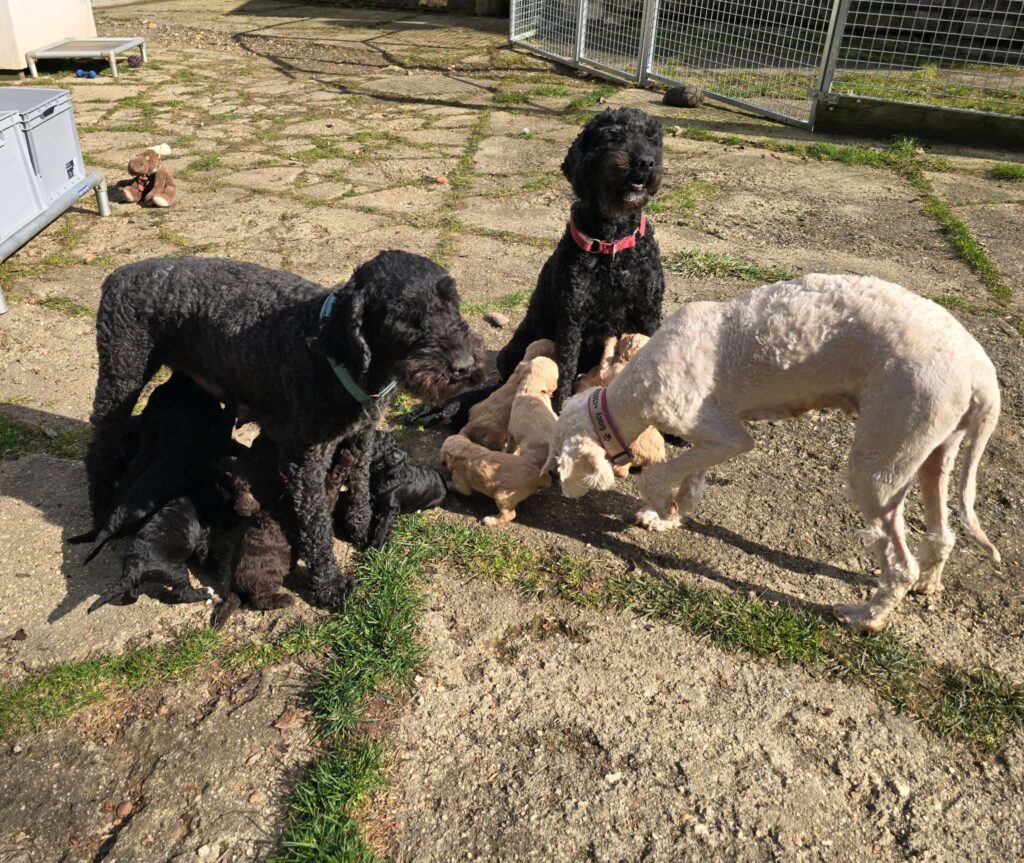
Finally, a special highlight is their first, albeit very brief, trip outdoors.
3rd Week
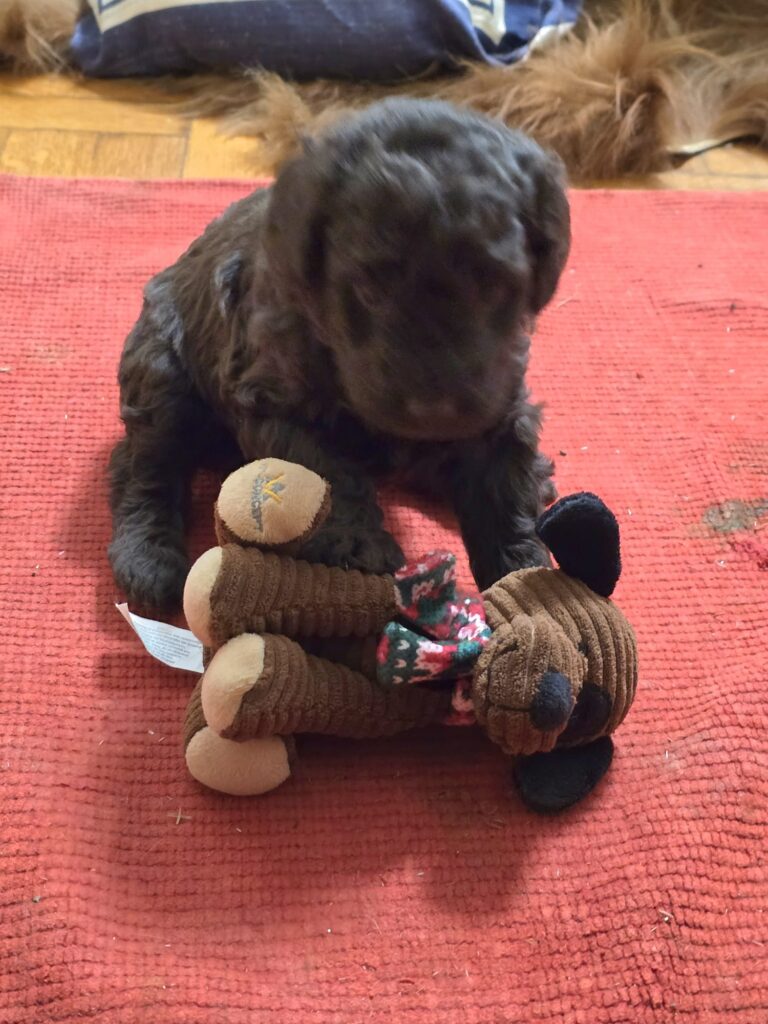
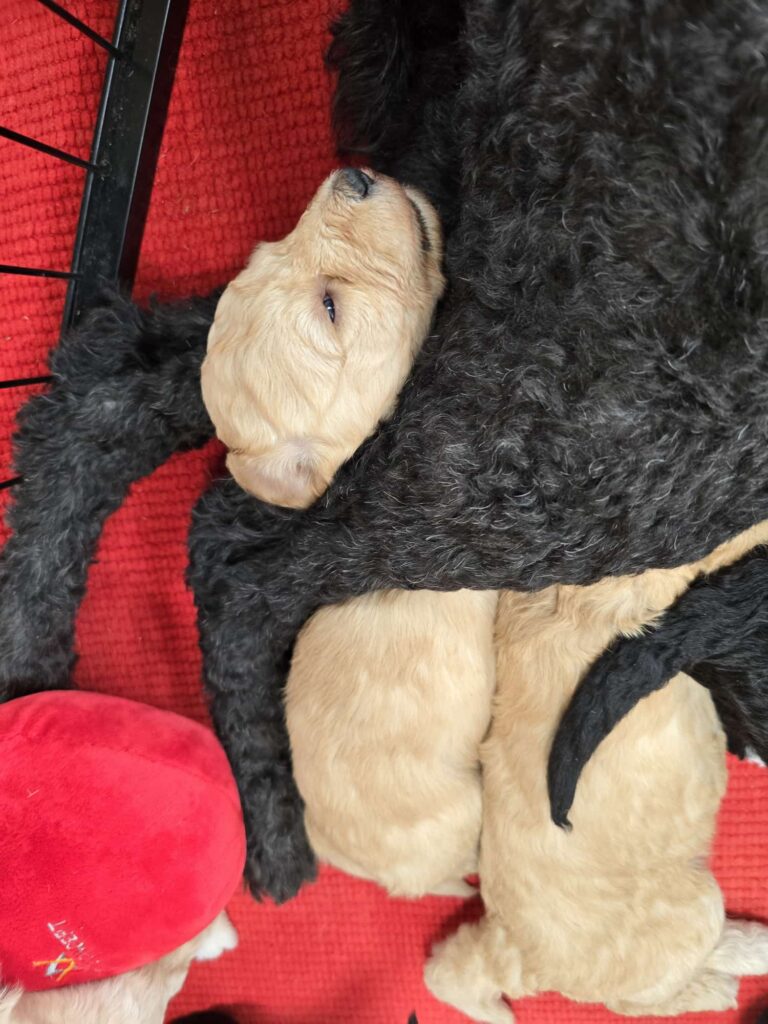
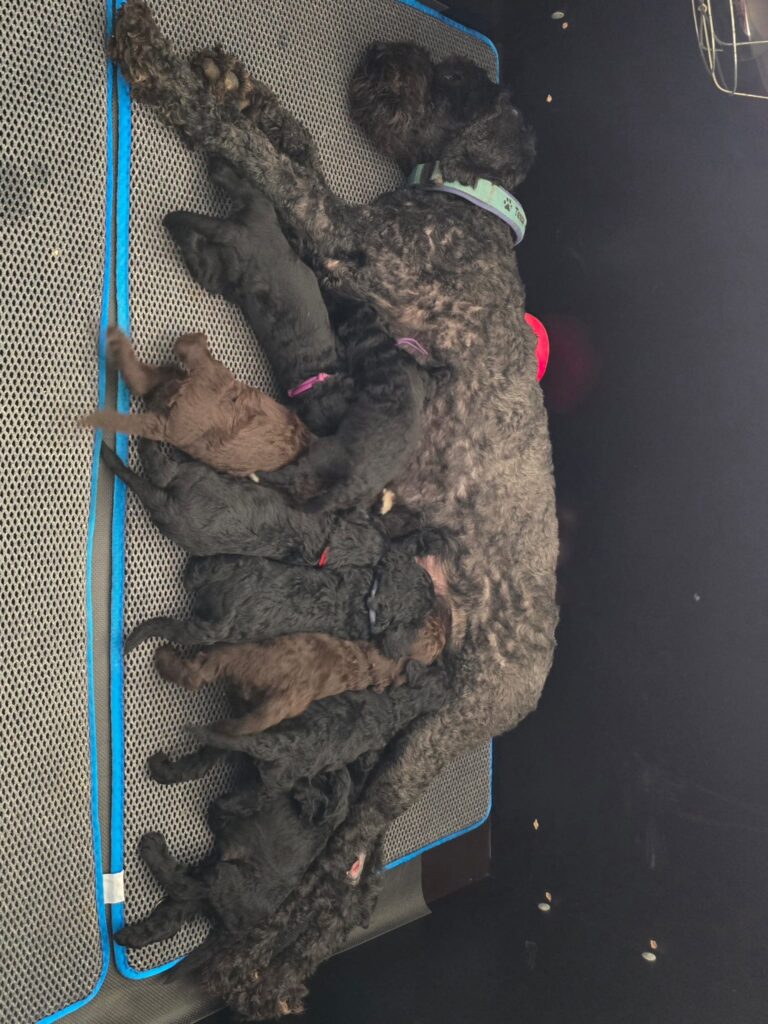
The third week of life is also known as the transition week. Puppies that were initially blind and deaf are now developing into sighted and hearing little explorers who are getting better at moving around every day. Their typical “wobbly gait” becomes more steady by the day.
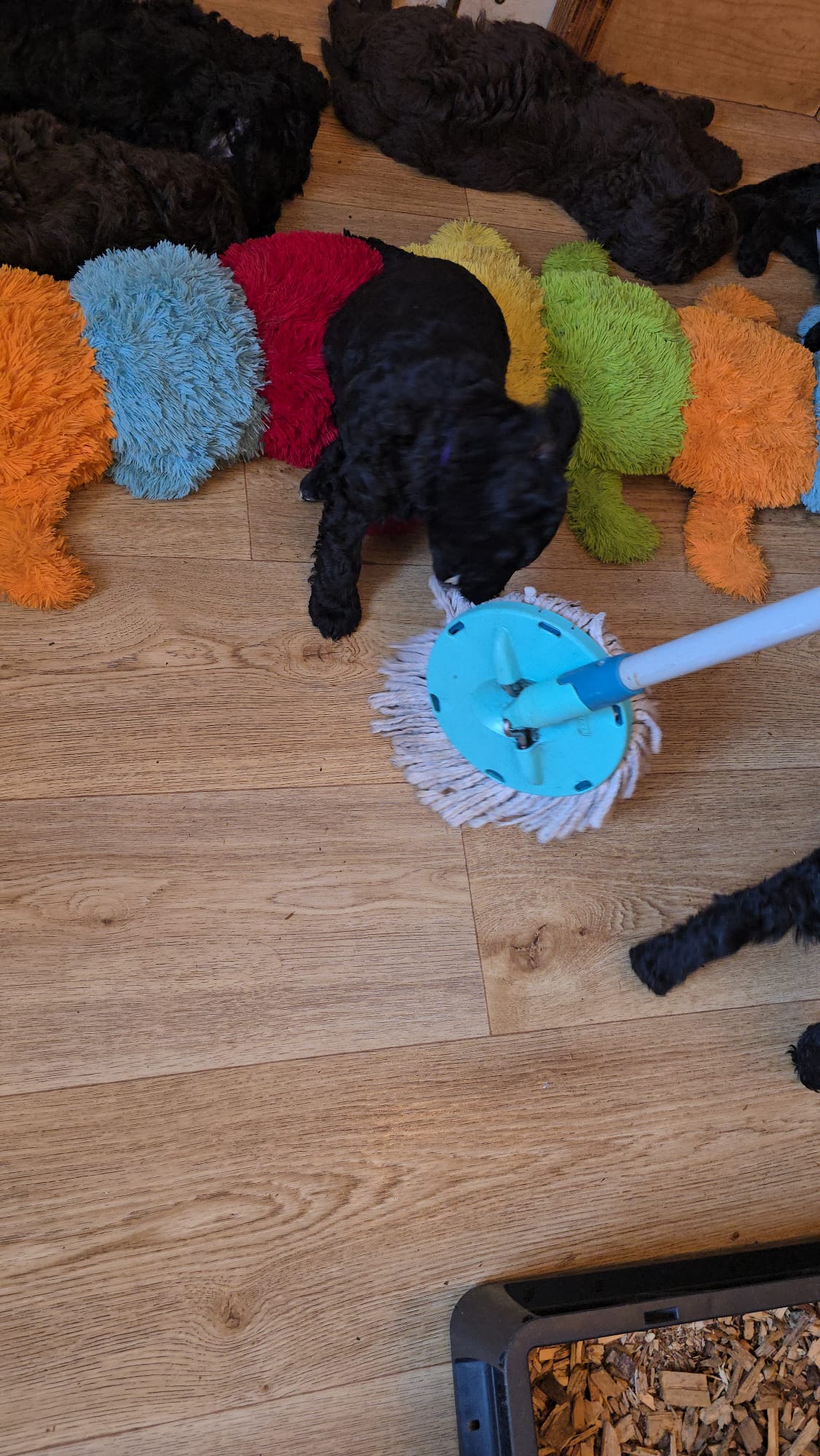
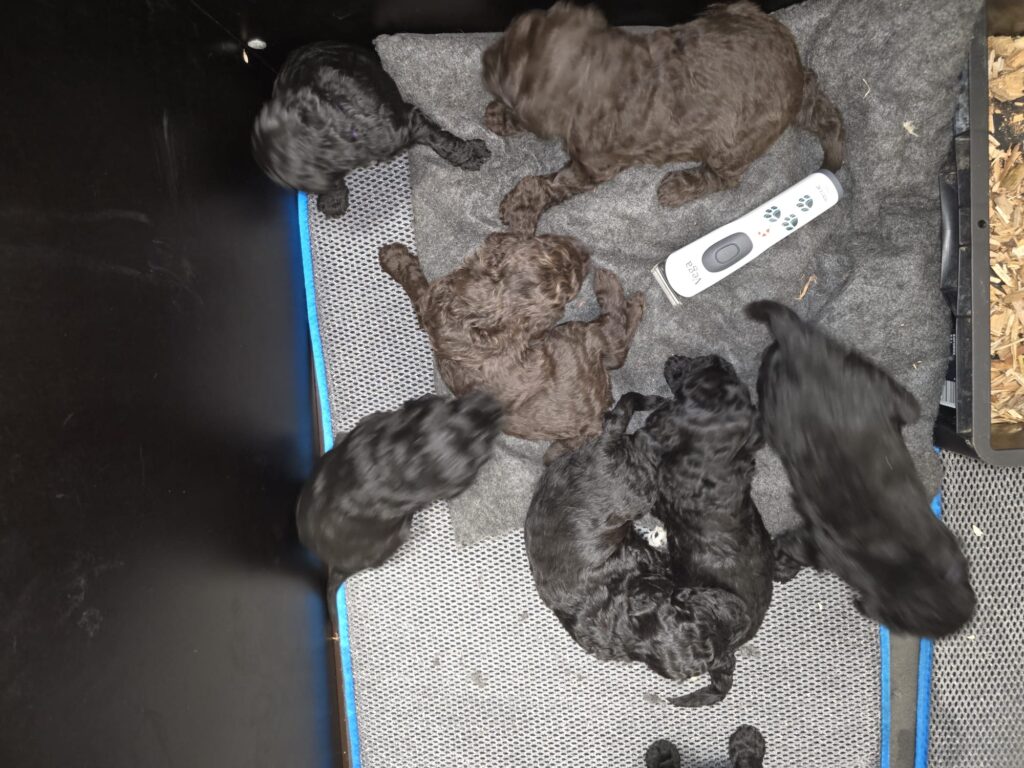
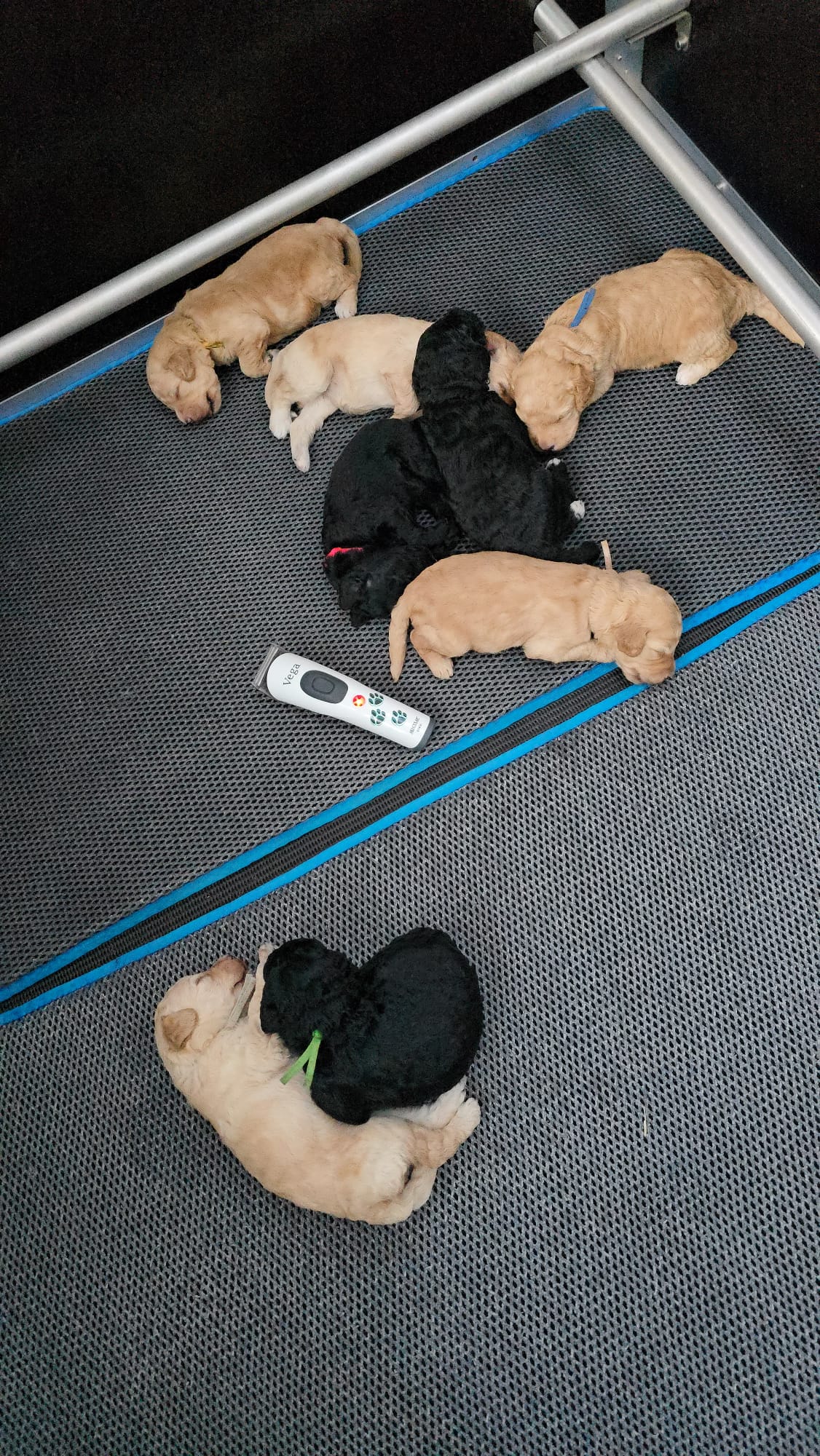
During this exciting phase, many new experiences are introduced: toys, different smells, and everyday sounds. For example, a running clipper is placed in the whelping box every day so that the puppies can get used to various background noises early on.
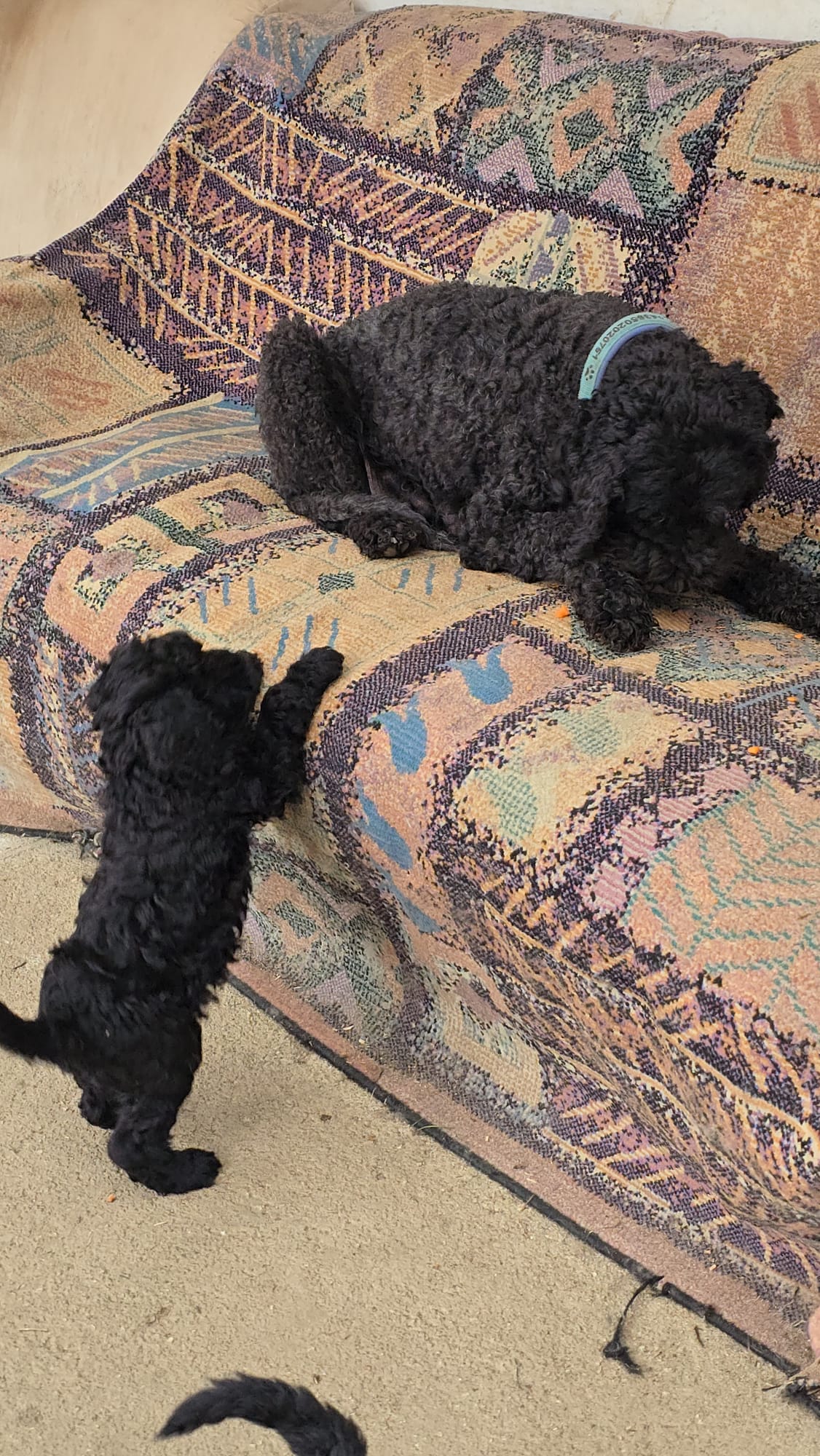
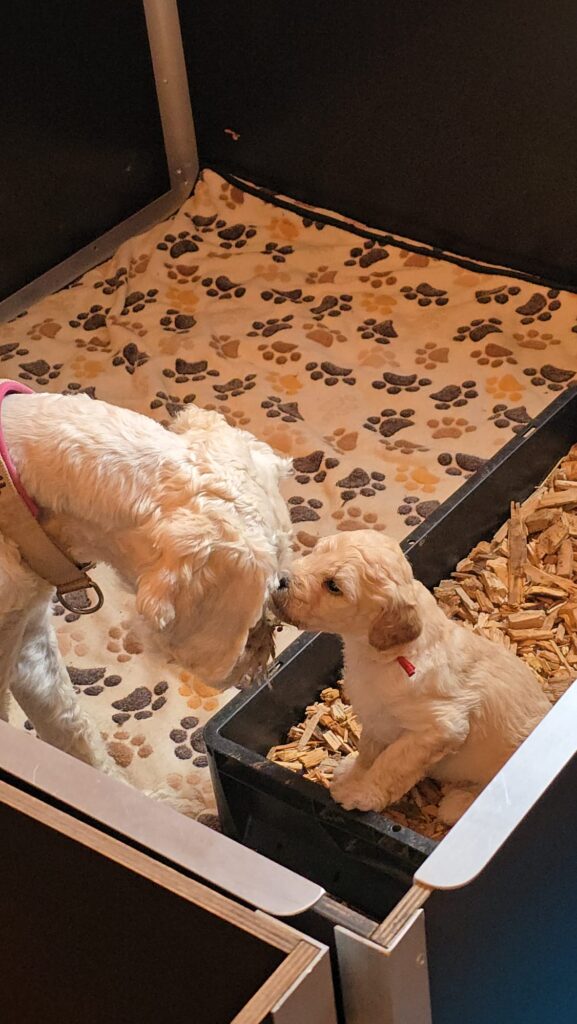
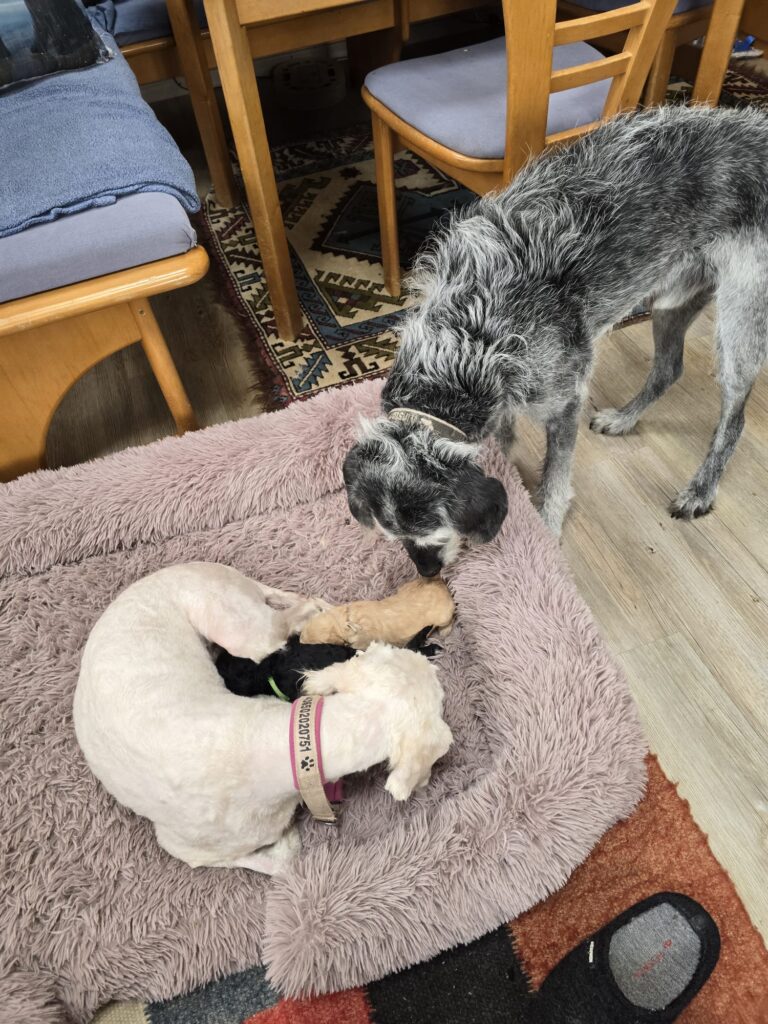
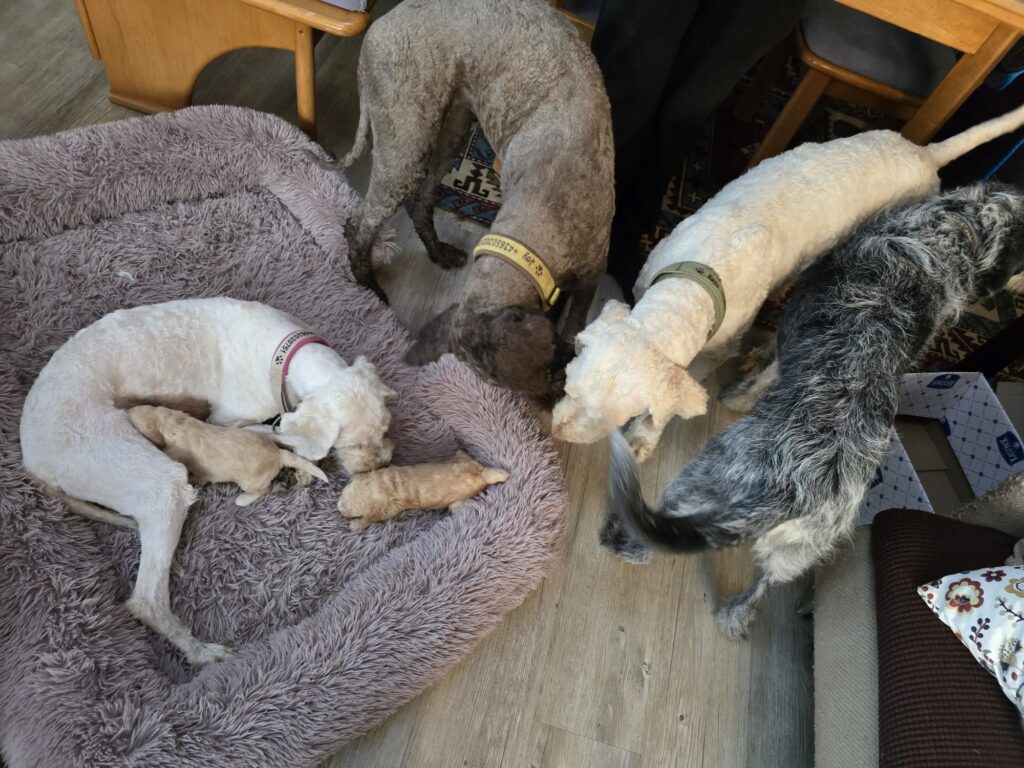
The adult dogs from the pack are also allowed to make their first cautious visits. In addition, the first playful interactions among the puppies can now be observed.
2nd Week
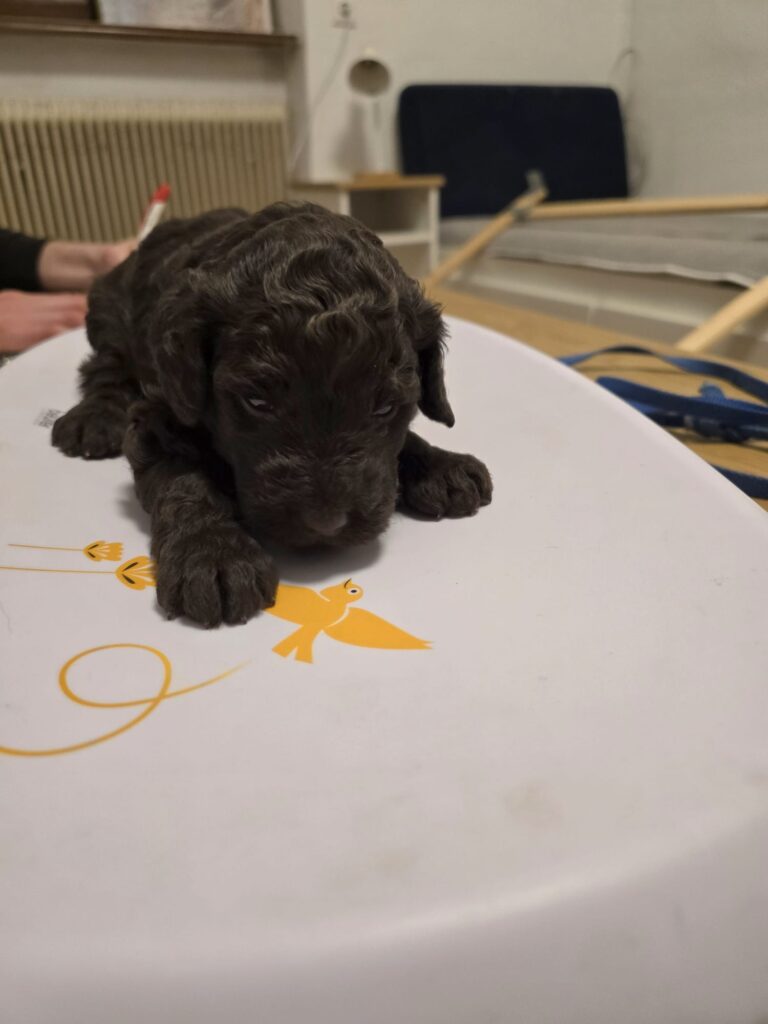
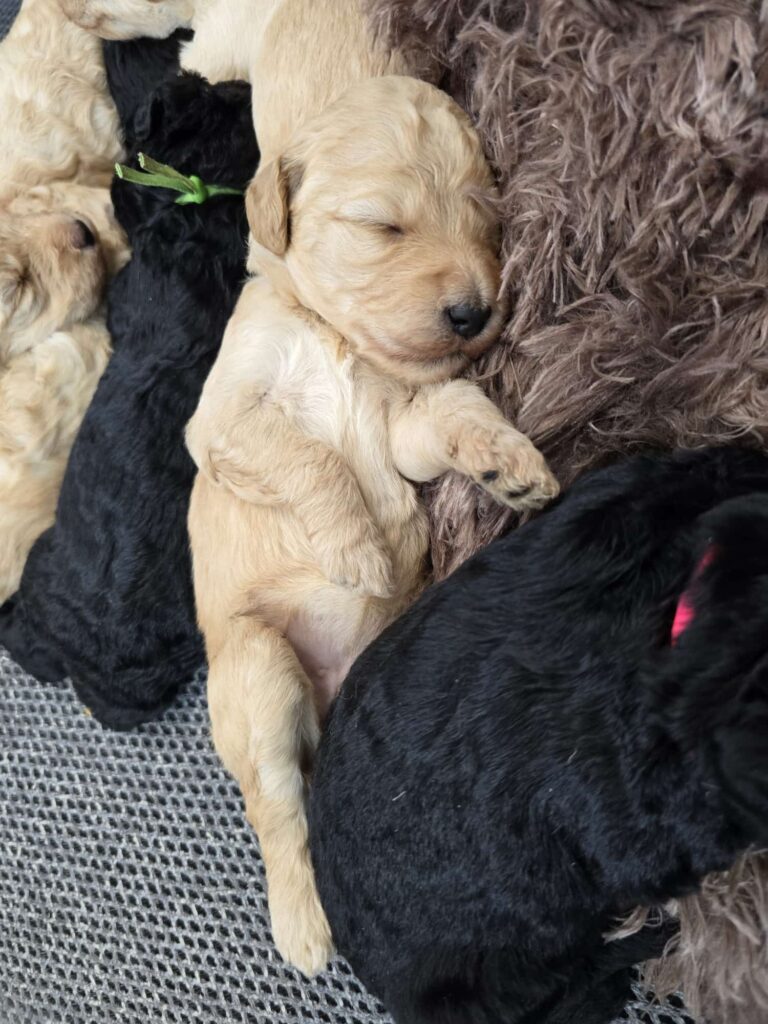
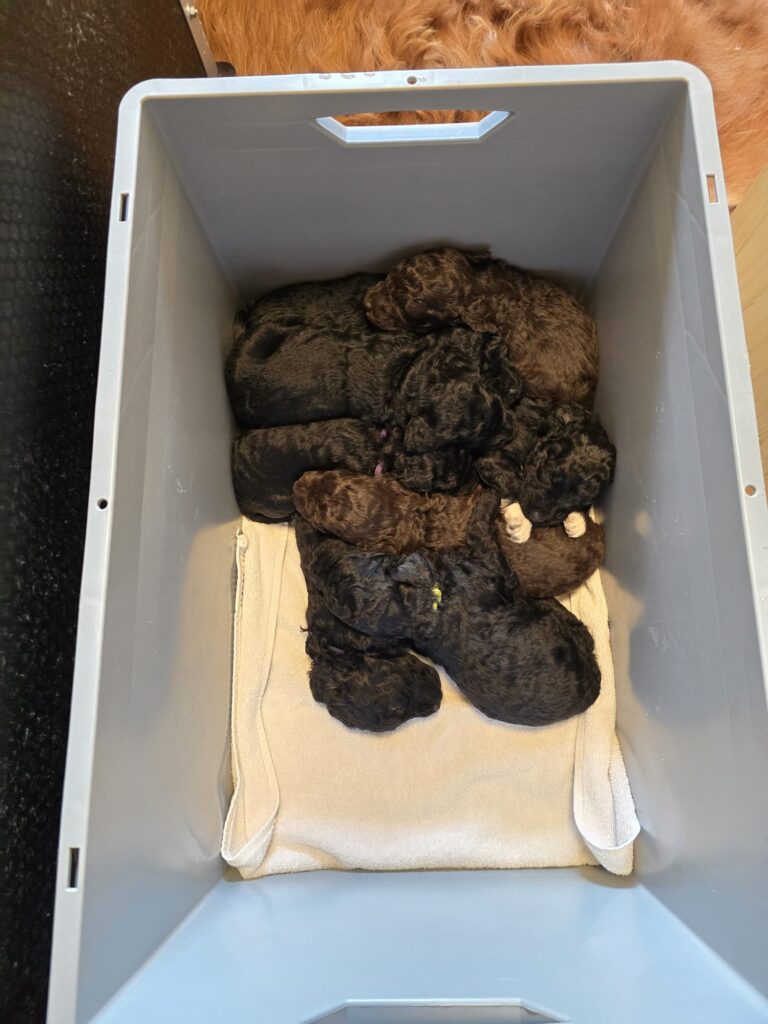
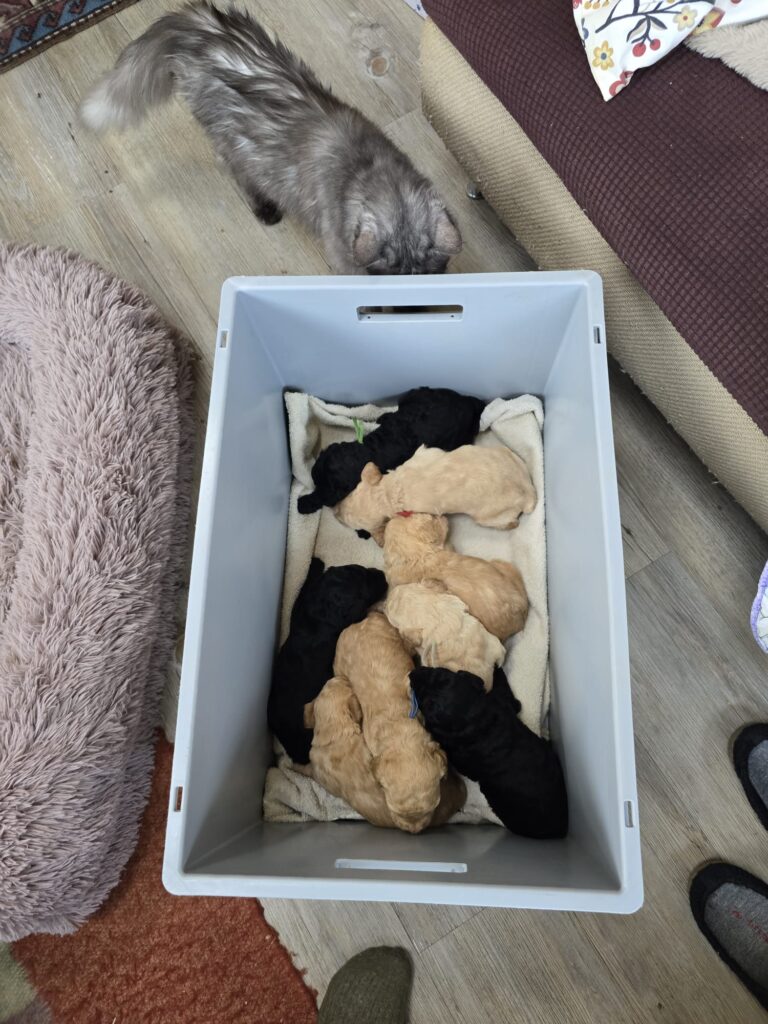
In the second week of our puppies’ lives, so much is happening – you can practically watch them grow and discover the world day by day. Their eyes are now opening, and with each passing day they become more active. Their first wobbly attempts at walking will quickly turning into curious little explorations around the whelping box.
They have also made great progress in terms of weight: the puppies have already tripled their birth weight, and some have even passed the 1 kg mark. To keep a close eye on their development, all puppies continue to be weighed daily.
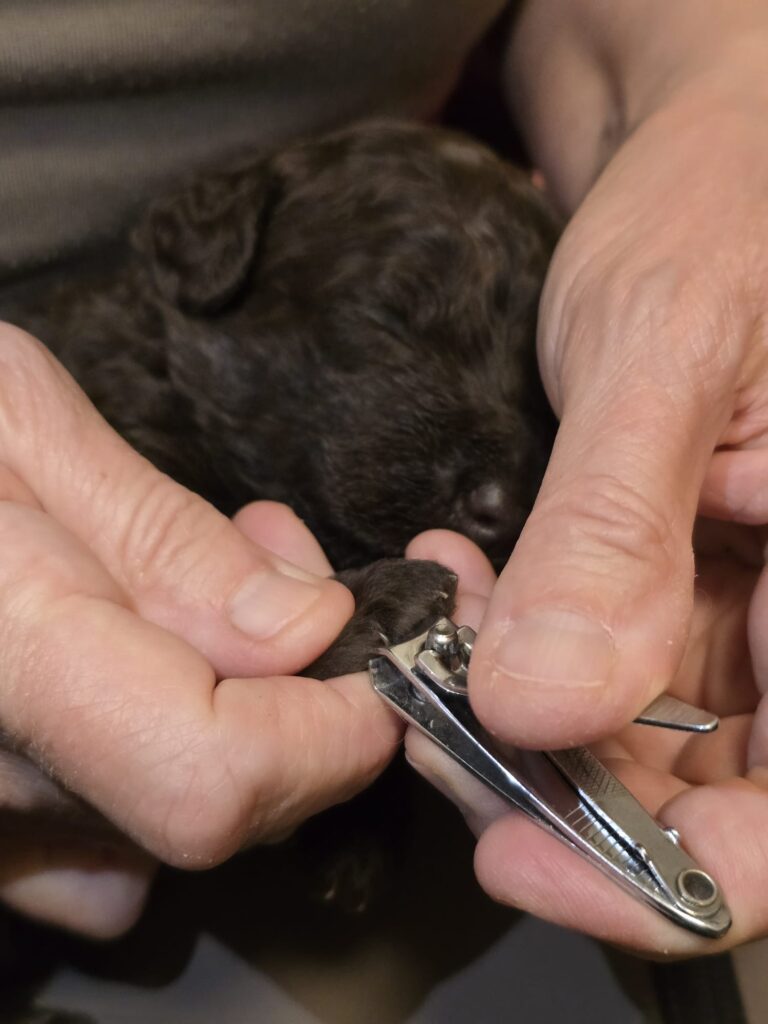
ENS (Early Neurological Stimulation) is being consistently continued to support their early development in the best possible way. Regular nail trimming is also essential to protect the mothers’ mammary glands. As the puppies are growing so quickly, their collars need to be adjusted almost daily.
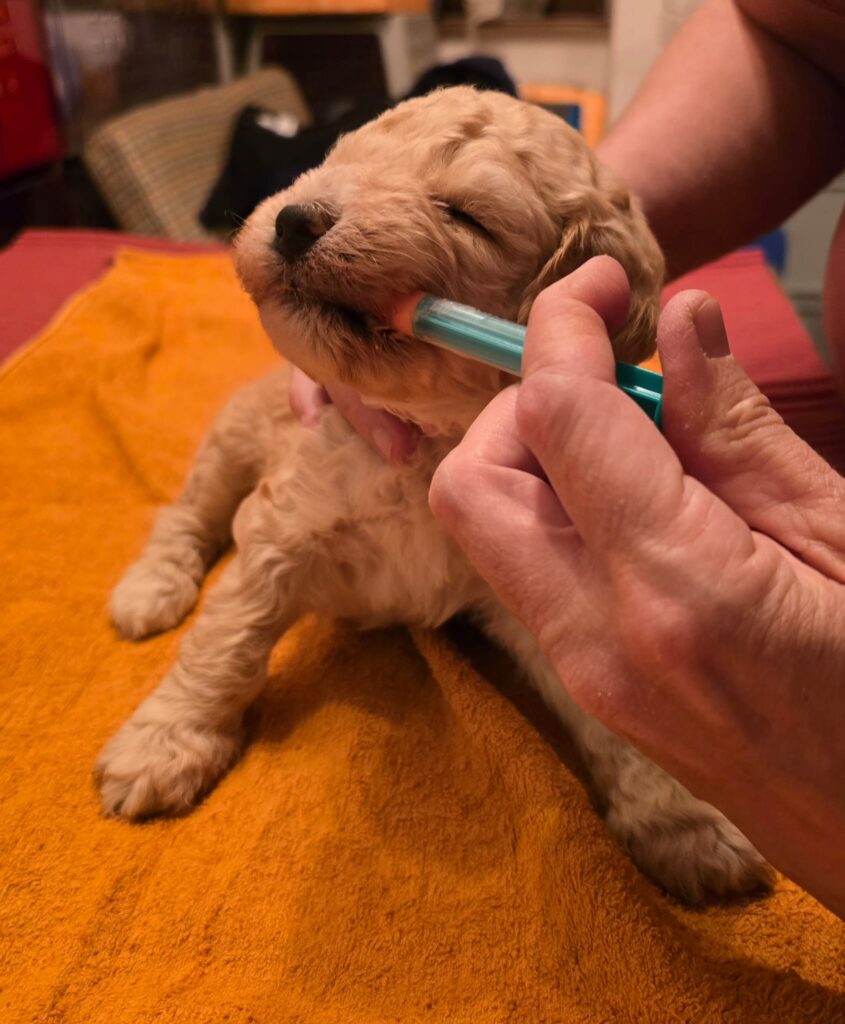
At the end of the second week, the first deworming was carried out, and all puppies handled it very well.
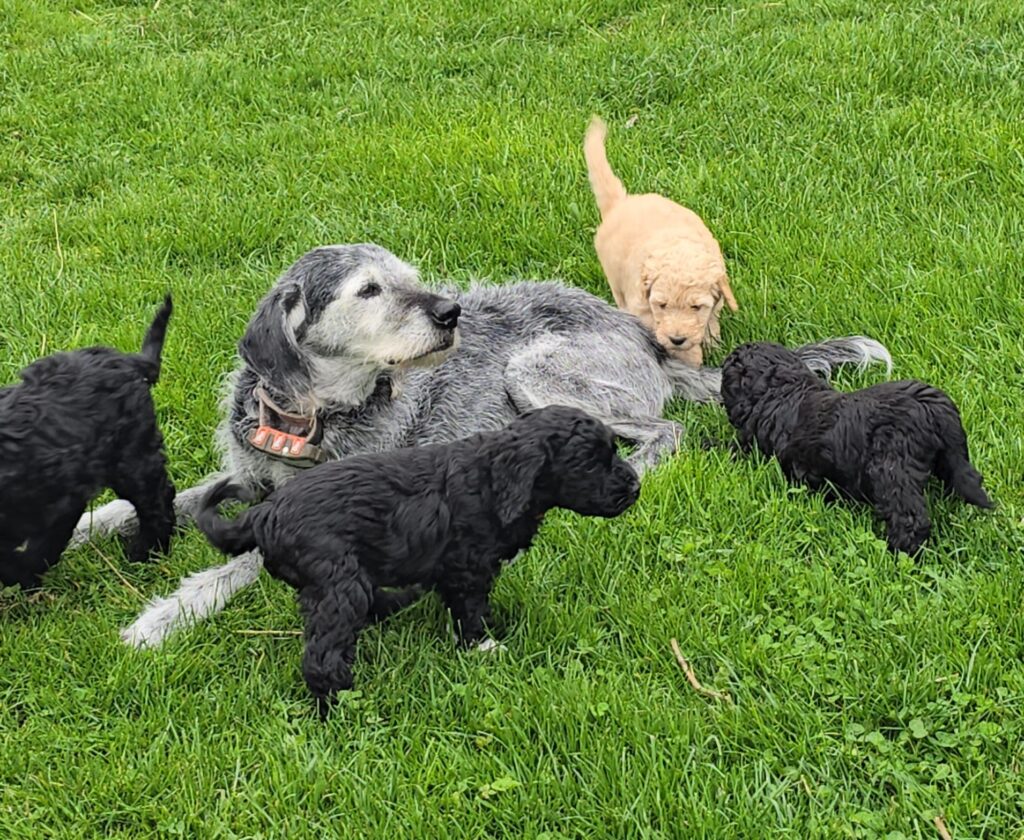
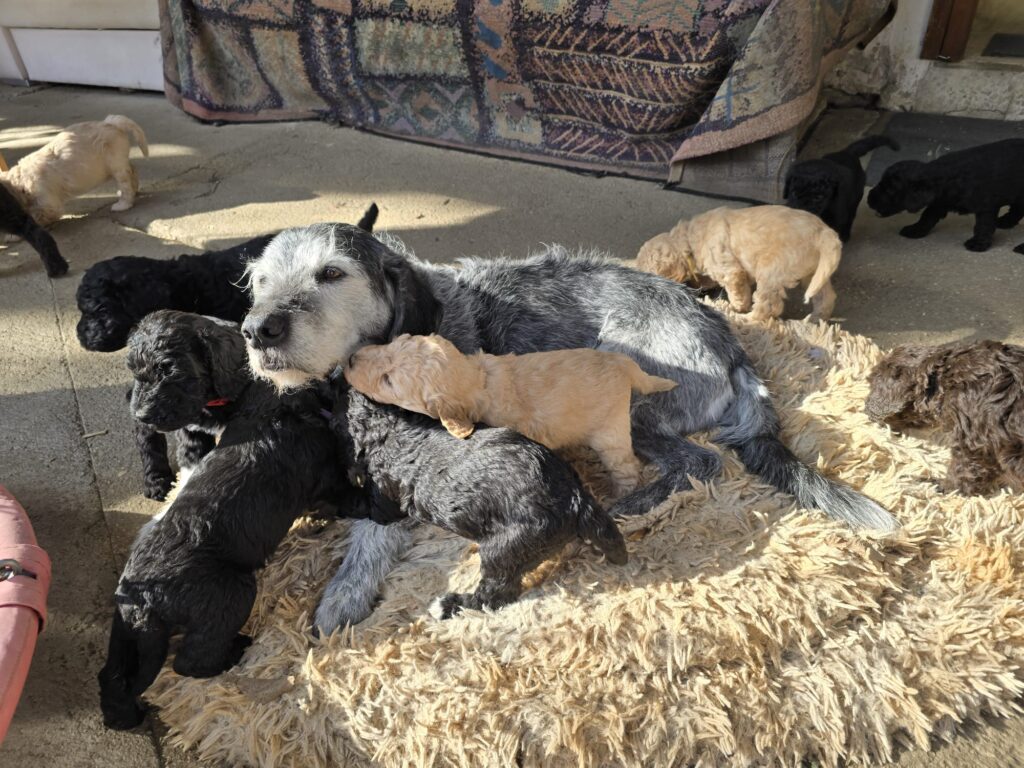
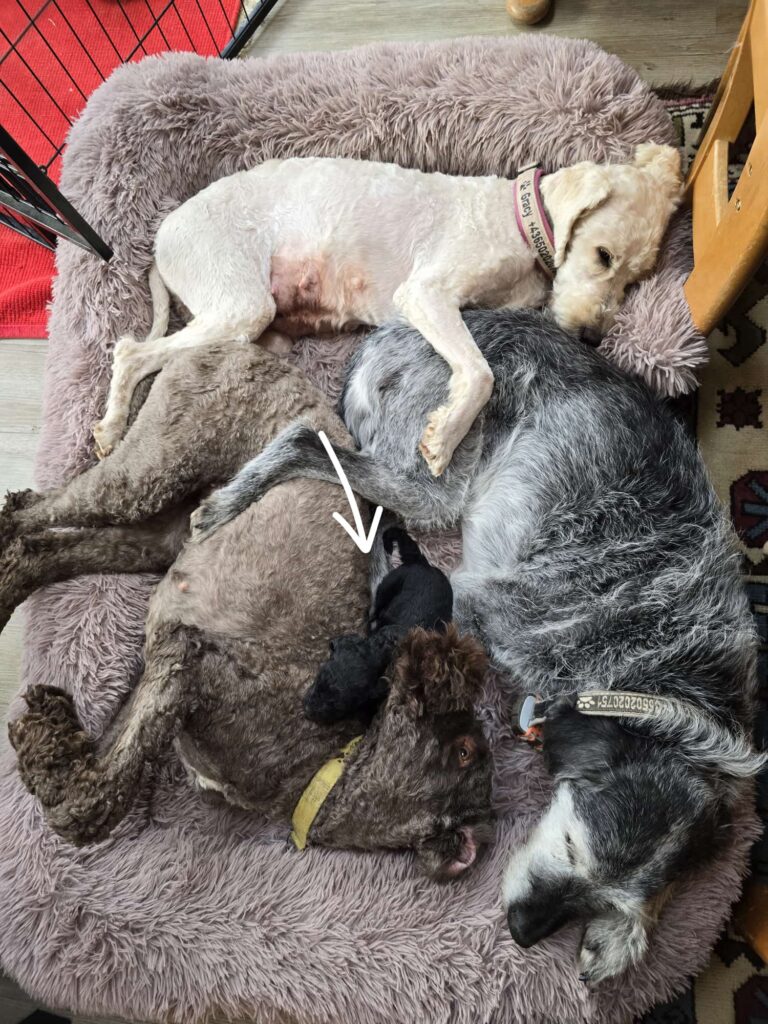
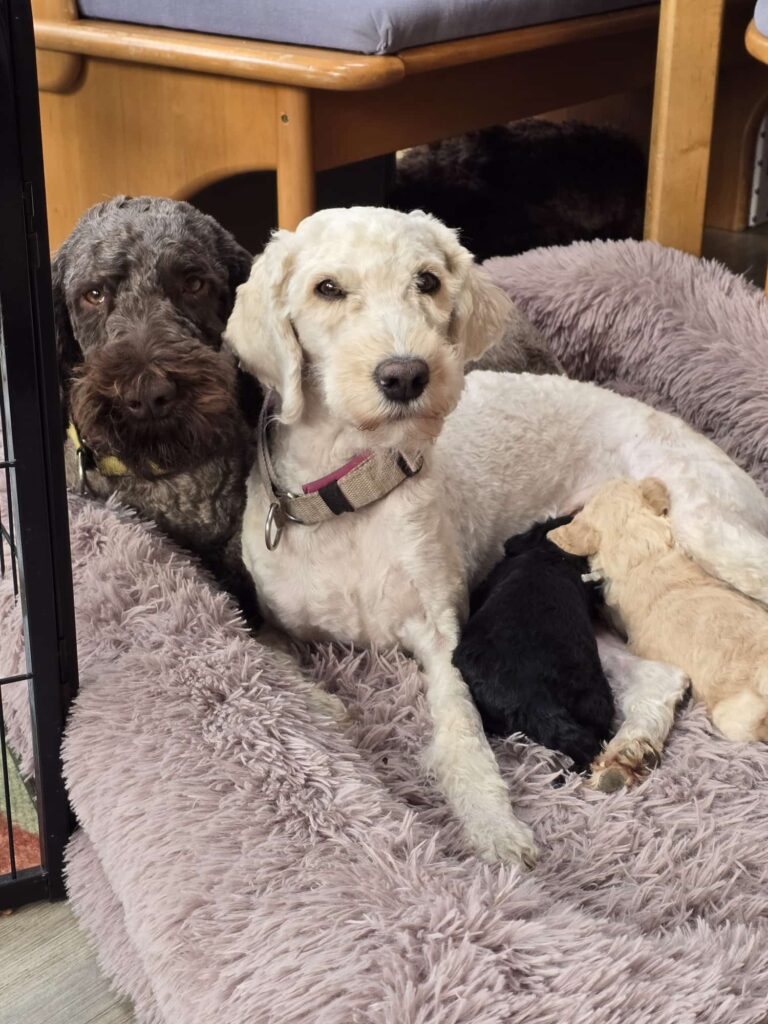
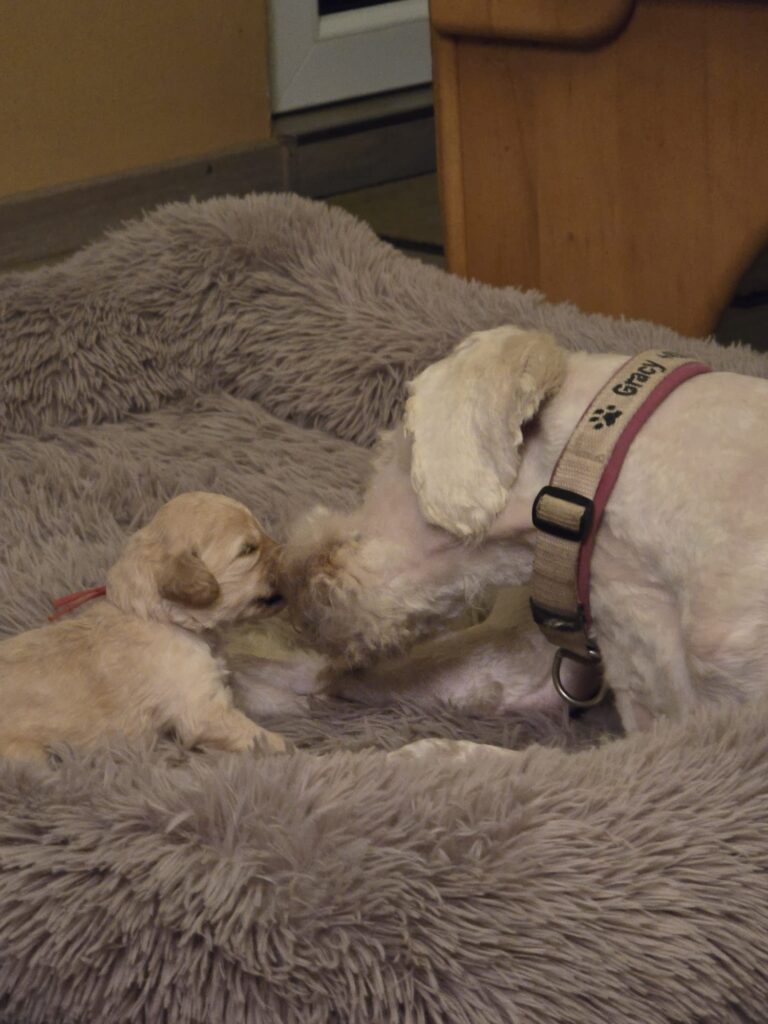
Our dear Gracy continues to be a loving nanny, caring for the puppies with great devotion. The mothers are doing an amazing job overall – their energy needs have increased significantly, and they are currently eating about four times their usual food ration.
There have already been the first little “escape attempts”: some of the puppies are eager to explore the big wide world, so we had to install the first barrier at the exit of the whelping box.
It’s an exciting time – every day brings new and delightful developmental milestones.
1st Week
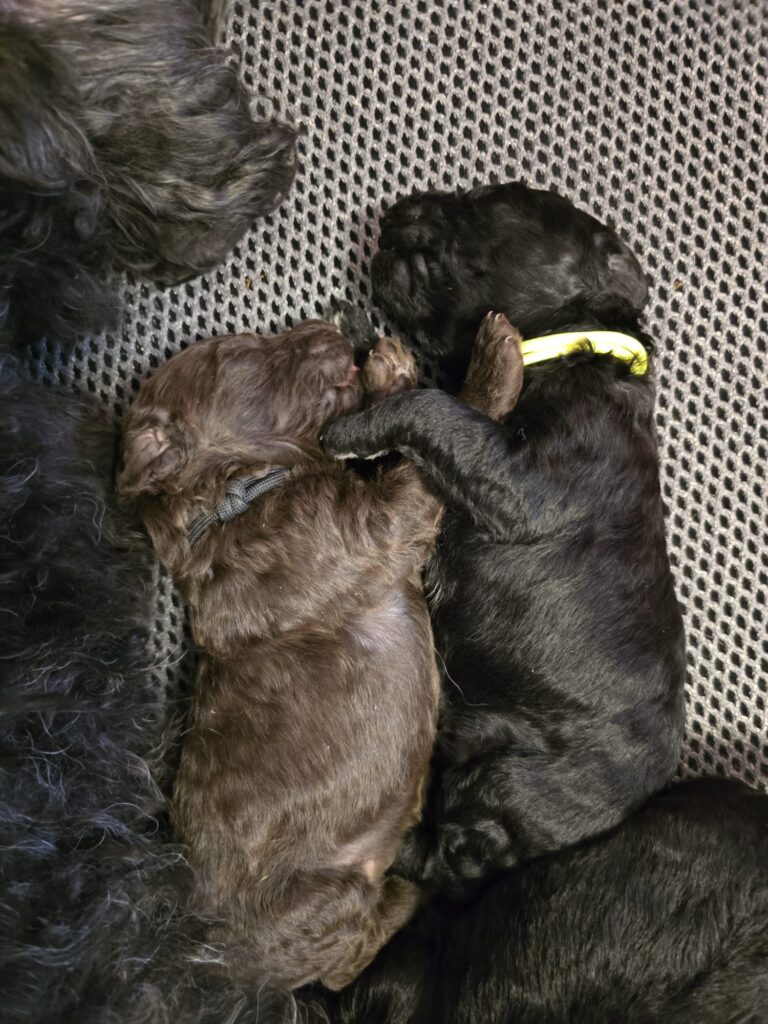
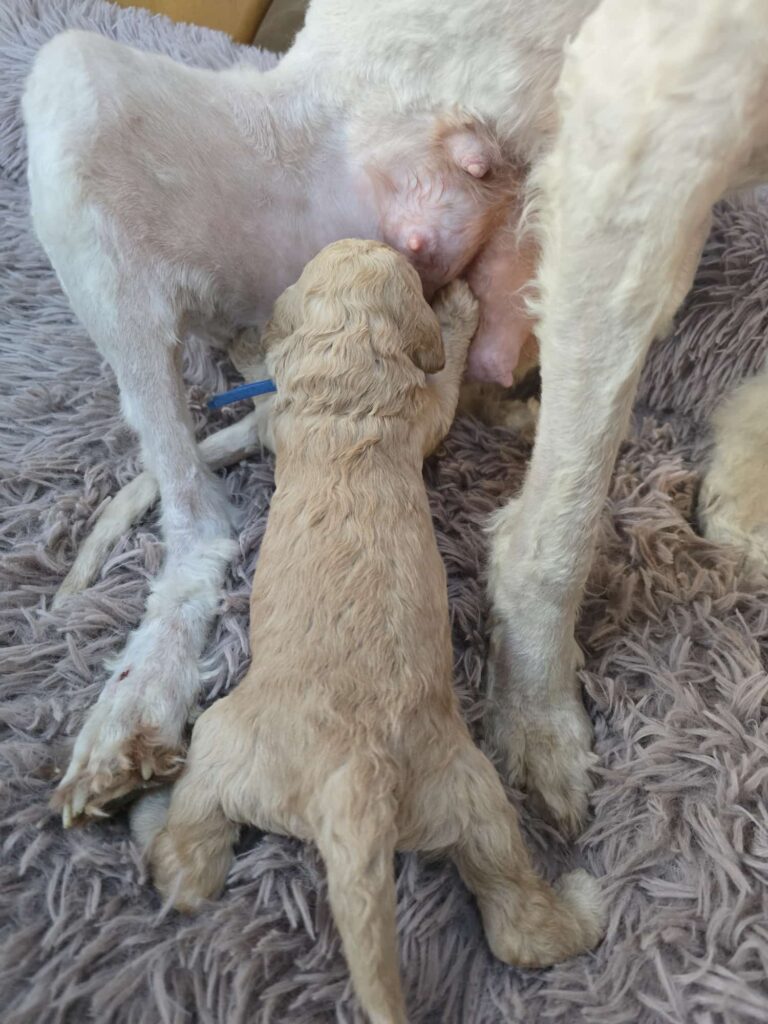
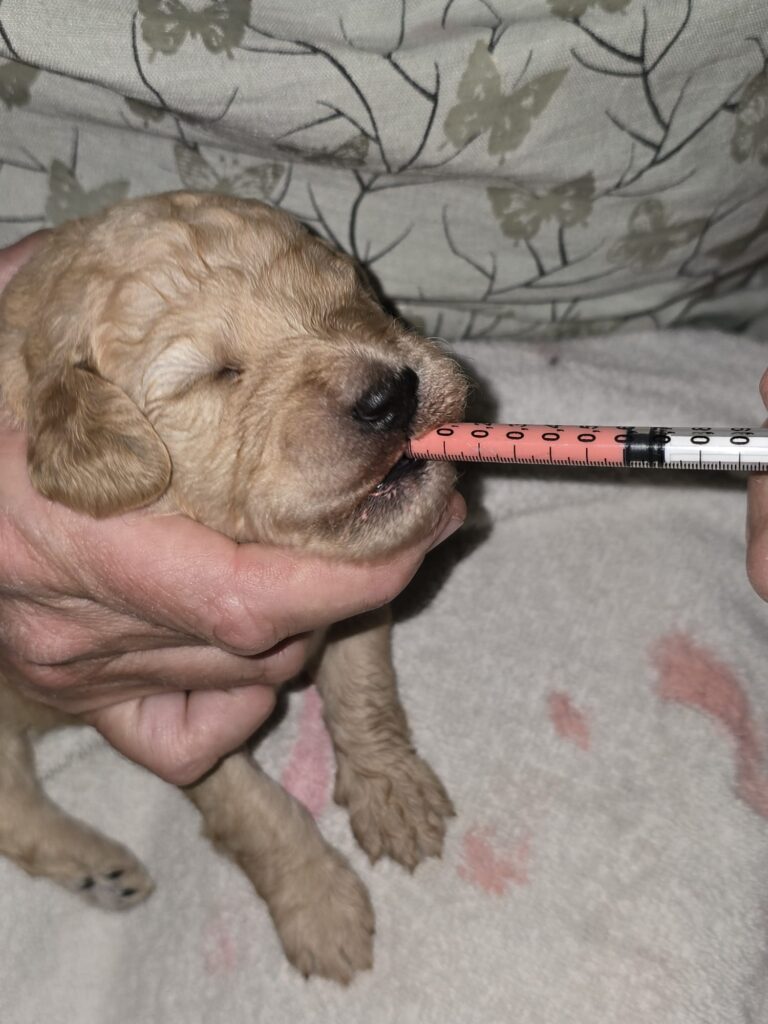
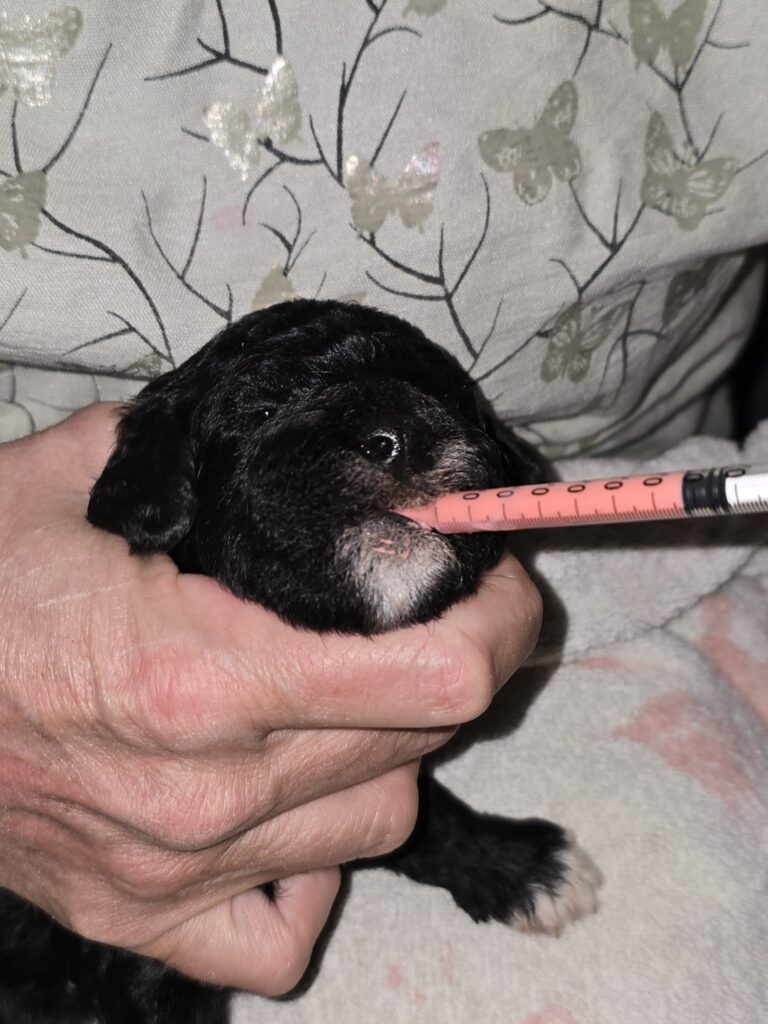
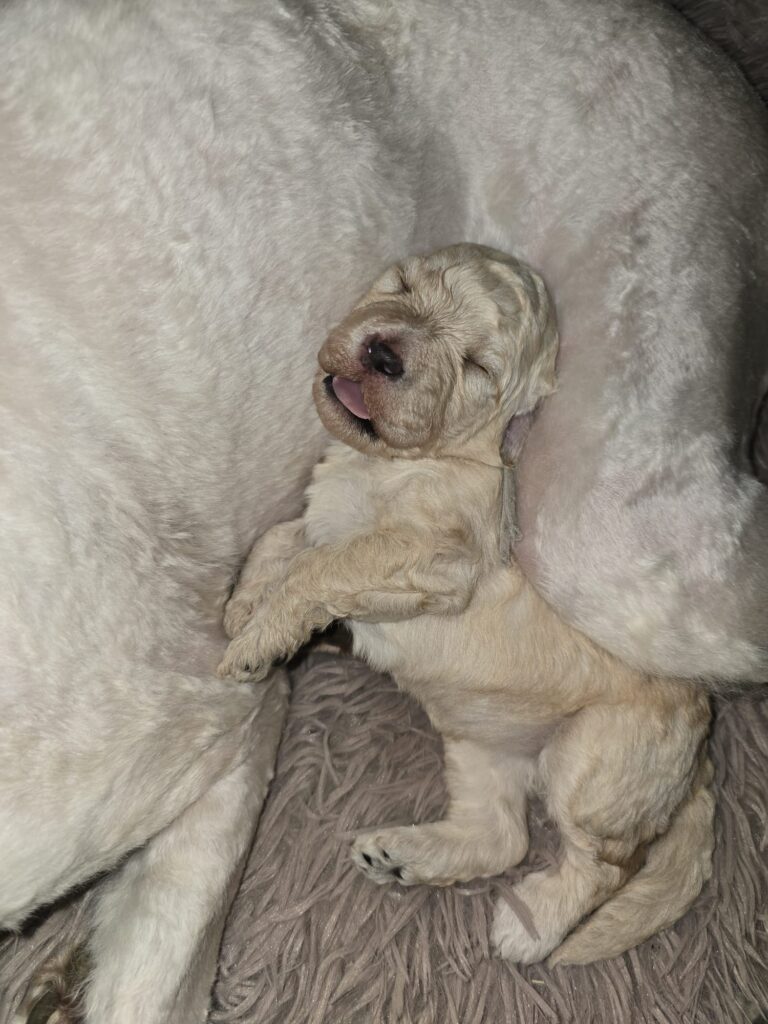
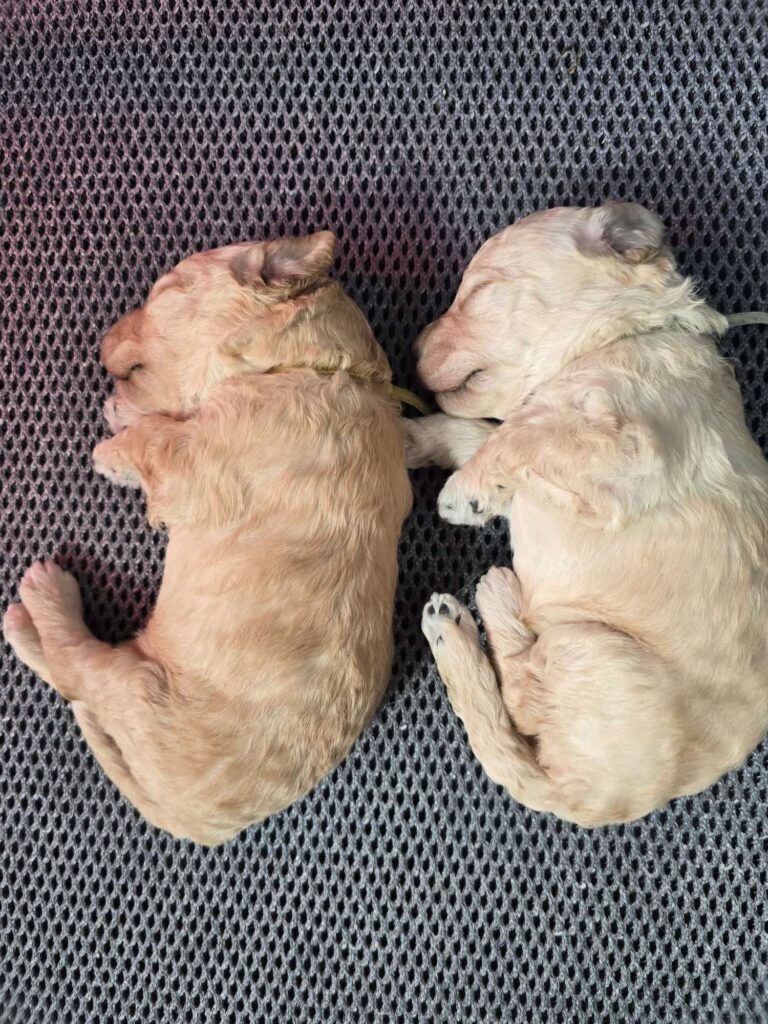
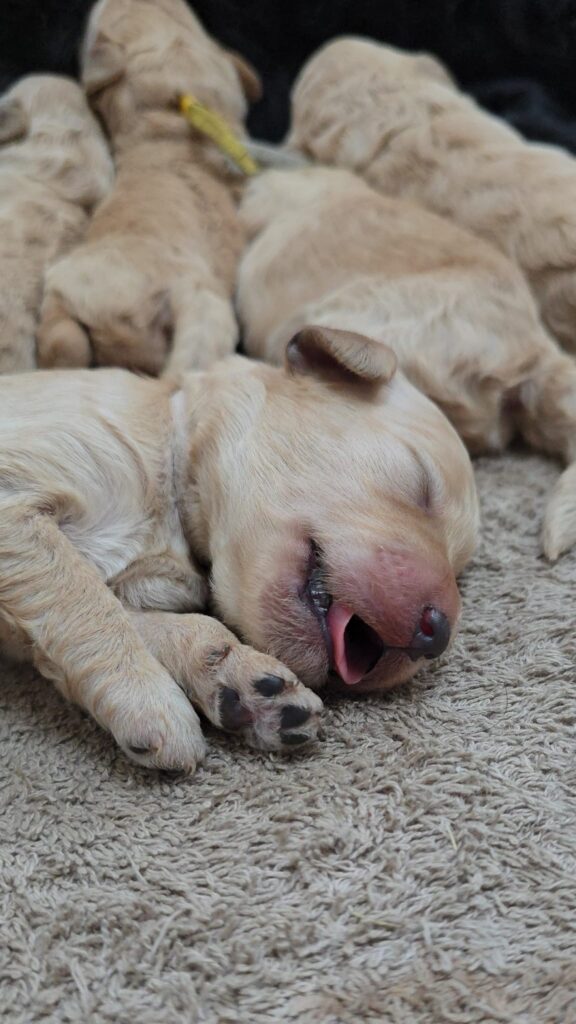
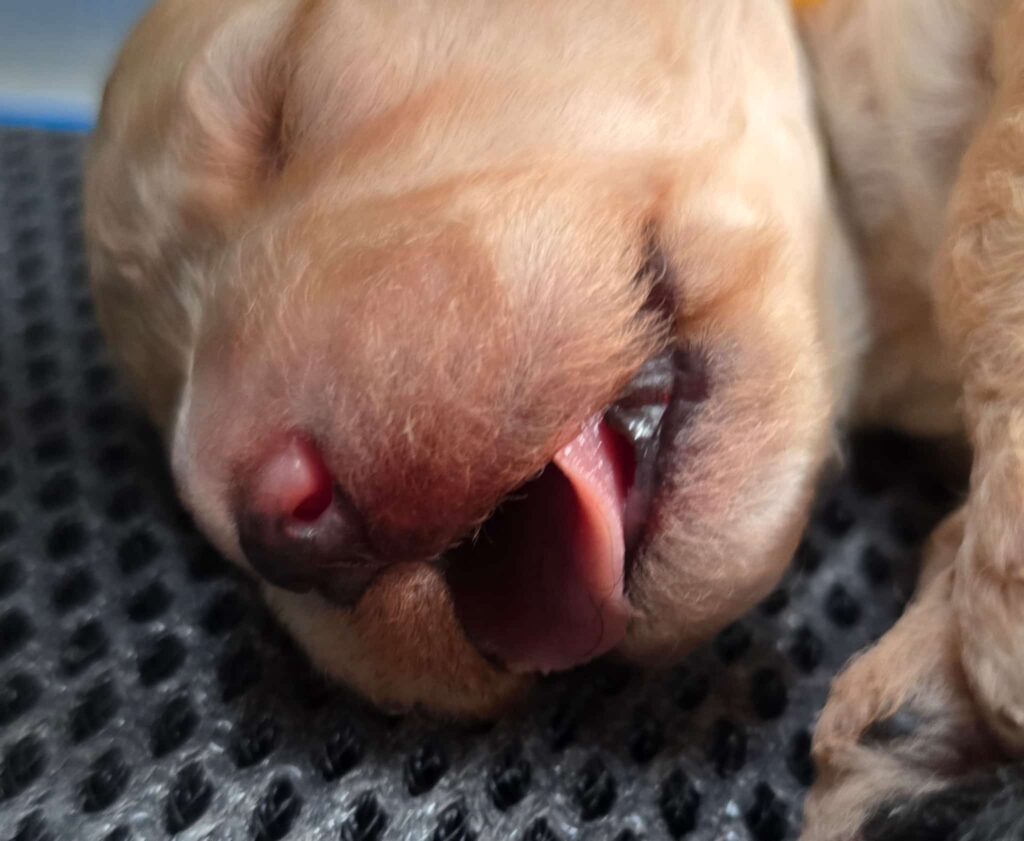
The puppies have developed nicely, and the first ones have already doubled their birth weight.
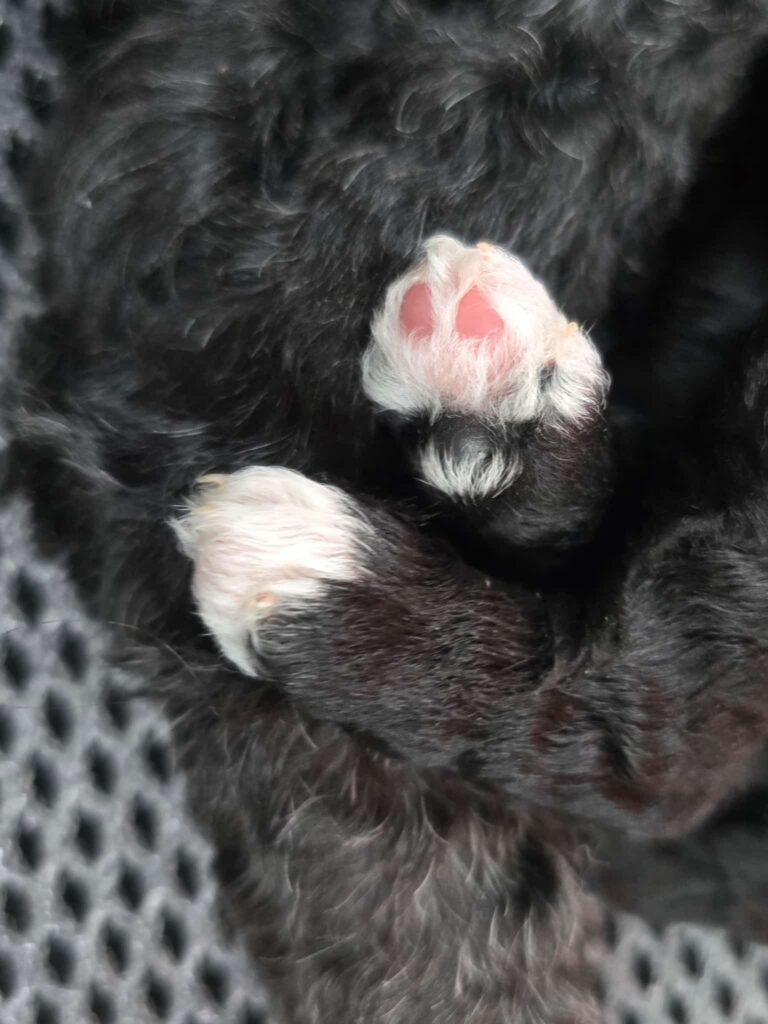
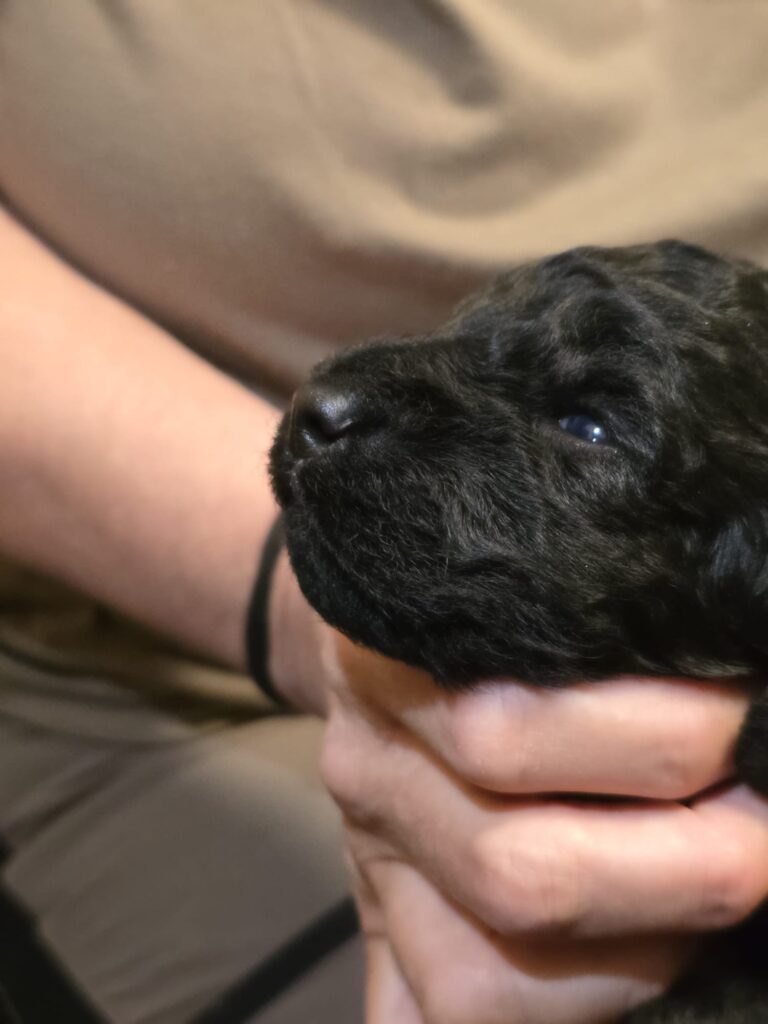
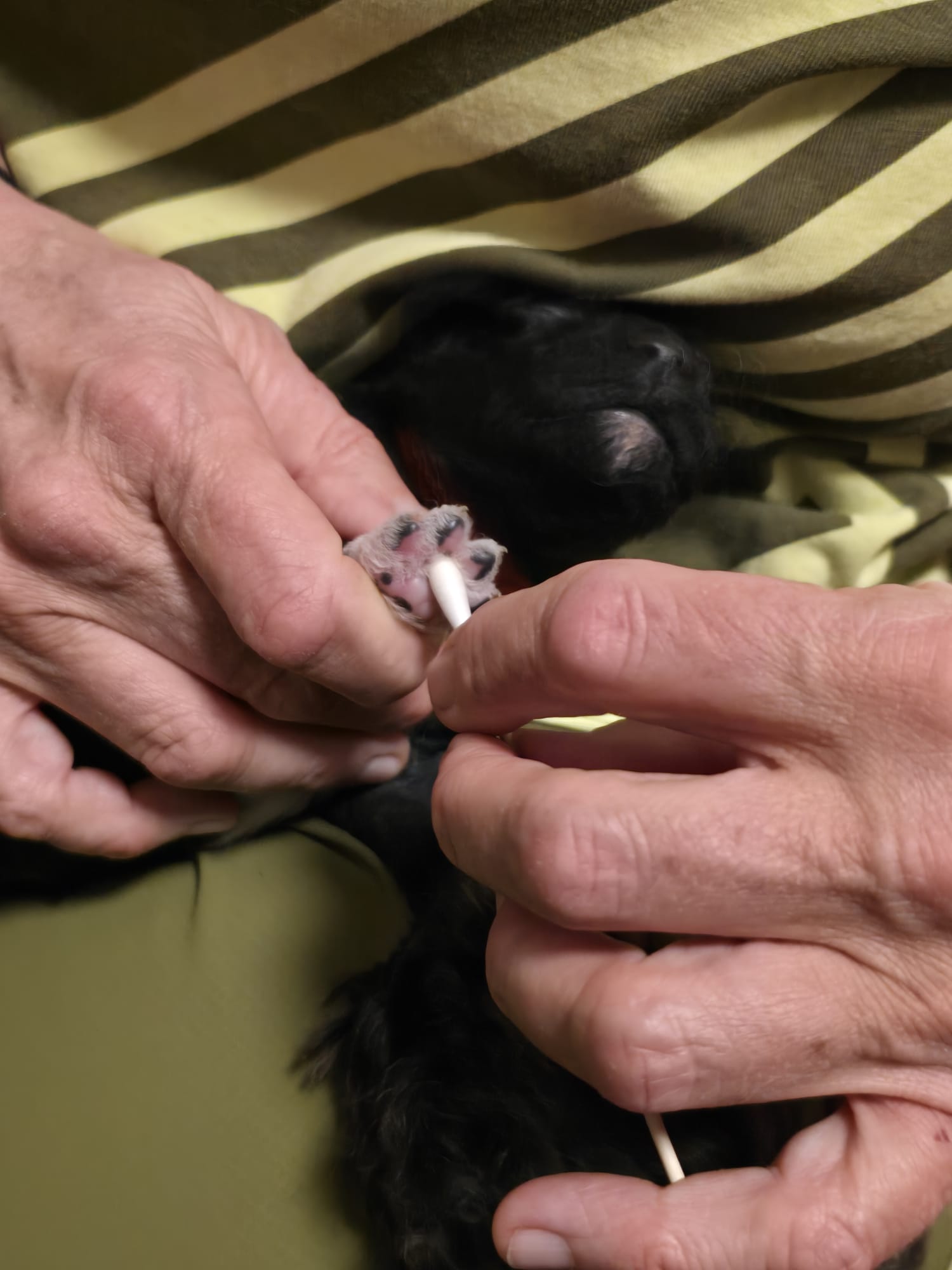
From day 3 on we started with daily ENS training. Early Neurological Stimulation (ENS) is a program of five, 5-second exercises applied to puppies from day 3 to 16 of life to enhance performance and stress tolerance. Developed by the US military (Bio Sensor program), it aims to improve cardiovascular, adrenal, and immune systems. Techniques include tactile stimulation, holding head up/down, supine position, and thermal stimulation.
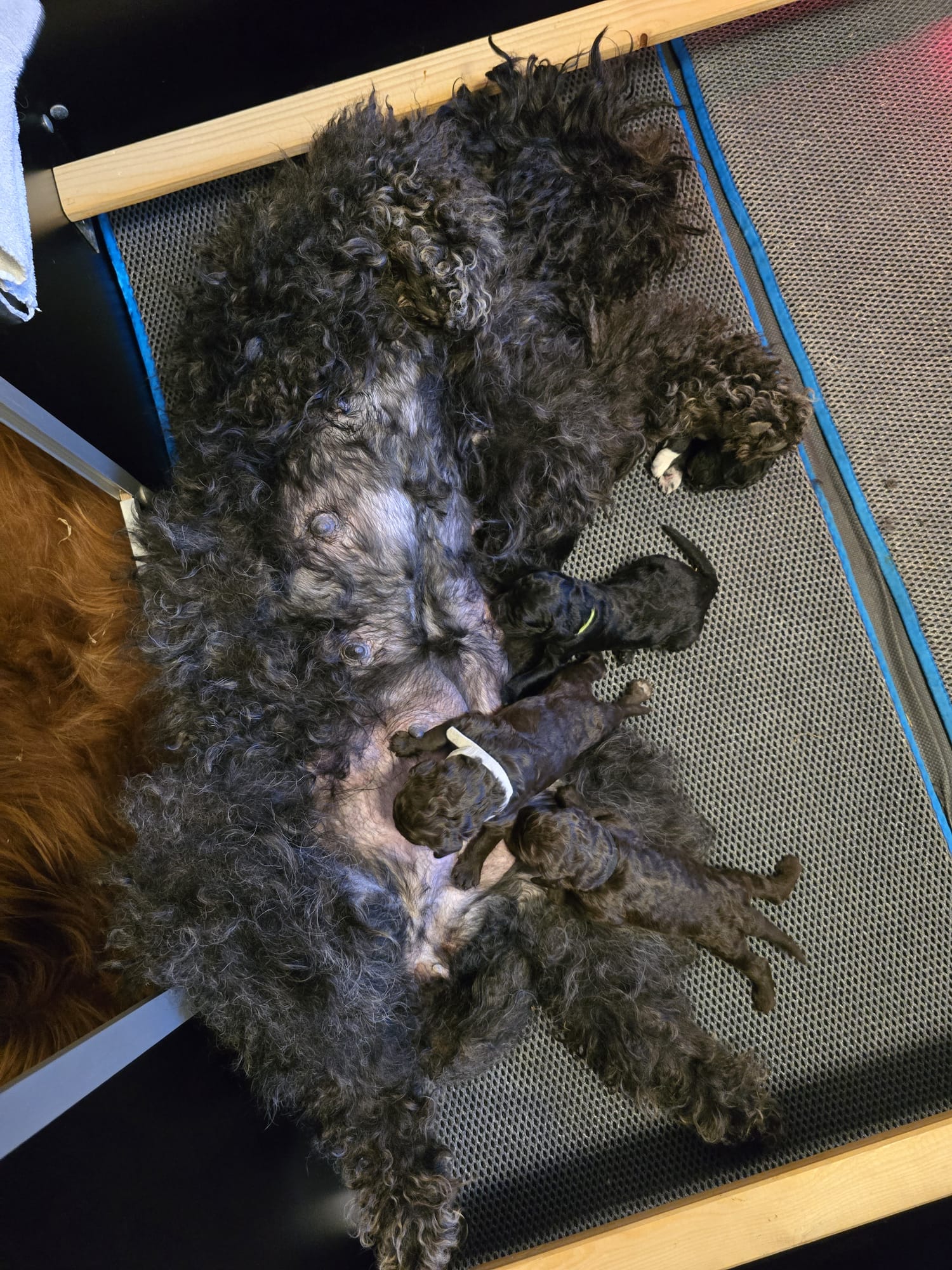
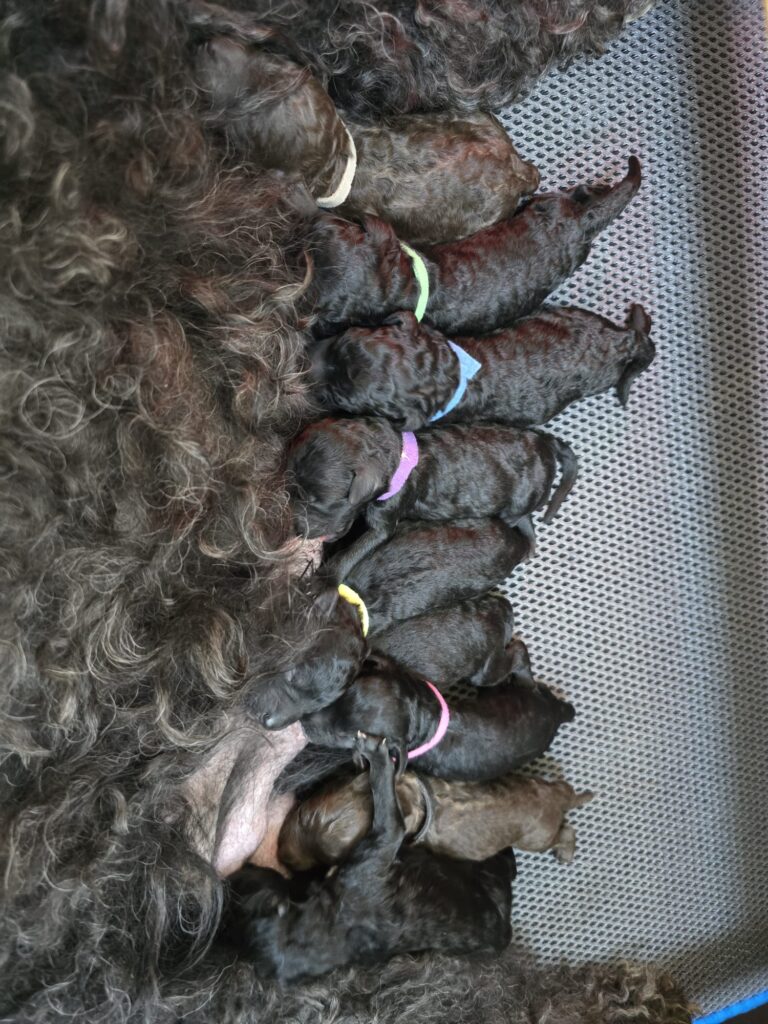
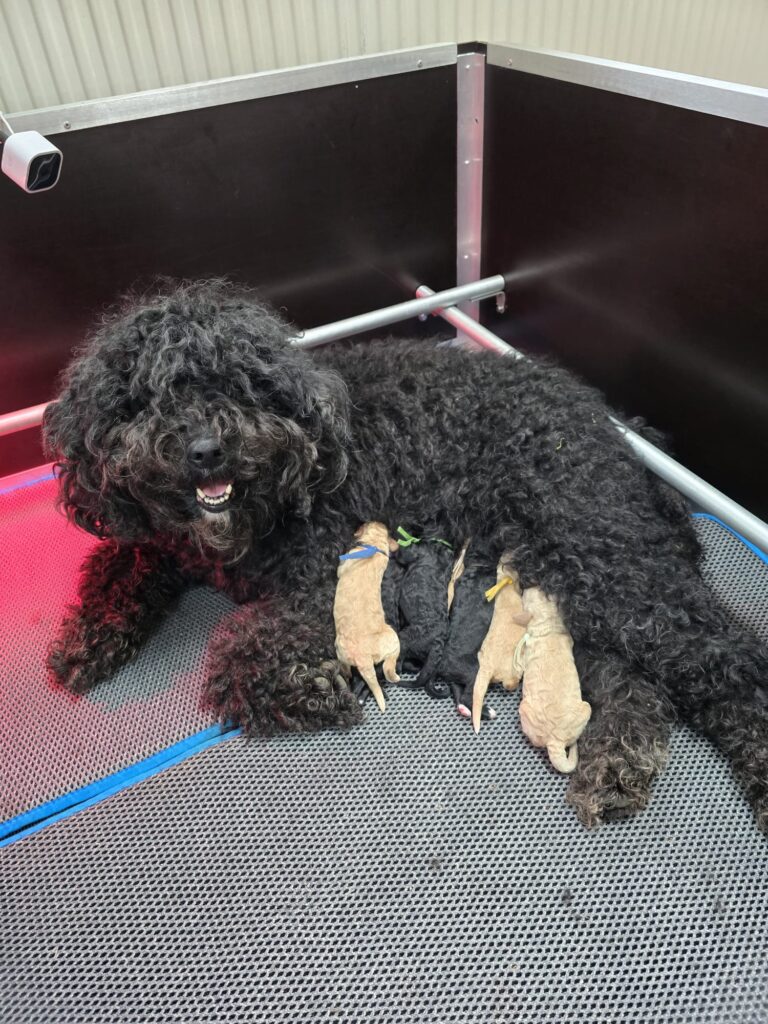
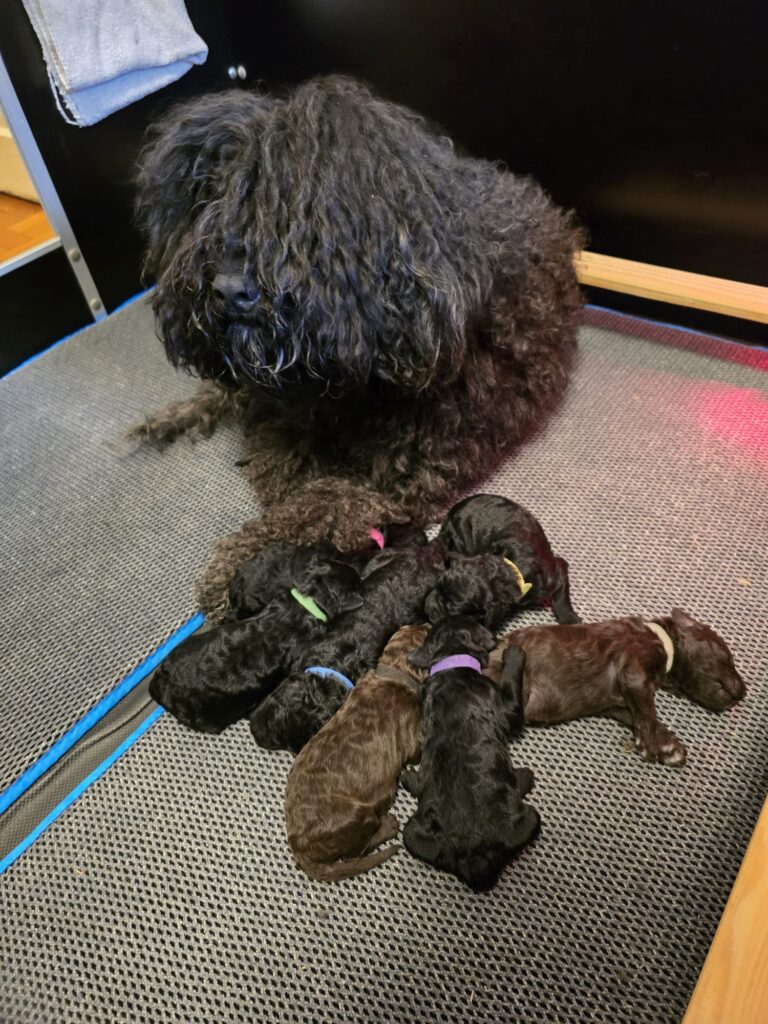
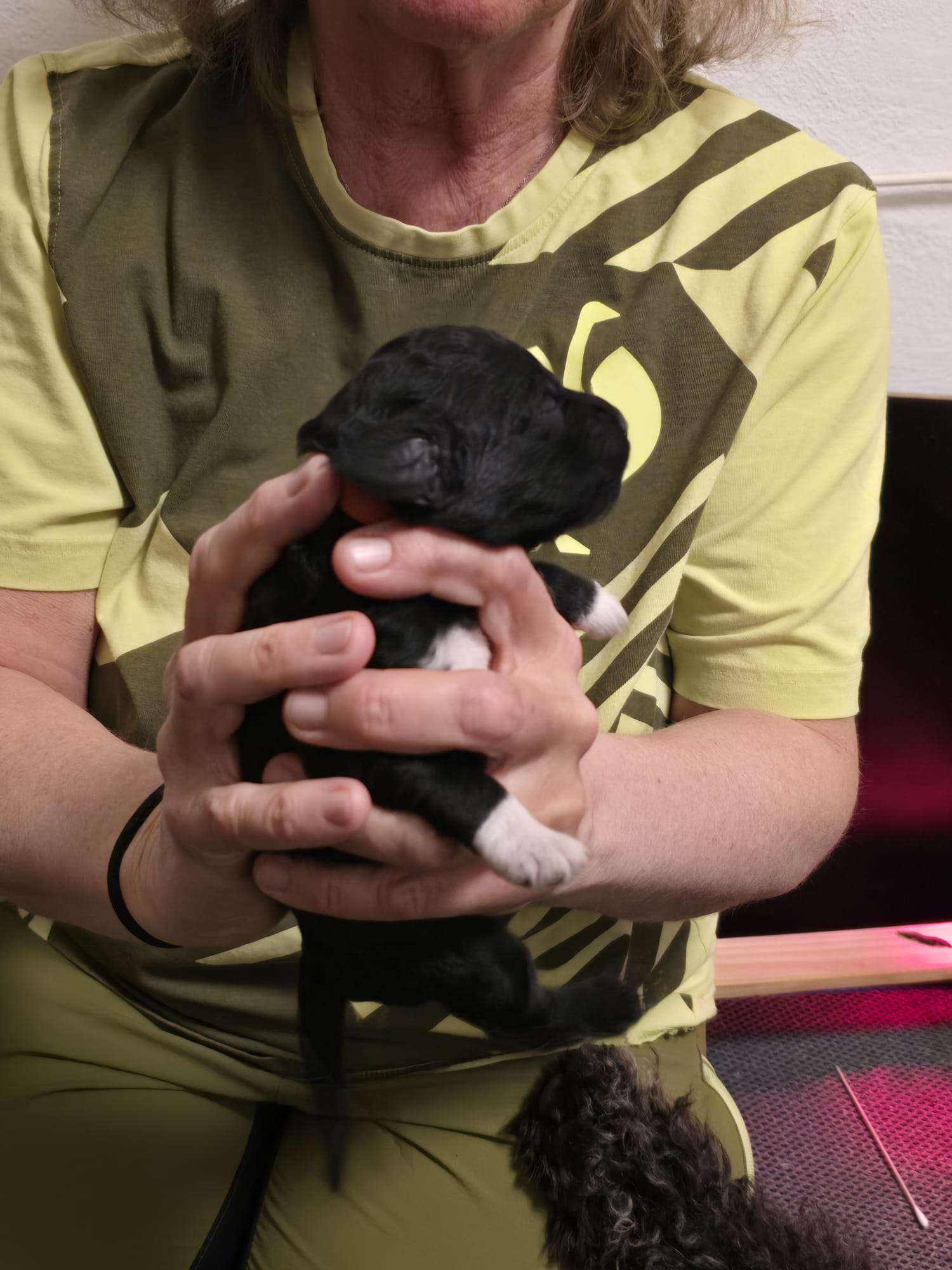
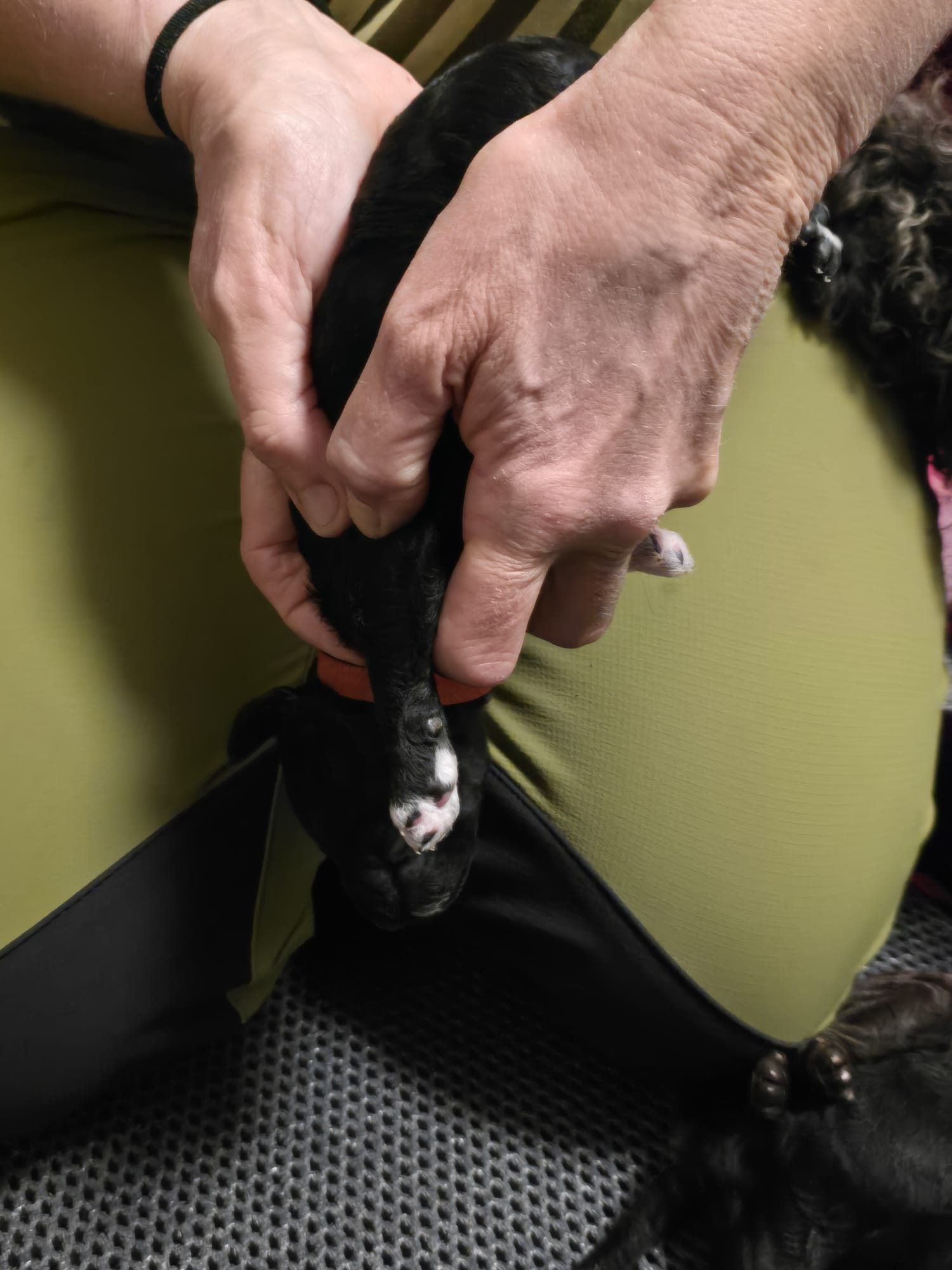
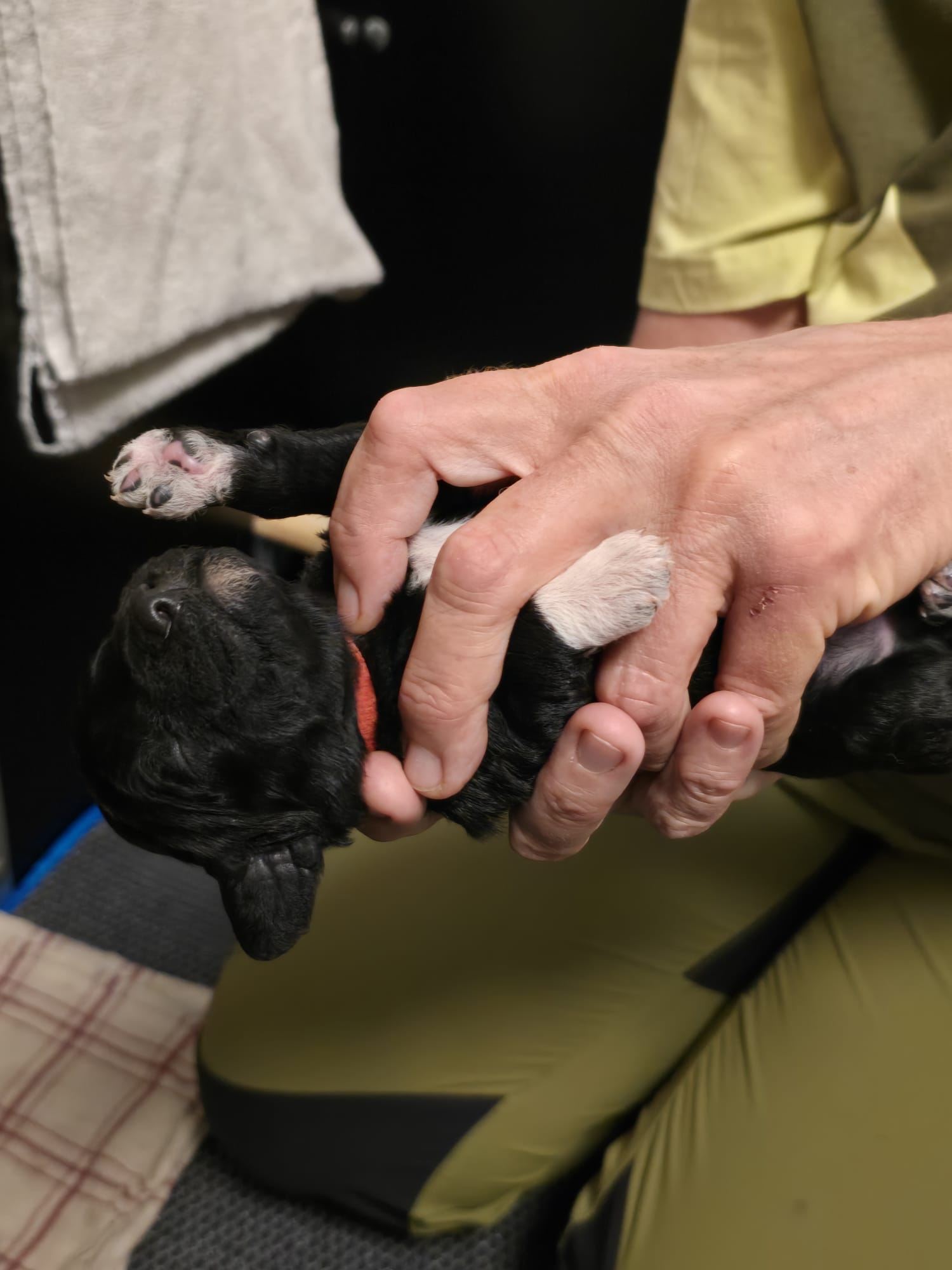
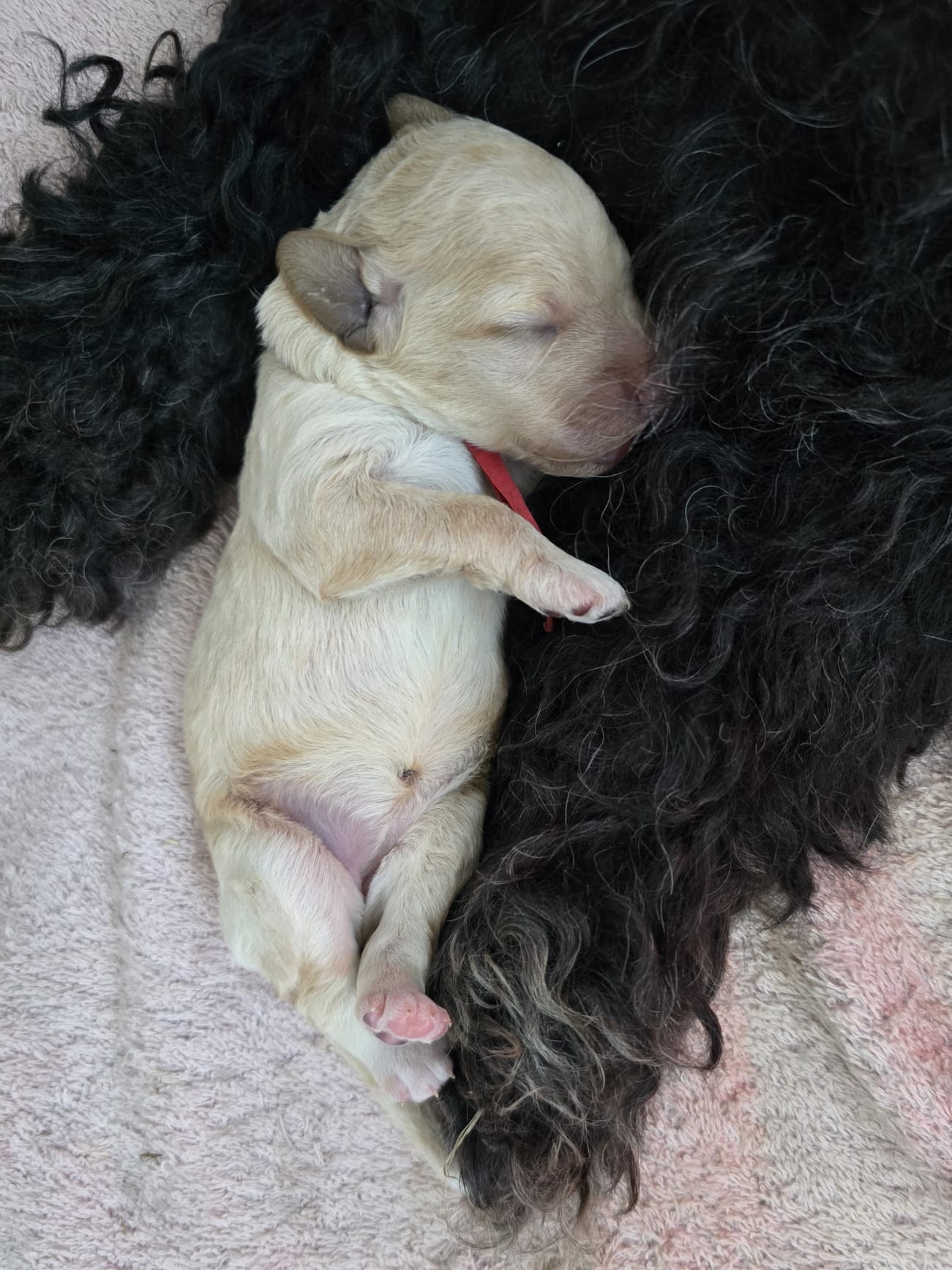
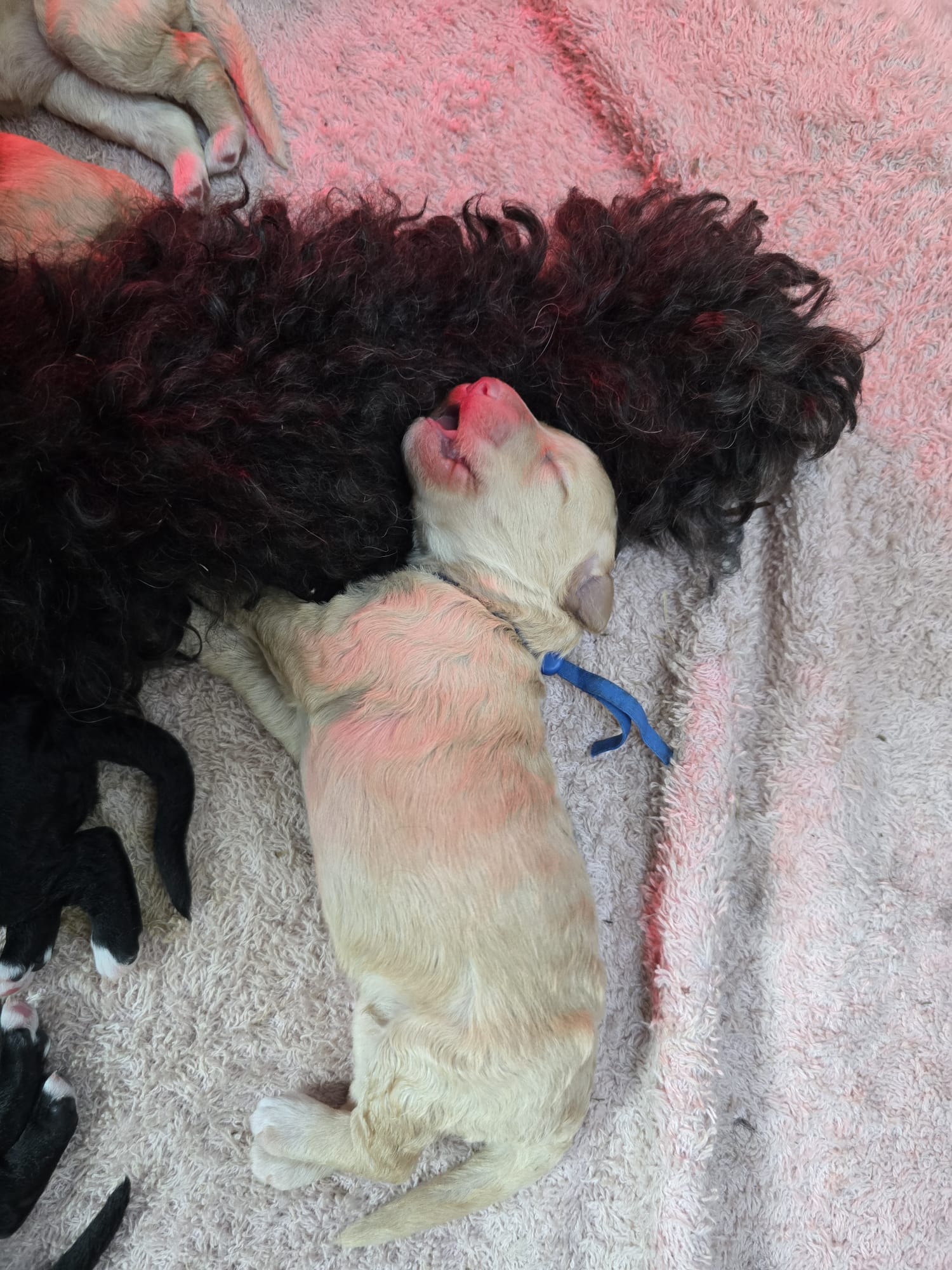
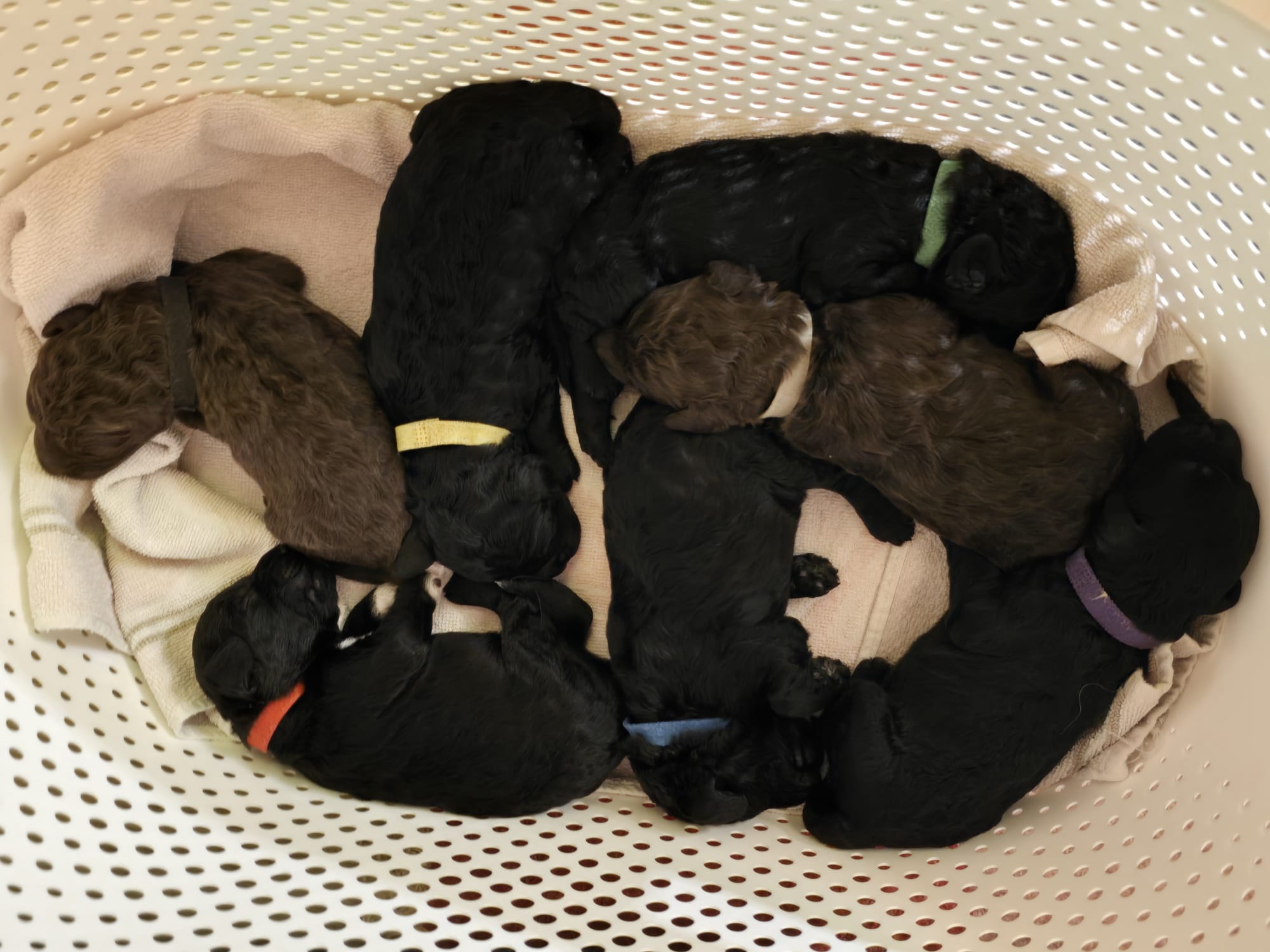
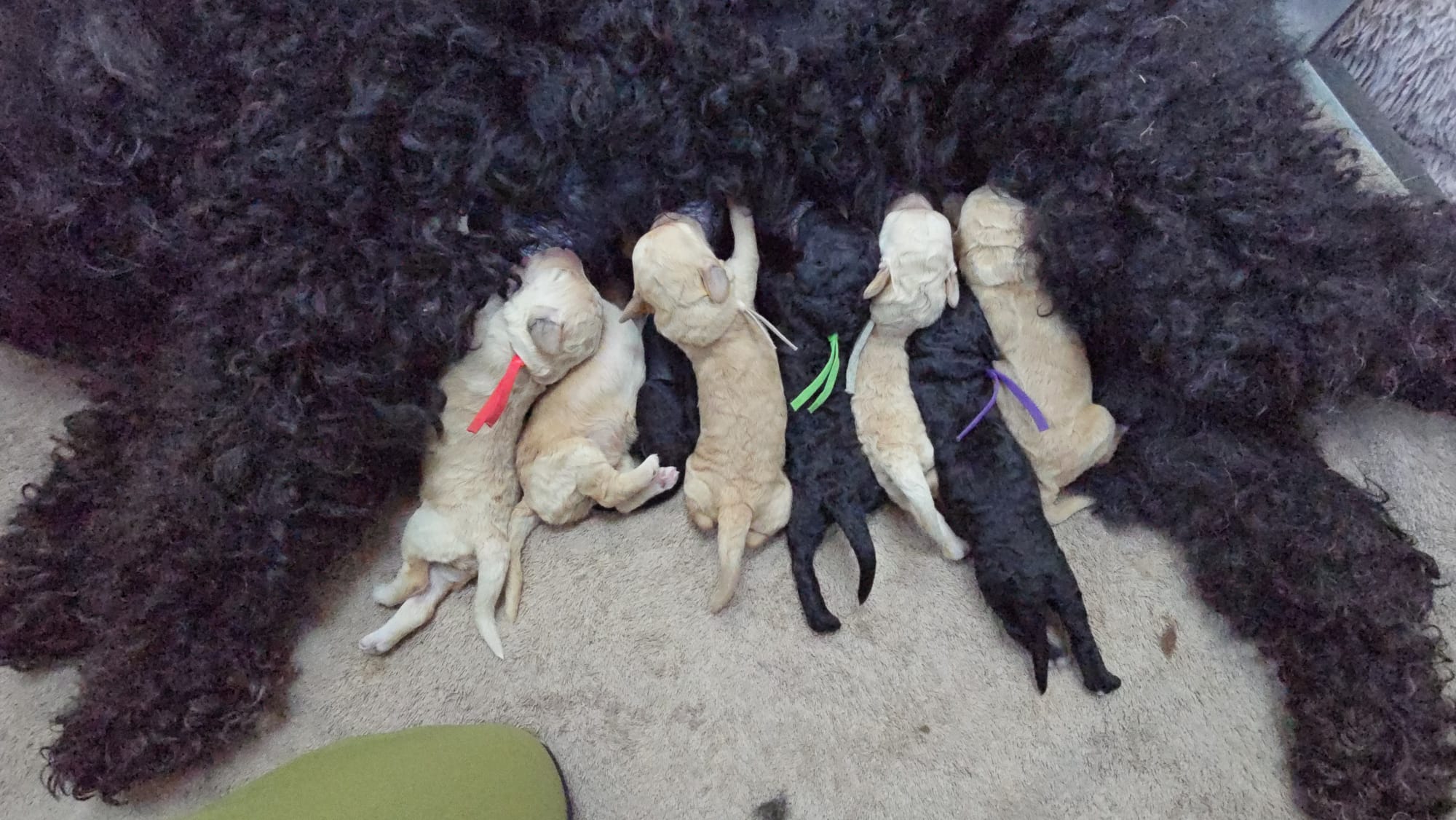
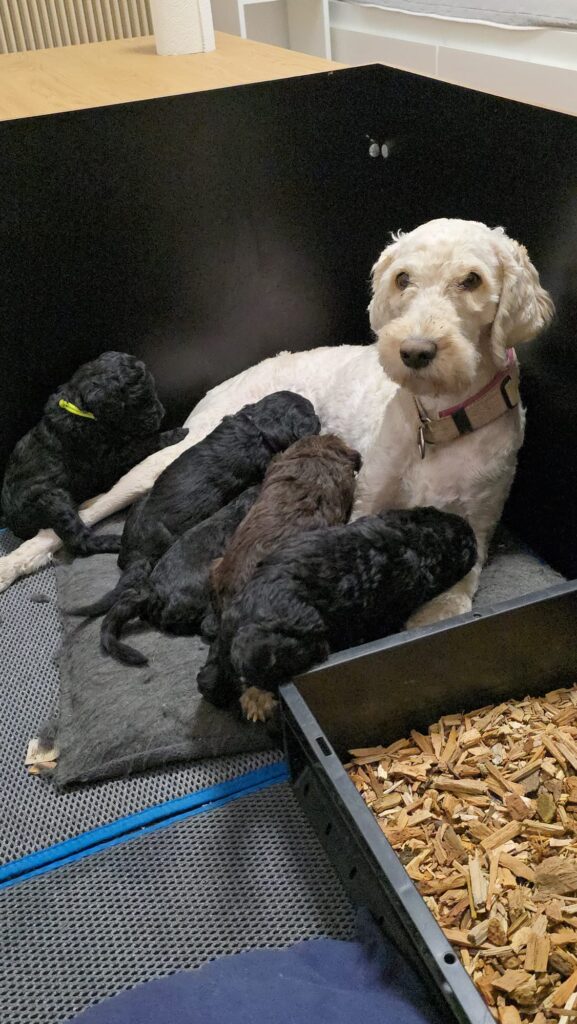
Gracy is the puppies’ nurse; she feeds and cares for them.
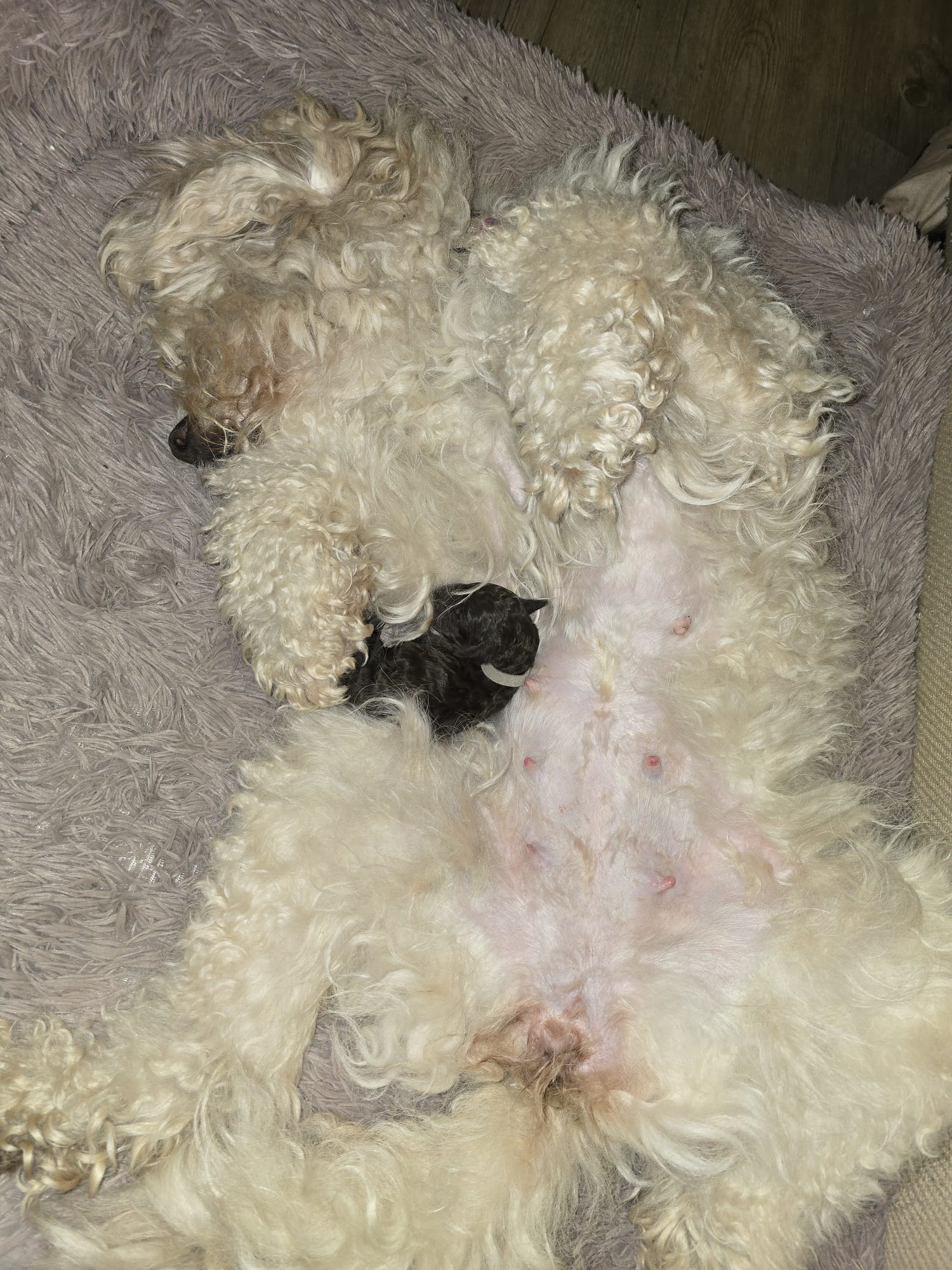
Birth
Mating